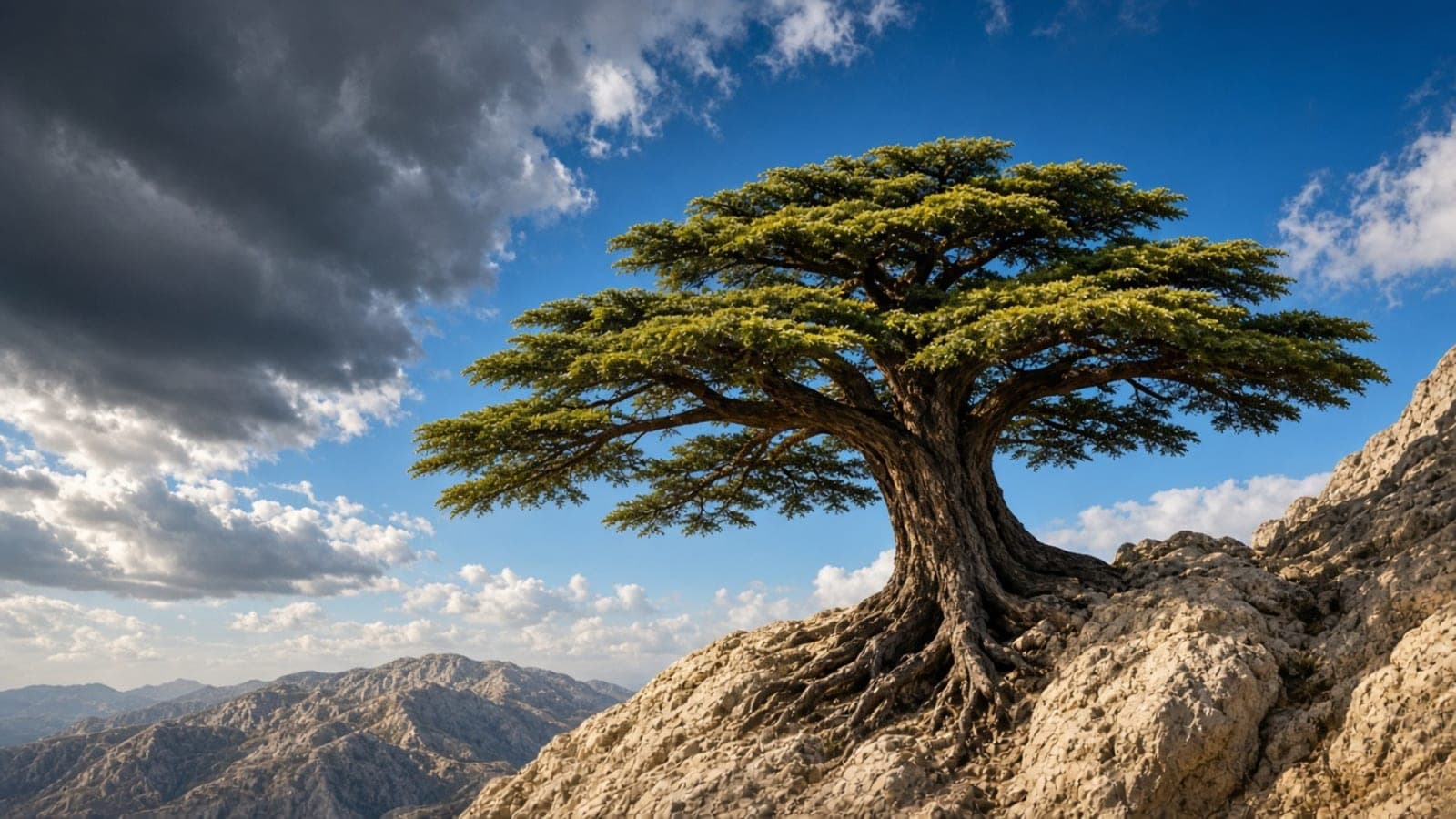
There is a moment in almost every hard season where the thing being asked of you is not a decision. You already made the decision. What is being asked is that you keep it, one more day, when nothing has changed and no relief is in sight and the only honest word for what you are doing is hanging on.
The New Testament has a word for that, and it is not the word you would expect. We usually translate it “patience,” which is a shame, because patience sounds like a person sitting quietly in a waiting room. The Greek word is hupomonē, and it is nothing like sitting still.
What the Word Is Made Of
Break it in half. Hupo means “under.” Menō means “to remain, to abide, to stay.” Put them together and hupomonē means, with almost aggressive plainness, remaining under. Staying put beneath a weight instead of crawling out from under it.
That is a completely different picture than “patience.” Patience is passive. Hupomonē is a man with a loaded bar across his shoulders refusing to let his knees buckle. The lexicons fight to get this across. One of the great ones, Trench, says it is not mere endurance but the brave patience with which the Christian contends against hindrances and persecutions. Another, Barclay, put it best: it is not the patience which sits down and accepts things, but the patience which masters them, a determination, unhurrying and yet undelaying, which refuses to be deflected. Obstacles do not daunt it and discouragements do not take its hope away.
So burn the waiting-room picture. Hupomonē is not what you do when there is nothing to do. It is what you do when there is everything to do and no strength left to do it, and you stay under the load anyway, and you keep moving.
The Forge
Paul says something about this word that sounds almost cruel until you understand it. “We glory in tribulations also: knowing that tribulation worketh hupomonē; and hupomonē, experience; and experience, hope” (Romans 5:3–4).
Read the chain slowly, because the order matters. Tribulation produces endurance. Endurance produces proven character. Character produces hope. Which means the pressure is not an interruption of the process. The pressure is the process. There is no other assembly line for hope. You do not get the tested character and the unshakable hope from a comfortable life; you get them from remaining under a weight long enough that it forges something in you that was not there before.
This is the thing nobody wants to hear in the middle of it, and it is also the only thing that makes the middle of it survivable. The suffering is not wasted. It is doing something. The God who runs this economy does not permit weight on His people for no reason; He permits exactly the weight that manufactures the endurance that produces the hope. It is the most expensive gift He gives, and He only gives it one way.
You Are Not Holding It Up Alone
Here is the part that keeps hupomonē from being a religion of gritted teeth.
When Paul prays for the Colossians to have this endurance, watch the grammar. He asks that they be “strengthened with all might, according to his glorious power, unto all hupomonē” (Colossians 1:11). Strengthened. Passive. The strength to remain under comes from outside you, poured in. You are not asked to generate the endurance from your own reserves and then present it to God as an achievement. You are asked to stay under the weight while He supplies the strength to do it.
That is the whole difference between Christian endurance and mere stoicism. The stoic grits his teeth and relies on the hardness of his own will. The believer remains under the weight and relies on a power that is not his own, flowing in exactly as fast as the weight presses down. Hupomonē is not you being strong. It is you staying in the one place where His strength reaches you.
And notice the root hiding inside the word. Menō, to remain, to abide. It is the same verb Jesus used in the upper room: abide in me, and I in you. Endurance is not gritting it out at a distance from God. It is abiding, staying, remaining in Him while the pressure does its work. You remain under the load because you are remaining in Him, and He is under it with you.
The One Who Remained Under
And this is where the word stops being a technique and becomes a Person, because Scripture gives us one supreme picture of hupomonē, and it is not an example of ours.
“Let us run with hupomonē the race that is set before us, looking unto Jesus the author and finisher of our faith; who for the joy that was set before him endured the cross, despising the shame, and is set down at the right hand of the throne of God” (Hebrews 12:1–2).
Look at what He did. He endured the cross. He remained under the single heaviest weight in the history of the universe, the wrath our sin had earned, and He did not crawl out from under it, though He could have called ten thousand angels and walked away in an instant. He stayed. And the text tells you how: for the joy that was set before him. He remained under the cross by looking past it, to the joy on the far side, to a redeemed people and a throne. He endured by fixing His eyes on the outcome, which is precisely what He now asks you to do.
That is why the passage says looking unto Jesus. He is not just the coach yelling at you to endure. He is the one who ran the whole course first, under infinitely more weight, and finished. When you remain under your load, you are not doing something foreign to Him. You are doing the thing He did, in His strength, following His eyes to the same kind of joy.
The Endurance That Reaches the End
There is one more place this word lives, and it is worth seeing, because it tells you where the road goes.
Hupomonē is all over the book of Revelation. “The patience of Jesus Christ” (1:9). And twice, in the darkest chapters, a strange and steadying phrase: “Here is the hupomonē of the saints” (13:10, 14:12), spoken of believers holding fast under the worst pressure the world will ever apply, refusing to bow to the beast, remaining under to the very end. The word that carries you through a hard Tuesday is the same word that will carry the saints through the final tribulation. It runs the whole distance, from your ordinary weary faithfulness all the way to the return of the King.
Which means your small, daily, unglamorous act of not quitting is not small at all. It is the same thread that runs to the throne. Every day you remain under and keep abiding, you are practicing the exact endurance that the whole story is moving toward, the faithfulness that greets the King when He comes.
So Stay Under It
If you are reading this in the middle of a weight, hear the word for what it actually is. You are not being asked to enjoy it, or to explain it, or to feel strong. You are being asked to remain under it a little longer, and you are not being asked to do it on your own power.
So here is what to do tomorrow morning, when the weight is still there and nothing has changed. Do not try to feel like enduring. Do not manufacture strength you do not have. Just stay. Stay under it one more day, and while you stay, abide, look up, and let Him supply the strength as the pressure presses. That is hupomonē, and it is not heroism. It is remaining in the One who is remaining with you.
And fix your eyes where He fixed His. There is joy set before you too, on the far side of this, and it is not a consolation prize. It is the throne, the King, the end of every weight forever, and a Savior who ran this exact race ahead of you and is standing at the finish line with the strength to get you there. He endured the cross for the joy of having you. You can endure tomorrow for the joy of having Him.
Do not crawl out from under it. Stay. He stayed for you. And the joy on the far side has your name on it.
And whosoever will, let him take the water of life freely, including the weary. Especially the weary.
Hebrews 12: the chapter behind this essay
Open the great endurance passage in the Bible reader with verse-by-verse commentary from Whosoever Will, Chuck Smith, and Matthew Henry beside the text.
This essay is original to Whosoever Will (2026). A reading of Romans 5, Colossians 1, and Hebrews 12 on the endurance that remains under. All rights reserved. Platform use under Revelation 22:17, free to all who come.