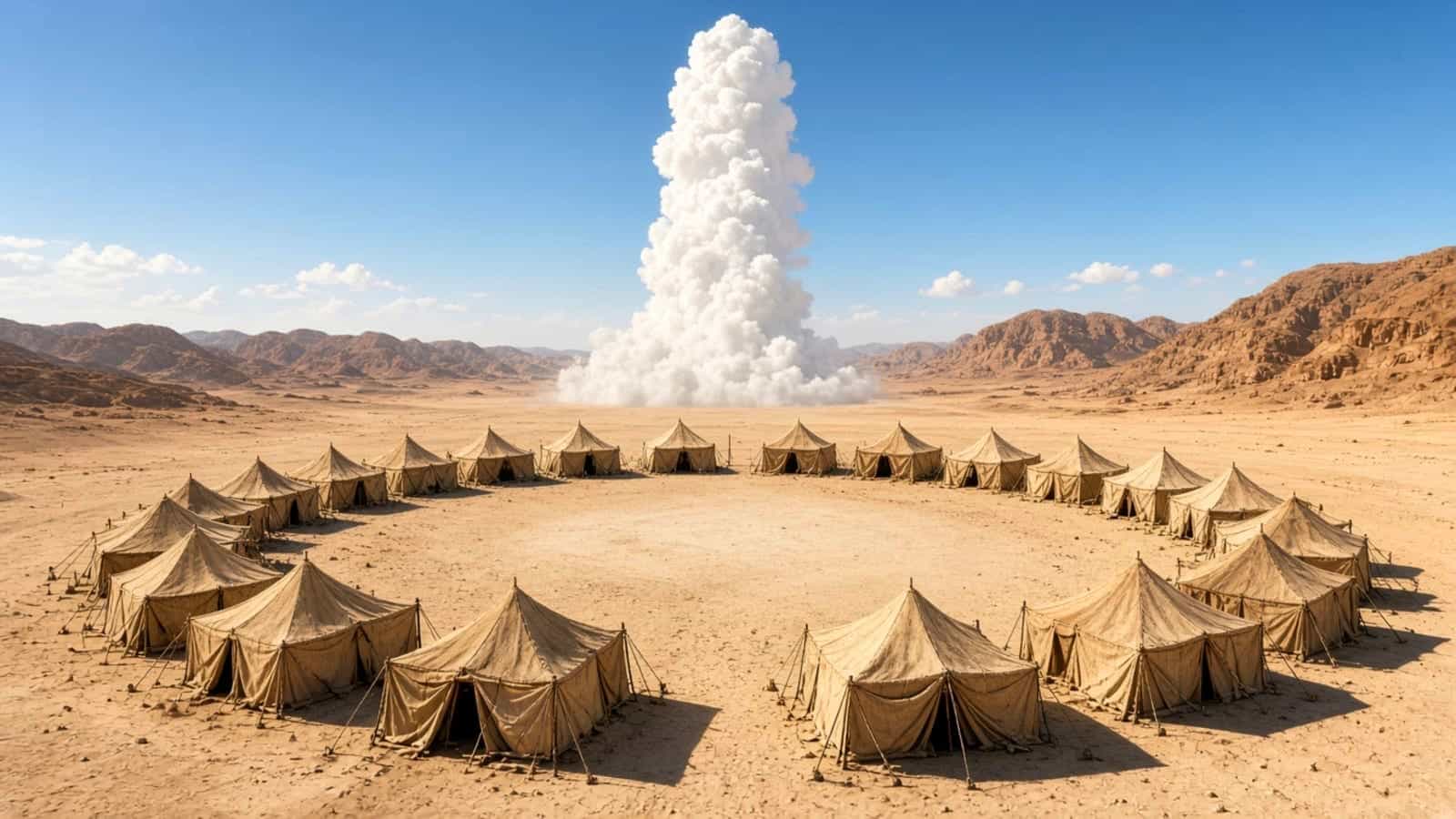
The wilderness period produces multiple rebellions and Numbers 16 records the most significant: Korah, Dathan, and Abiram gather 250 leaders and challenge Moses and Aaron. Their argument sounds democratic: all the congregation is holy, the LORD is among all of them, why do you elevate yourselves above the congregation?
The argument is theologically half-true. The congregation is holy. The LORD is among them. But the specific calling of Aaron's priesthood is God's designation, not Moses's ambition. Korah is conflating the holiness of the community with the elimination of functional distinctions within it.
Moses proposes a test: each man take his censer, offer incense before the LORD, and the LORD will show who is holy. The next day: the earth opens its mouth and swallows Korah, Dathan, Abiram, their households, and all their possessions. Fire comes out and consumes the 250 men offering the incense.
And the next day the whole congregation murmurs against Moses and Aaron: you have killed the people of the LORD. A plague breaks out. Aaron takes his censer and runs into the midst of the congregation and makes atonement. He stands between the living and the dead until the plague stops. 14,700 die.
Thread 4 is in the rebellion: genuine challenge to divinely appointed authority, genuine consequences, and the remarkable detail that the congregation immediately blames Moses rather than recognizing the judgment. Thread 5 is the Mosaic administration's structural integrity: the specific designations God has made within the community are not subject to popular redefinition.
Korah's rebellion, ye take too much upon you, is the challenge to divinely appointed authority dressed in the language of democratic theology; and the earth opens and swallows them; the Mosaic administration's structures are not negotiable.
רַב לָכֶם כִּי כָל הָעֵדָה כֻּלָּם קְדֹשִׁים (rav lakhem ki khal ha-edah kullam qedoshim): ye take too much upon you seeing all the congregation are holy: rav lakhem (enough for you, you have too much, the phrase used to oppose what is regarded as overreach); the theology sounds right: the congregation is holy, the LORD is among all of them; the error is not the theology but its application, the holiness of the congregation does not eliminate the specific priestly calling; God has designated roles; Korah's argument removes the distinction God has established
threads t4 · t5 · see Numbers 17:5 · 1 Corinthians 10:10 · Jude 11
The wilderness period produces multiple rebellions and Numbers 16 records the most significant: Korah, Dathan, and Abiram gather 250 leaders and challenge Moses and Aaron. Their argument sounds democratic: all the congregation is holy, the LORD is among all of them, why do you elevate yourselves above the congregation?
The argument is theologically half-true. The congregation is holy. The LORD is among them. But the specific calling of Aaron's priesthood is God's designation, not Moses's ambition. Korah is conflating the holiness of the community with the elimination of functional distinctions within it.
Moses proposes a test: each man take his censer, offer incense before the LORD, and the LORD will show who is holy. The next day: the earth opens its mouth and swallows Korah, Dathan, Abiram, their households, and all their possessions. Fire comes out and consumes the 250 men offering the incense.
And the next day the whole congregation murmurs against Moses and Aaron: you have killed the people of the LORD. A plague breaks out. Aaron takes his censer and runs into the midst of the congregation and makes atonement. He stands between the living and the dead until the plague stops. 14,700 die.
Thread 4 is in the rebellion: genuine challenge to divinely appointed authority, genuine consequences, and the remarkable detail that the congregation immediately blames Moses rather than recognizing the judgment. Thread 5 is the Mosaic administration's structural integrity: the specific designations God has made within the community are not subject to popular redefinition.
Korah's rebellion, ye take too much upon you, is the challenge to divinely appointed authority dressed in the language of democratic theology; and the earth opens and swallows them; the Mosaic administration's structures are not negotiable.
רַב לָכֶם כִּי כָל הָעֵדָה כֻּלָּם קְדֹשִׁים (rav lakhem ki khal ha-edah kullam qedoshim): ye take too much upon you seeing all the congregation are holy: rav lakhem (enough for you, you have too much, the phrase used to oppose what is regarded as overreach); the theology sounds right: the congregation is holy, the LORD is among all of them; the error is not the theology but its application, the holiness of the congregation does not eliminate the specific priestly calling; God has designated roles; Korah's argument removes the distinction God has established
threads t4 · t5 · see Numbers 17:5 · 1 Corinthians 10:10 · Jude 11
The wilderness period produces multiple rebellions and Numbers 16 records the most significant: Korah, Dathan, and Abiram gather 250 leaders and challenge Moses and Aaron. Their argument sounds democratic: all the congregation is holy, the LORD is among all of them, why do you elevate yourselves above the congregation?
The argument is theologically half-true. The congregation is holy. The LORD is among them. But the specific calling of Aaron's priesthood is God's designation, not Moses's ambition. Korah is conflating the holiness of the community with the elimination of functional distinctions within it.
Moses proposes a test: each man take his censer, offer incense before the LORD, and the LORD will show who is holy. The next day: the earth opens its mouth and swallows Korah, Dathan, Abiram, their households, and all their possessions. Fire comes out and consumes the 250 men offering the incense.
And the next day the whole congregation murmurs against Moses and Aaron: you have killed the people of the LORD. A plague breaks out. Aaron takes his censer and runs into the midst of the congregation and makes atonement. He stands between the living and the dead until the plague stops. 14,700 die.
Thread 4 is in the rebellion: genuine challenge to divinely appointed authority, genuine consequences, and the remarkable detail that the congregation immediately blames Moses rather than recognizing the judgment. Thread 5 is the Mosaic administration's structural integrity: the specific designations God has made within the community are not subject to popular redefinition.
Korah's rebellion, ye take too much upon you, is the challenge to divinely appointed authority dressed in the language of democratic theology; and the earth opens and swallows them; the Mosaic administration's structures are not negotiable.
רַב לָכֶם כִּי כָל הָעֵדָה כֻּלָּם קְדֹשִׁים (rav lakhem ki khal ha-edah kullam qedoshim): ye take too much upon you seeing all the congregation are holy: rav lakhem (enough for you, you have too much, the phrase used to oppose what is regarded as overreach); the theology sounds right: the congregation is holy, the LORD is among all of them; the error is not the theology but its application, the holiness of the congregation does not eliminate the specific priestly calling; God has designated roles; Korah's argument removes the distinction God has established
threads t4 · t5 · see Numbers 17:5 · 1 Corinthians 10:10 · Jude 11
The wilderness period produces multiple rebellions and Numbers 16 records the most significant: Korah, Dathan, and Abiram gather 250 leaders and challenge Moses and Aaron. Their argument sounds democratic: all the congregation is holy, the LORD is among all of them, why do you elevate yourselves above the congregation?
The argument is theologically half-true. The congregation is holy. The LORD is among them. But the specific calling of Aaron's priesthood is God's designation, not Moses's ambition. Korah is conflating the holiness of the community with the elimination of functional distinctions within it.
Moses proposes a test: each man take his censer, offer incense before the LORD, and the LORD will show who is holy. The next day: the earth opens its mouth and swallows Korah, Dathan, Abiram, their households, and all their possessions. Fire comes out and consumes the 250 men offering the incense.
And the next day the whole congregation murmurs against Moses and Aaron: you have killed the people of the LORD. A plague breaks out. Aaron takes his censer and runs into the midst of the congregation and makes atonement. He stands between the living and the dead until the plague stops. 14,700 die.
Thread 4 is in the rebellion: genuine challenge to divinely appointed authority, genuine consequences, and the remarkable detail that the congregation immediately blames Moses rather than recognizing the judgment. Thread 5 is the Mosaic administration's structural integrity: the specific designations God has made within the community are not subject to popular redefinition.
Korah's rebellion, ye take too much upon you, is the challenge to divinely appointed authority dressed in the language of democratic theology; and the earth opens and swallows them; the Mosaic administration's structures are not negotiable.
רַב לָכֶם כִּי כָל הָעֵדָה כֻּלָּם קְדֹשִׁים (rav lakhem ki khal ha-edah kullam qedoshim): ye take too much upon you seeing all the congregation are holy: rav lakhem (enough for you, you have too much, the phrase used to oppose what is regarded as overreach); the theology sounds right: the congregation is holy, the LORD is among all of them; the error is not the theology but its application, the holiness of the congregation does not eliminate the specific priestly calling; God has designated roles; Korah's argument removes the distinction God has established
threads t4 · t5 · see Numbers 17:5 · 1 Corinthians 10:10 · Jude 11
The wilderness period produces multiple rebellions and Numbers 16 records the most significant: Korah, Dathan, and Abiram gather 250 leaders and challenge Moses and Aaron. Their argument sounds democratic: all the congregation is holy, the LORD is among all of them, why do you elevate yourselves above the congregation?
The argument is theologically half-true. The congregation is holy. The LORD is among them. But the specific calling of Aaron's priesthood is God's designation, not Moses's ambition. Korah is conflating the holiness of the community with the elimination of functional distinctions within it.
Moses proposes a test: each man take his censer, offer incense before the LORD, and the LORD will show who is holy. The next day: the earth opens its mouth and swallows Korah, Dathan, Abiram, their households, and all their possessions. Fire comes out and consumes the 250 men offering the incense.
And the next day the whole congregation murmurs against Moses and Aaron: you have killed the people of the LORD. A plague breaks out. Aaron takes his censer and runs into the midst of the congregation and makes atonement. He stands between the living and the dead until the plague stops. 14,700 die.
Thread 4 is in the rebellion: genuine challenge to divinely appointed authority, genuine consequences, and the remarkable detail that the congregation immediately blames Moses rather than recognizing the judgment. Thread 5 is the Mosaic administration's structural integrity: the specific designations God has made within the community are not subject to popular redefinition.
Korah's rebellion, ye take too much upon you, is the challenge to divinely appointed authority dressed in the language of democratic theology; and the earth opens and swallows them; the Mosaic administration's structures are not negotiable.
רַב לָכֶם כִּי כָל הָעֵדָה כֻּלָּם קְדֹשִׁים (rav lakhem ki khal ha-edah kullam qedoshim): ye take too much upon you seeing all the congregation are holy: rav lakhem (enough for you, you have too much, the phrase used to oppose what is regarded as overreach); the theology sounds right: the congregation is holy, the LORD is among all of them; the error is not the theology but its application, the holiness of the congregation does not eliminate the specific priestly calling; God has designated roles; Korah's argument removes the distinction God has established
threads t4 · t5 · see Numbers 17:5 · 1 Corinthians 10:10 · Jude 11
The wilderness period produces multiple rebellions and Numbers 16 records the most significant: Korah, Dathan, and Abiram gather 250 leaders and challenge Moses and Aaron. Their argument sounds democratic: all the congregation is holy, the LORD is among all of them, why do you elevate yourselves above the congregation?
The argument is theologically half-true. The congregation is holy. The LORD is among them. But the specific calling of Aaron's priesthood is God's designation, not Moses's ambition. Korah is conflating the holiness of the community with the elimination of functional distinctions within it.
Moses proposes a test: each man take his censer, offer incense before the LORD, and the LORD will show who is holy. The next day: the earth opens its mouth and swallows Korah, Dathan, Abiram, their households, and all their possessions. Fire comes out and consumes the 250 men offering the incense.
And the next day the whole congregation murmurs against Moses and Aaron: you have killed the people of the LORD. A plague breaks out. Aaron takes his censer and runs into the midst of the congregation and makes atonement. He stands between the living and the dead until the plague stops. 14,700 die.
Thread 4 is in the rebellion: genuine challenge to divinely appointed authority, genuine consequences, and the remarkable detail that the congregation immediately blames Moses rather than recognizing the judgment. Thread 5 is the Mosaic administration's structural integrity: the specific designations God has made within the community are not subject to popular redefinition.
Korah's rebellion, ye take too much upon you, is the challenge to divinely appointed authority dressed in the language of democratic theology; and the earth opens and swallows them; the Mosaic administration's structures are not negotiable.
רַב לָכֶם כִּי כָל הָעֵדָה כֻּלָּם קְדֹשִׁים (rav lakhem ki khal ha-edah kullam qedoshim): ye take too much upon you seeing all the congregation are holy: rav lakhem (enough for you, you have too much, the phrase used to oppose what is regarded as overreach); the theology sounds right: the congregation is holy, the LORD is among all of them; the error is not the theology but its application, the holiness of the congregation does not eliminate the specific priestly calling; God has designated roles; Korah's argument removes the distinction God has established
threads t4 · t5 · see Numbers 17:5 · 1 Corinthians 10:10 · Jude 11
The wilderness period produces multiple rebellions and Numbers 16 records the most significant: Korah, Dathan, and Abiram gather 250 leaders and challenge Moses and Aaron. Their argument sounds democratic: all the congregation is holy, the LORD is among all of them, why do you elevate yourselves above the congregation?
The argument is theologically half-true. The congregation is holy. The LORD is among them. But the specific calling of Aaron's priesthood is God's designation, not Moses's ambition. Korah is conflating the holiness of the community with the elimination of functional distinctions within it.
Moses proposes a test: each man take his censer, offer incense before the LORD, and the LORD will show who is holy. The next day: the earth opens its mouth and swallows Korah, Dathan, Abiram, their households, and all their possessions. Fire comes out and consumes the 250 men offering the incense.
And the next day the whole congregation murmurs against Moses and Aaron: you have killed the people of the LORD. A plague breaks out. Aaron takes his censer and runs into the midst of the congregation and makes atonement. He stands between the living and the dead until the plague stops. 14,700 die.
Thread 4 is in the rebellion: genuine challenge to divinely appointed authority, genuine consequences, and the remarkable detail that the congregation immediately blames Moses rather than recognizing the judgment. Thread 5 is the Mosaic administration's structural integrity: the specific designations God has made within the community are not subject to popular redefinition.
Korah's rebellion, ye take too much upon you, is the challenge to divinely appointed authority dressed in the language of democratic theology; and the earth opens and swallows them; the Mosaic administration's structures are not negotiable.
רַב לָכֶם כִּי כָל הָעֵדָה כֻּלָּם קְדֹשִׁים (rav lakhem ki khal ha-edah kullam qedoshim): ye take too much upon you seeing all the congregation are holy: rav lakhem (enough for you, you have too much, the phrase used to oppose what is regarded as overreach); the theology sounds right: the congregation is holy, the LORD is among all of them; the error is not the theology but its application, the holiness of the congregation does not eliminate the specific priestly calling; God has designated roles; Korah's argument removes the distinction God has established
threads t4 · t5 · see Numbers 17:5 · 1 Corinthians 10:10 · Jude 11
The wilderness period produces multiple rebellions and Numbers 16 records the most significant: Korah, Dathan, and Abiram gather 250 leaders and challenge Moses and Aaron. Their argument sounds democratic: all the congregation is holy, the LORD is among all of them, why do you elevate yourselves above the congregation?
The argument is theologically half-true. The congregation is holy. The LORD is among them. But the specific calling of Aaron's priesthood is God's designation, not Moses's ambition. Korah is conflating the holiness of the community with the elimination of functional distinctions within it.
Moses proposes a test: each man take his censer, offer incense before the LORD, and the LORD will show who is holy. The next day: the earth opens its mouth and swallows Korah, Dathan, Abiram, their households, and all their possessions. Fire comes out and consumes the 250 men offering the incense.
And the next day the whole congregation murmurs against Moses and Aaron: you have killed the people of the LORD. A plague breaks out. Aaron takes his censer and runs into the midst of the congregation and makes atonement. He stands between the living and the dead until the plague stops. 14,700 die.
Thread 4 is in the rebellion: genuine challenge to divinely appointed authority, genuine consequences, and the remarkable detail that the congregation immediately blames Moses rather than recognizing the judgment. Thread 5 is the Mosaic administration's structural integrity: the specific designations God has made within the community are not subject to popular redefinition.
Korah's rebellion, ye take too much upon you, is the challenge to divinely appointed authority dressed in the language of democratic theology; and the earth opens and swallows them; the Mosaic administration's structures are not negotiable.
רַב לָכֶם כִּי כָל הָעֵדָה כֻּלָּם קְדֹשִׁים (rav lakhem ki khal ha-edah kullam qedoshim): ye take too much upon you seeing all the congregation are holy: rav lakhem (enough for you, you have too much, the phrase used to oppose what is regarded as overreach); the theology sounds right: the congregation is holy, the LORD is among all of them; the error is not the theology but its application, the holiness of the congregation does not eliminate the specific priestly calling; God has designated roles; Korah's argument removes the distinction God has established
threads t4 · t5 · see Numbers 17:5 · 1 Corinthians 10:10 · Jude 11
The wilderness period produces multiple rebellions and Numbers 16 records the most significant: Korah, Dathan, and Abiram gather 250 leaders and challenge Moses and Aaron. Their argument sounds democratic: all the congregation is holy, the LORD is among all of them, why do you elevate yourselves above the congregation?
The argument is theologically half-true. The congregation is holy. The LORD is among them. But the specific calling of Aaron's priesthood is God's designation, not Moses's ambition. Korah is conflating the holiness of the community with the elimination of functional distinctions within it.
Moses proposes a test: each man take his censer, offer incense before the LORD, and the LORD will show who is holy. The next day: the earth opens its mouth and swallows Korah, Dathan, Abiram, their households, and all their possessions. Fire comes out and consumes the 250 men offering the incense.
And the next day the whole congregation murmurs against Moses and Aaron: you have killed the people of the LORD. A plague breaks out. Aaron takes his censer and runs into the midst of the congregation and makes atonement. He stands between the living and the dead until the plague stops. 14,700 die.
Thread 4 is in the rebellion: genuine challenge to divinely appointed authority, genuine consequences, and the remarkable detail that the congregation immediately blames Moses rather than recognizing the judgment. Thread 5 is the Mosaic administration's structural integrity: the specific designations God has made within the community are not subject to popular redefinition.
Korah's rebellion, ye take too much upon you, is the challenge to divinely appointed authority dressed in the language of democratic theology; and the earth opens and swallows them; the Mosaic administration's structures are not negotiable.
רַב לָכֶם כִּי כָל הָעֵדָה כֻּלָּם קְדֹשִׁים (rav lakhem ki khal ha-edah kullam qedoshim): ye take too much upon you seeing all the congregation are holy: rav lakhem (enough for you, you have too much, the phrase used to oppose what is regarded as overreach); the theology sounds right: the congregation is holy, the LORD is among all of them; the error is not the theology but its application, the holiness of the congregation does not eliminate the specific priestly calling; God has designated roles; Korah's argument removes the distinction God has established
threads t4 · t5 · see Numbers 17:5 · 1 Corinthians 10:10 · Jude 11
The wilderness period produces multiple rebellions and Numbers 16 records the most significant: Korah, Dathan, and Abiram gather 250 leaders and challenge Moses and Aaron. Their argument sounds democratic: all the congregation is holy, the LORD is among all of them, why do you elevate yourselves above the congregation?
The argument is theologically half-true. The congregation is holy. The LORD is among them. But the specific calling of Aaron's priesthood is God's designation, not Moses's ambition. Korah is conflating the holiness of the community with the elimination of functional distinctions within it.
Moses proposes a test: each man take his censer, offer incense before the LORD, and the LORD will show who is holy. The next day: the earth opens its mouth and swallows Korah, Dathan, Abiram, their households, and all their possessions. Fire comes out and consumes the 250 men offering the incense.
And the next day the whole congregation murmurs against Moses and Aaron: you have killed the people of the LORD. A plague breaks out. Aaron takes his censer and runs into the midst of the congregation and makes atonement. He stands between the living and the dead until the plague stops. 14,700 die.
Thread 4 is in the rebellion: genuine challenge to divinely appointed authority, genuine consequences, and the remarkable detail that the congregation immediately blames Moses rather than recognizing the judgment. Thread 5 is the Mosaic administration's structural integrity: the specific designations God has made within the community are not subject to popular redefinition.
Korah's rebellion, ye take too much upon you, is the challenge to divinely appointed authority dressed in the language of democratic theology; and the earth opens and swallows them; the Mosaic administration's structures are not negotiable.
רַב לָכֶם כִּי כָל הָעֵדָה כֻּלָּם קְדֹשִׁים (rav lakhem ki khal ha-edah kullam qedoshim): ye take too much upon you seeing all the congregation are holy: rav lakhem (enough for you, you have too much, the phrase used to oppose what is regarded as overreach); the theology sounds right: the congregation is holy, the LORD is among all of them; the error is not the theology but its application, the holiness of the congregation does not eliminate the specific priestly calling; God has designated roles; Korah's argument removes the distinction God has established
threads t4 · t5 · see Numbers 17:5 · 1 Corinthians 10:10 · Jude 11
The wilderness period produces multiple rebellions and Numbers 16 records the most significant: Korah, Dathan, and Abiram gather 250 leaders and challenge Moses and Aaron. Their argument sounds democratic: all the congregation is holy, the LORD is among all of them, why do you elevate yourselves above the congregation?
The argument is theologically half-true. The congregation is holy. The LORD is among them. But the specific calling of Aaron's priesthood is God's designation, not Moses's ambition. Korah is conflating the holiness of the community with the elimination of functional distinctions within it.
Moses proposes a test: each man take his censer, offer incense before the LORD, and the LORD will show who is holy. The next day: the earth opens its mouth and swallows Korah, Dathan, Abiram, their households, and all their possessions. Fire comes out and consumes the 250 men offering the incense.
And the next day the whole congregation murmurs against Moses and Aaron: you have killed the people of the LORD. A plague breaks out. Aaron takes his censer and runs into the midst of the congregation and makes atonement. He stands between the living and the dead until the plague stops. 14,700 die.
Thread 4 is in the rebellion: genuine challenge to divinely appointed authority, genuine consequences, and the remarkable detail that the congregation immediately blames Moses rather than recognizing the judgment. Thread 5 is the Mosaic administration's structural integrity: the specific designations God has made within the community are not subject to popular redefinition.
Korah's rebellion, ye take too much upon you, is the challenge to divinely appointed authority dressed in the language of democratic theology; and the earth opens and swallows them; the Mosaic administration's structures are not negotiable.
רַב לָכֶם כִּי כָל הָעֵדָה כֻּלָּם קְדֹשִׁים (rav lakhem ki khal ha-edah kullam qedoshim): ye take too much upon you seeing all the congregation are holy: rav lakhem (enough for you, you have too much, the phrase used to oppose what is regarded as overreach); the theology sounds right: the congregation is holy, the LORD is among all of them; the error is not the theology but its application, the holiness of the congregation does not eliminate the specific priestly calling; God has designated roles; Korah's argument removes the distinction God has established
threads t4 · t5 · see Numbers 17:5 · 1 Corinthians 10:10 · Jude 11
The wilderness period produces multiple rebellions and Numbers 16 records the most significant: Korah, Dathan, and Abiram gather 250 leaders and challenge Moses and Aaron. Their argument sounds democratic: all the congregation is holy, the LORD is among all of them, why do you elevate yourselves above the congregation?
The argument is theologically half-true. The congregation is holy. The LORD is among them. But the specific calling of Aaron's priesthood is God's designation, not Moses's ambition. Korah is conflating the holiness of the community with the elimination of functional distinctions within it.
Moses proposes a test: each man take his censer, offer incense before the LORD, and the LORD will show who is holy. The next day: the earth opens its mouth and swallows Korah, Dathan, Abiram, their households, and all their possessions. Fire comes out and consumes the 250 men offering the incense.
And the next day the whole congregation murmurs against Moses and Aaron: you have killed the people of the LORD. A plague breaks out. Aaron takes his censer and runs into the midst of the congregation and makes atonement. He stands between the living and the dead until the plague stops. 14,700 die.
Thread 4 is in the rebellion: genuine challenge to divinely appointed authority, genuine consequences, and the remarkable detail that the congregation immediately blames Moses rather than recognizing the judgment. Thread 5 is the Mosaic administration's structural integrity: the specific designations God has made within the community are not subject to popular redefinition.
Korah's rebellion, ye take too much upon you, is the challenge to divinely appointed authority dressed in the language of democratic theology; and the earth opens and swallows them; the Mosaic administration's structures are not negotiable.
רַב לָכֶם כִּי כָל הָעֵדָה כֻּלָּם קְדֹשִׁים (rav lakhem ki khal ha-edah kullam qedoshim): ye take too much upon you seeing all the congregation are holy: rav lakhem (enough for you, you have too much, the phrase used to oppose what is regarded as overreach); the theology sounds right: the congregation is holy, the LORD is among all of them; the error is not the theology but its application, the holiness of the congregation does not eliminate the specific priestly calling; God has designated roles; Korah's argument removes the distinction God has established
threads t4 · t5 · see Numbers 17:5 · 1 Corinthians 10:10 · Jude 11
The wilderness period produces multiple rebellions and Numbers 16 records the most significant: Korah, Dathan, and Abiram gather 250 leaders and challenge Moses and Aaron. Their argument sounds democratic: all the congregation is holy, the LORD is among all of them, why do you elevate yourselves above the congregation?
The argument is theologically half-true. The congregation is holy. The LORD is among them. But the specific calling of Aaron's priesthood is God's designation, not Moses's ambition. Korah is conflating the holiness of the community with the elimination of functional distinctions within it.
Moses proposes a test: each man take his censer, offer incense before the LORD, and the LORD will show who is holy. The next day: the earth opens its mouth and swallows Korah, Dathan, Abiram, their households, and all their possessions. Fire comes out and consumes the 250 men offering the incense.
And the next day the whole congregation murmurs against Moses and Aaron: you have killed the people of the LORD. A plague breaks out. Aaron takes his censer and runs into the midst of the congregation and makes atonement. He stands between the living and the dead until the plague stops. 14,700 die.
Thread 4 is in the rebellion: genuine challenge to divinely appointed authority, genuine consequences, and the remarkable detail that the congregation immediately blames Moses rather than recognizing the judgment. Thread 5 is the Mosaic administration's structural integrity: the specific designations God has made within the community are not subject to popular redefinition.
Korah's rebellion, ye take too much upon you, is the challenge to divinely appointed authority dressed in the language of democratic theology; and the earth opens and swallows them; the Mosaic administration's structures are not negotiable.
רַב לָכֶם כִּי כָל הָעֵדָה כֻּלָּם קְדֹשִׁים (rav lakhem ki khal ha-edah kullam qedoshim): ye take too much upon you seeing all the congregation are holy: rav lakhem (enough for you, you have too much, the phrase used to oppose what is regarded as overreach); the theology sounds right: the congregation is holy, the LORD is among all of them; the error is not the theology but its application, the holiness of the congregation does not eliminate the specific priestly calling; God has designated roles; Korah's argument removes the distinction God has established
threads t4 · t5 · see Numbers 17:5 · 1 Corinthians 10:10 · Jude 11