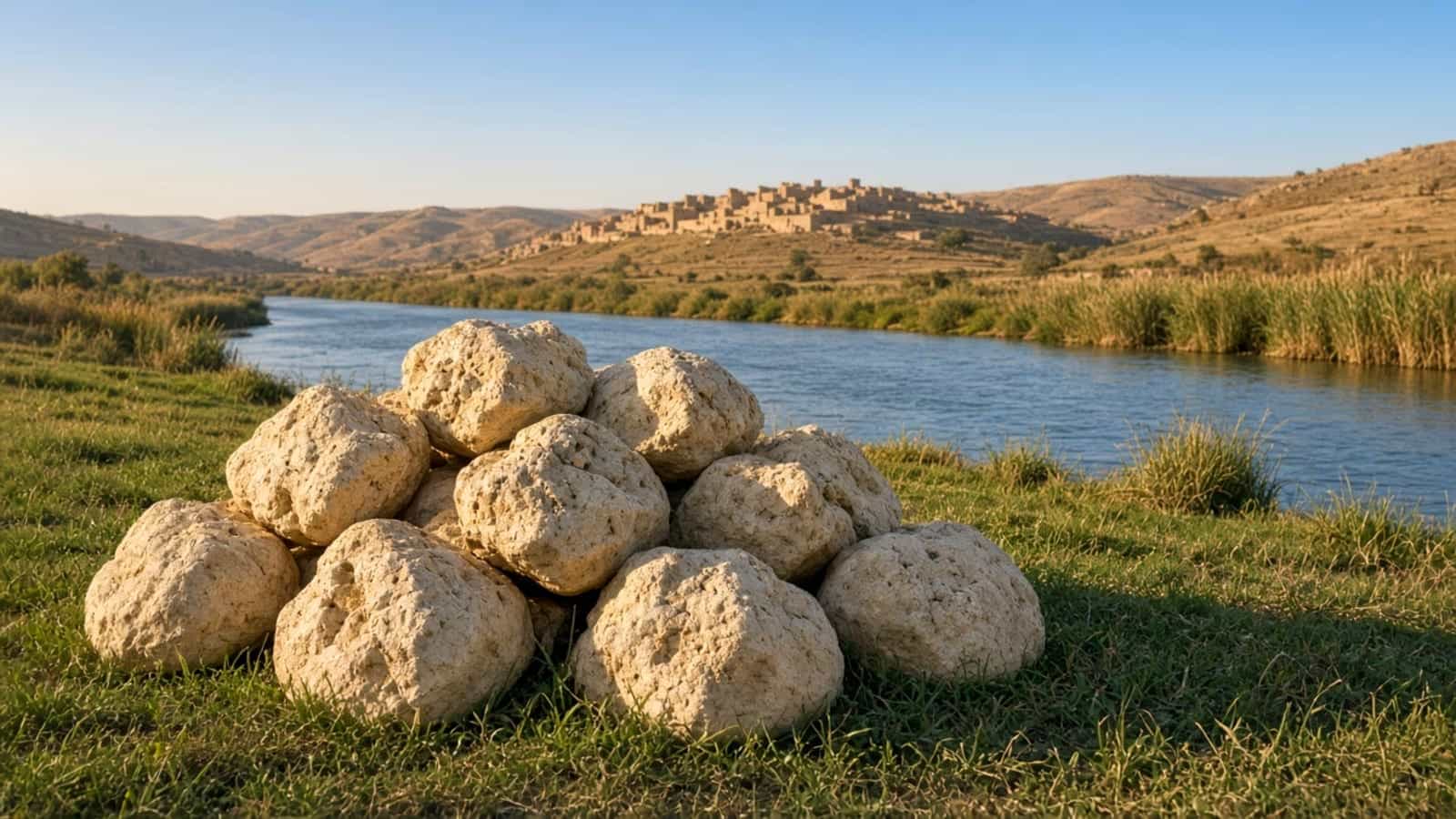
The Jordan crossing is designed to echo the Red Sea. The mechanism is different, the priests carry the ark into the water and the water piles up upstream, but the result is the same: dry ground, water walled, Israel walks through. The new generation entering the land receives the same kind of miracle their parents received leaving Egypt.
Twelve stones are taken from the riverbed and set up at Gilgal as a memorial. When your children ask in time to come what these stones mean, you shall tell them. The memorial system is the covenant people's way of carrying the testimony forward: each generation taught the story of the previous generation's miracle.
Thread 2 is the corporate crossing: twelve tribes, twelve stones, one covenant people entering their inheritance. Thread 5 is the dispensational transition: the wilderness period is over. The land period begins. The circumcision that was not performed in the wilderness is performed at Gilgal, the reproach of Egypt rolled away, the covenant mark applied to a generation that has crossed the Jordan.
The ark of the covenant goes first. The Jordan crossing is a Jordan-parting that deliberately echoes the Red Sea; the new generation enters the land through the same mechanism as their parents left Egypt, and the twelve stones of memorial are the covenant's visible reminder.
וַיַּעַמְדוּ הַכֹּהֲנִים נֹשְׂאֵי הָאָרוֹן בְּתוֹךְ הַיַּרְדֵּן עַל חָרָבָה (vayyaamedu ha-kohanim nose'e ha-aron be-tokh ha-Yarden al charavah): the priests bearing the ark stood firm on dry ground in the midst of the Jordan: vayyaamedu (stood firm, from amad, to stand; the Hiphil sense would be causative; they hold their position; the priests must step into the water before it parts; faith-first, miracle-second, as at the Red Sea); al charavah (on dry ground, the same word used for the dry ground the Israelites walked on through the Red Sea in Exodus 14)
threads t2 · t5 · see Exodus 14:22 · Joshua 4:6-7 · 1 Corinthians 10:1-2