Ezra 6
Chuck Smith on Ezra 6
Verse by verse, taught on Sunday nights: the C2000 series, 1979 to 1985, and the C3000 series, 1985 to 1999. Permission granted by The Word For Today.
Sunday Nights, 1979 to 1985 (C2000)
Verses 1–6
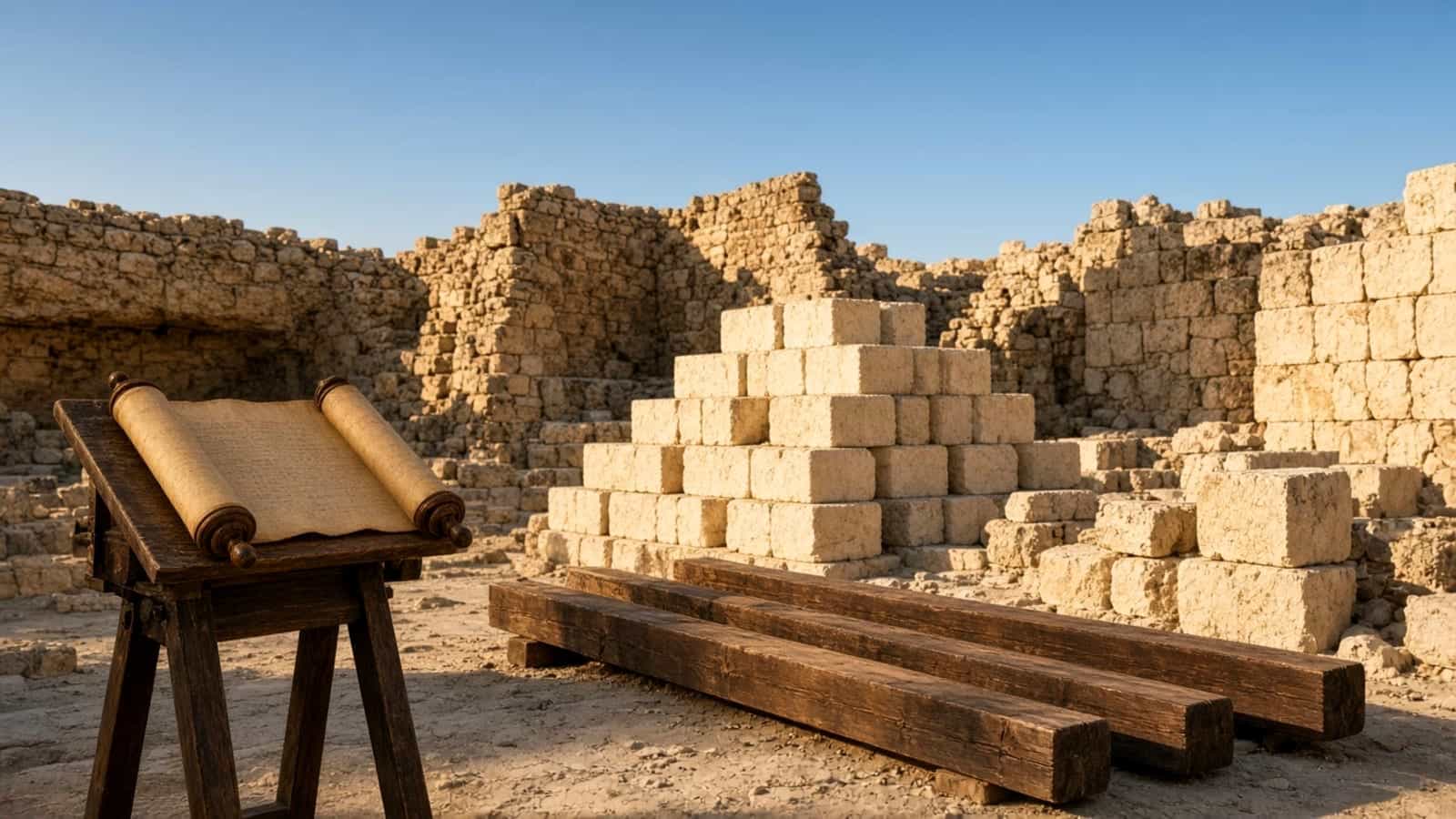
So Darius the king made a decree, and search was made in the house of the rolls, where the treasures were laid up in Babylon. And there was found at Achmetha, in the palace that is in the province of the Medes, a roll, and there was the record written: In the first year of Cyrus the king the same Cyrus the king made a decree concerning the house of God at Jerusalem, Let the house be builded, the place where they offered sacrifices, and let the foundations thereof be strongly laid; the height of it [would be ninety feet], and the breadth of it [ninety feet]; with three rows of great stones, and a row of new timber: so let the expenses be given out of the king's house: and let the golden and silver vessels which were in the house of God, which Nebuchadnezzar took forth out of the temple which is at Jerusalem, and brought unto Babylon, let them be restored again to the temple which is at Jerusalem, every one to his place. Now therefore, Tatnai, the governor beyond the river (6:1-6),
Now he searched.
Verses 6–8
He found this in the record, so he writes back to Tatnai and he said,
[You and] your companions: Let the work of this house of God alone; let the governor of the Jews and the elders of the Jews build this house of God in his place. Moreover I make a decree what ye shall do to the elders of these Jews for the building of this house of God: that of the king's goods, even of the taxes that you'll collect on that side of the river, and the expenses be given to these men, that they may not be hindered (6:6-8).
So these guys were trying to stop them, but instead they were ordered to give part of the taxes to them to help them.
Verses 9–11
And that which they may need, both young bullocks, and rams, and lambs, for their burnt offerings of the God of heaven, wheat, salt, wine, and oil, let it be given them everyday without fail: that they may offer sacrifices of sweet savours unto the God of heaven, and pray for the life of the king, and for his sons. I have made a decree, that whosoever shall alter this word, let timber be pulled down from his house, and being set up, let him be hanged thereon; and let his house be made a dunghill for this (6:9-11).
In other words, anybody tries to hinder them, tear down his house and take the timbers of his house, make a gallows and hang the guy on the gallows. Now you remember in the book of Esther how Haman sought to destroy the people of God and he was hanged on a gallows that he had built in his backyard. So hanging was a form of capital punishment during that period of time. But rather than thwarting now the building of God, Darius, no doubt because of Daniel's influence, ordered that they help them, that they give them expense monies, that they give them animal to sacrifice and pray for Darius the king as they are praying there before God.
let it be done with speed. And so the elders of the Jews built, and they prospered through the prophesying of Haggai and Zechariah. And they built, and finished it, according to the commandment of the God of Israel, and according to the commandment of Cyrus, and Darius. And this house was finished on the third day of the month of Adar, which was in the sixth year of the reign of Darius the king. And the children of Israel, the priests, and the Levites, and the rest of the children of the captivity, kept the dedication of this house of God with joy, they offered at the dedication of this house of God a hundred bullocks, two hundred rams, four hundred lambs; and for a sin offering for all Israel, twelve he goats, according to the number of the tribes of Israel. And they set the priests in their divisions, and the Levites in their courses, for the service of God, which is at Jerusalem. And the children of the captivity kept the passover upon the fourteenth day of the first month. For the priests and the Levites were purified together, all of them were pure, and killed the passover for all the children of the captivity, and for their brethren the priests, and for themselves. And the children of Israel, which were come again out of captivity, and all such as had separated themselves unto them from the filthiness of the heathen of the land, to seek the LORD God of Israel, did eat, and they kept the feast of unleavened bread for seven days with joy: for the LORD had made them joyful, and turned the heart of the king of Assyria unto them, to strengthen their hands in the work of the house of God, the God of Israel (6:12, 14-22).
Sunday Nights, 1985 to 1999 (C3000)
Verses 1–7
Then Darius the king made a decree, and search was made in the house of the rolls, [books] where the treasures were laid up in Babylon. And there was found at Achmetha, in the palace that is in the province of the Medes, a roll, and therein was a record thus written: In the first year of Cyrus the king the same Cyrus the king made a decree concerning the house of God at Jerusalem, Let the house be builded, the place where they offered sacrifices, and let the foundations thereof be strongly laid; the height thereof threescore cubits [ninety feet] and the breadth thereof threescore cubits [ninety feet]; With three rows of great stones, and a row of new timber: and let the expenses be given out of the king’s house: And also let the golden and silver vessels of the house of God, which Nebuchadnezzar took forth out of the temple which is at Jerusalem, and brought unto Babylon, be restored, and brought again unto the temple which is at Jerusalem, every one to his place, and place them in the house of God. Now therefore, Tatnai, governor beyond the river, Shetharboznai and your companions the Apharsachites, which are beyond the river, be ye far from thence: Let the work of this house of God alone; let the governor of the Jews and the elders of the Jews build this house of God in his place (6:1-7).
Now, I love it how the Lord so often turns the table. You remember of course with the story of Joseph and his brethren? Jealous of their younger brother, they decided to kill him. Then they opted to sell him as a slave to traders going to Egypt. They sold their brother. Hard hearted, they would not listen to his cries as he was carried off to Egypt, weeping and crying and asking them to have mercy. They were so callous and jealous of him that they did not respond to his cries. Later on, when God exalted Joseph in Egypt and his brothers had to come down and live under the rule of this brother who they have despised and so mistreated. When their father Jacob died, they came trembling before Joseph feeling that “hey, now that dad is dead, he’s gonna just wipe us all out, he’s going to get even with us now”.
In those days, you remember earlier with Jacob and Esau, Esau said, “As soon as dad dies, I’m going to kill you”. The reason why he wouldn’t kill him while his dad was still alive was he was afraid his dad would curse him for killing his brother; “I don’t want a curse of my father on me, so as soon as dad is dead, you’ve had it, you’re finished”. So often they would wait until the death of the father to take it out on their brothers so that their father wouldn’t curse them. They didn’t want the curse of the father lying on them.
Now when Jacob died, that thought, man we had it now. Joseph’s gonna get even with us, he’s gonna wipe us out. So they came trembling to Joseph and said, “seek mercy,” but they did not show mercy to Joseph earlier. But as they came to Joseph he said unto them, “I know that what you did, you intended for evil. You have evil intends but God meant it for good. God had a purpose that was greater than you realized. Though your hearts were evil and you had evil intends, God has meant this whole thing for good, that he might preserve the family”. Joseph said, “God and live with your families and don’t worry, I’m not after blood or to destroy you because God has intended good on me”.
So many times God has taken the evil intentions of man and turned them around for good. In a few weeks, we’re gonna get to one of my favorite stories in the Bible; the story of Esther. There is a classic example of how God took the evil intentions of Amos and turned the tables on the guy. Here God does the same thing, these guys are thinking they’re going to shut down this project.
The first letter that came back form Artaxerxes was to cease building the wall, but he made a mistake, he didn’t say anything about the temple. So these guys ceased the wall and just concentrated on building the temple. Now they come back and start giving them a hard time on the temple, “who ordered you to do this and what are your names?” So they sent their letter, expecting of course Darius to send a letter saying cease and desist, to stop them. Instead, the tables are turned and listen what happens. I love the way God says things like this.
Verses 7–8
Darius sent back the letter and said,
Let the work of this house of God alone; let the governor of the Jews and the elders of the Jews but this house of God in his place. Moreover I make a decree what ye shall do to the elders of these Jews for the building of this house of God: that of the king’s goods, even of the tribute [taxes] beyond the river, forthwith expenses be given unto these men, that they be not hindered (6:7-8).
So the taxes that you are collecting, make sure that they have enough money to continue the work, that the work not be hindered.
Verse 9
And that which they have need of, both young bullocks, and rams, and lambs, for the burnt offerings of the God of heaven, wheat, salt, wine, and oil, according to the appointment of the priests which are at Jerusalem, let it be given them day by day without fail: (6:9).
Not only are you not to touch or hinder these guys, help them with the money that they need and the things for sacrifice.
Verse 10
That they may offer sacrifices of sweet savors unto the God of heaven, and pray for the life of the king, and of his sons (6:10).
Have them pray for me and for my family.
Verse 11
Also I have made a decree, that whosoever shall alter this word, let timber be pulled down from his house, and being set up, let him be hanged thereon: (6:11).
In other words, anybody tries to stop them, take down the timbers of his house and make a gallows and hang the guy.
and let his house be made a dunghill for this (6:11).
Now it interesting that the Jews to the present day sort of practice the destruction of the houses of those who create disturbances in the West Bank. If they come in your house and find dynamite or contraband, they just blow up the house. This was the decree that was made clear back in the book of Ezra.
Verse 12
And the God that hath caused his name to dwell there destroy all kings and people, that shall put to their hand to alter and to destroy this house of God which is at Jerusalem. I Darius have made a decree; let it be done with speed (6:12).
O man, how God turned the tables on these guys.
Verse 13
Then Tatnai, governor on this side the river, Shetharboznai, and their companions, according to that which Darius the king had sent, so they did speedily (6:13).
They were subject to this guy so they had to follow the orders.
Verses 14–15
And the elders of the Jews builded, and they prospered through the prophesying of Haggai the prophet and Zechariah the son of Iddo. And they builded, and finished it, according to the commandment of the God of Israel, and according to the commandment of Cyrus, and Darius, and Artaxerxes king of Persia. And this house was finished on the third day of the month Adar, which was in the sixth year of the reign of Darius the king (6:14-15).
So it was finished in the month of March, just in time for the Passover. It is interesting how that many times when you have a building project, you set your target date to be completed on say the holidays; we want to be in by Easter or we want in to be in by Christmas. That helps spur you, you have a target date, we want to be finished by this date. So they, no doubt, had set it to be next year by the time Passover comes along, let’s be through with it so we can actually have a big Passover; we can celebrate at the Passover Feast. So they finished it in the month of Adar, which on our calendar is the month of March.
Verse 15
in the sixth year of the reign of Darius the king (6:15).
They sent the letter in the second year. They’ve been building for six years at that time and so it means that they were about twenty years in the rebuilding of the temple.
Verse 16
And the children of Israel, the priests, and the Levites, and the rest of the children of the captivity, kept the dedication of this house of God with joy (6:16).
Dedication day, they’re going to begin again.
Verse 17
And offered at the dedication of this house of God an hundred bullocks, two hundred rams, four hundred lambs; and for a sin offering for all Israel, (6:17).
Indicating again that there were members of all twelve tribes that had come back.
Verses 17–18
twelve he goats, according to the number of the tribes of Israel. And they set the priests in their divisions, and the Levites in their courses, for the service of God, which is at Jerusalem; as it is written in the book of Moses (6:17-18).
The whole process of worship again was established in Jerusalem. Temple worship is restored.
Verse 19
And the children of captivity kept the Passover upon the fourteenth day of the first month. For the priests and the Levites were purified together, all of them were pure, (6:19).
That is from a ceremonial sense that they could offer the sacrifices.
Verses 19–22
and killed the Passover for all the children of the captivity, and for their brethren the priests, and for themselves. And the children of Israel, which were come again out of captivity, and all such as had separated themselves unto them from the filthiness of the heathen of the land, to seek the LORD God of Israel did eat, And kept the feast of unleavened bread seven days with joy: for the LORD had made them joyful, and turned the heart of the king of Assyria unto them, to strengthen their hands in the work of the house of God, the God of Israel (6:19-22).
The glorious conclusion to the building project with the dedication and the observing again of the Passover, re-establishing of the worship and the priesthood and the choruses and the whole thing that was set up by David originally. Set up by David on paper, Solomon carried it out.
We come now to chapter seven and we will come into that in our next study. Chapter seven and eight and then we will finish Ezra with chapters nine and ten. So your next assignment is chapters seven and eight. Now in as much as I won’t be here next Sunday, it gives you two weeks, which means you have to read Haggai and Zechariah in order to get the full background. So you have plenty of time to do it. So I want you to jump to Haggai and Zechariah and read these prophecies in these two weeks that we have in order that you can get a full background to this study in Ezra and Nehemiah, which we will be moving into next because they are both tied together with the two prophets.
May the Lord be with you, watch over you and keep you in his love, strengthen you by his spirit as we seek to do the Lord’s work. May the Lord turn against the enemy every ploy that he might institute against your walk. May he turn it around. And though the enemy may intend it for evil, may the Lord turn it for good, that you might see the good hand of God upon your life, enabling you to be the man or to be the woman that God wants you to be; filled with his spirit, walking in the spirit, and instrument God uses to bring his love and his grace to others. In Jesus name, Amen.