Ezra 5
Chuck Smith on Ezra 5
Verse by verse, taught on Sunday nights: the C2000 series, 1979 to 1985, and the C3000 series, 1985 to 1999. Permission granted by The Word For Today.
Sunday Nights, 1979 to 1985 (C2000)
Verses 1–2
So it tells us here in chapter five,
The prophet Haggai, and the prophet Zechariah, they prophesied unto the Jews that were in Judah and Jerusalem in the name of the God of Israel. Then rose up Zerubbabel the son of Shealtiel, and Jeshua, and they began to build the house of God which is at Jerusalem: and with them were the prophets of God helping them (5:1-2).
Now in the first effort, it was, there were the priests that were doing the work. And now Haggai and Zechariah, the prophets have pitched in and they are helping them to rebuild the house of God.
Verses 3–4
And at the same time there came to them Tatnai, who was the governor on that side of the river, and Shetharboznai, and their companions, and they said unto them, Who commanded you to build this house, and to make this wall? And they said or they said to them, What are the names of you men that are making this building? (5:3-4)
So the guys came up like building inspectors, a lot of thread, "Who commanded you to build it? What are your names, fellows?" And started giving them a bad time.
Verses 5–7
But the eye of their God was upon the elders of the Jews, that they could not cause them to cease, till the matter came to Darius: and so they returned answer by letter concerning this matter. The copy of the letter that Tatnai, the governor sent to Darius the king: they sent a letter unto him, wherein was written; Unto Darius the king, all peace (5:5-7).
Now remember, this is the Darius who loved Daniel. Daniel sat with him many times. Had long conversations about God and the power of God. And Daniel, a man of such wisdom and such fellowship with God, no doubt Darius was. Well, he was, scripture tells us, extremely impressed by Daniel. Loved him. So Darius gets this letter; God moved Ahasuerus out of the way and put Darius on the throne now.
Verses 8–15
And it said,
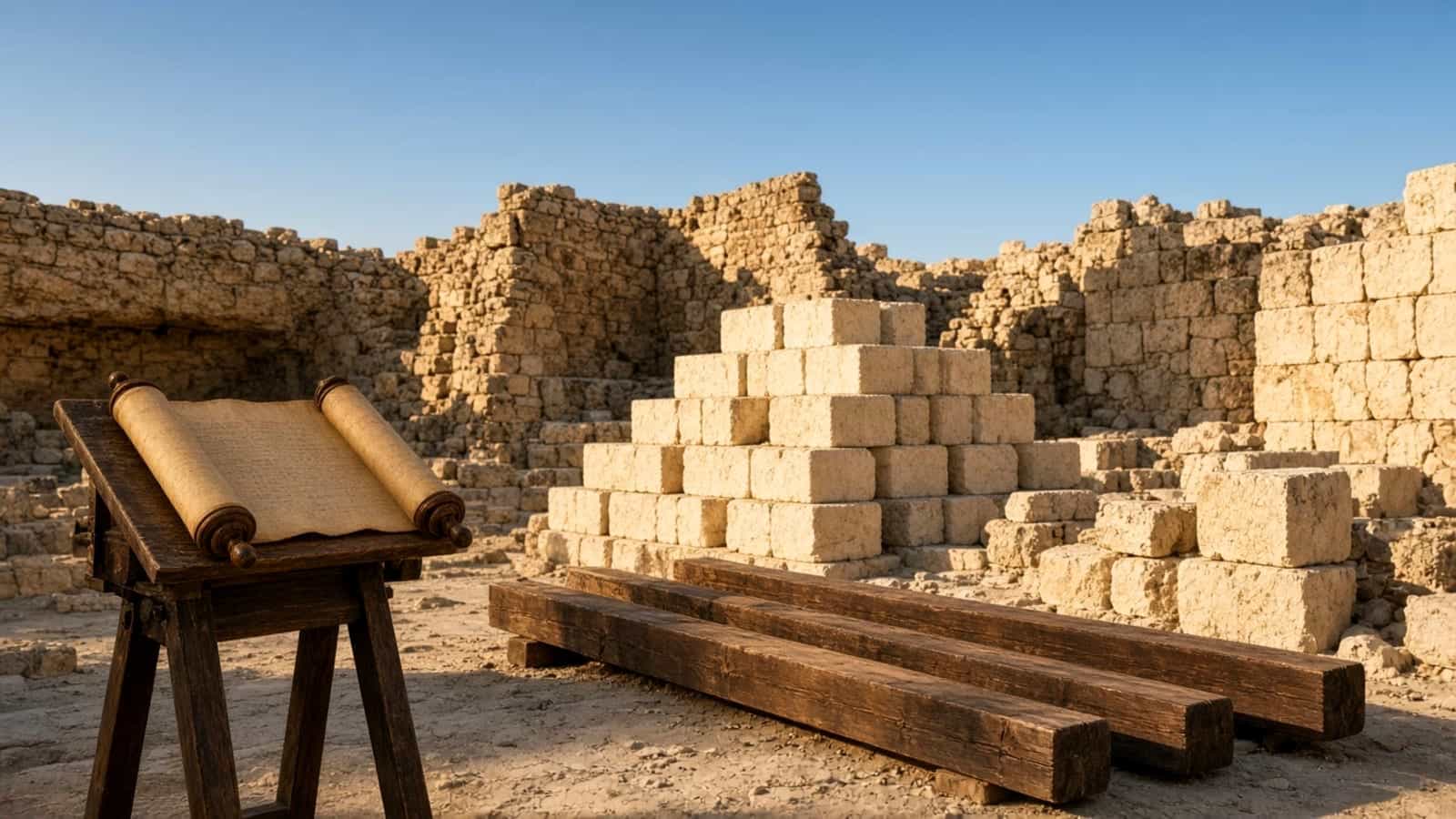
Be it known unto the king, we went into the province of Judea, to the house of the great God, which is builded with great stones, and timber is laid in the walls, and this work is going on fast, and it is prospering in their hands. Then asked we those elders, and said unto them, Who commanded you to build this house, and to make up these walls? We asked their names also, in order that we could certify to you, that we might write the names of the men that were chief among them. And thus they returned us an answer, saying, We are the servants of the God of heaven and earth, and we build the house that was builded these many years ago, which the great king of Israel builded and set up. But after that our fathers had provoked the God of heaven unto wrath, he gave them into the hand of Nebuchadnezzar the king of Babylon, the Chaldean, who destroyed this house, and carried the people away into Babylon. But in the first year of Cyrus the king of Babylon the same king Cyrus made a decree to build this house of God. And the vessels also of gold and silver of the house of God, which Nebuchadnezzar took out of the temple that was in Jerusalem, and brought them into the temple of Babylon, those did Cyrus the king take out of the temple of Babylon, and they were delivered unto one, whose name was Sheshbazzar, whom he had made governor; and said unto him, Take these vessels, go, carry them into the temple that is in Jerusalem, and let the house of God be builded in his place (5:8-15).
It says, "Now if it seems good to the king, search and see if Cyrus did made such an order. And let us know quickly so that we can put a stop to what's going on or let us know the king's pleasure in this matter."
Sunday Nights, 1985 to 1999 (C3000)
Verse 10
Then the prophets, Haggai the prophet, and Zechariah the son of Iddo, prophesied unto the Jews that were in Judah and Jerusalem in the name of the God of Israel, even unto them (5:10).
As I said last week, it would be to your benefit in conjunction with the reading of the book of Ezra, you’ll be helped immensely if you’ll read the book of Haggai, which is only two chapters, and also the book of Zechariah. They were prophets at the same period of history and their prophecies relate to these things. They are mentioned here that “Haggai and Zechariah prophesied to the Jews in Judah and Jerusalem in the name of God,”
In the first chapter of Haggai it says, “Is it time for you O Israel to dwell in your sealed houses and the house of the Lord lays desolate”. Take a look ant what’s going on; you’re planting a lot of seed but your reaping small crops. There’s a drought that’s going on. God is seeking to get your attention. You are trying to gather money but you put it into your purse but the purse has wholes in it. Your money isn’t going anywhere and you’re having a lot of problems. Haggai said, the reason is you have turned from the work of building the house of the Lord and you’re thinking of yourself first rather than God first. Putting yourself first above God and your personal needs above the Lord, God’s just let you experience a real spiritual drought in your own lives. So you gather in a lot but you really have nothing, you’re short. Haggai was encouraging the people to get back and finish building of the house of God.
We find that the same thing is true in the prophecies of Zechariah as he was encouraging Zerubbabel and Jeshua, the leaders of the building. He gives the vision that he has of this period of time. So if you’ll read those books, they’ll dovetail right here in the fifth chapter as it tells us that Haggai and Zechariah were prophesying at this particular time.
Verse 2
Then rose up Zerubbabel the son of Shealtiel, and Jeshua the son of Jozadak, and began to build the house of God which is at Jerusalem: and with them were the prophets of God helping them (5:2).
So this group of fellas, they weren’t just prophesying, they got in and started doing the work; I like that.
I don’t have much confidence in a person who just tells me what I ought to be doing if he isn’t willing to get in and do it himself. Tell me that I ought to be sacrificing but they’re not willing to sacrifice themselves. Sort of troubles me when Oral Roberts asked me to go to the bank and borrow money so I could send it to him when he has an eight thousand dollar winter home in Palm Springs. I wrote him and said, “You sell your home and I’ll go to the bank and borrow money”. There’s always those guys who tell you what you ought to be doing but, unless they’re willing to get in and get their hands dirty and do some of the work themselves, it doesn’t really go very far in my book.
Zerubbabel and Jeshua were working together and the other prophets of God were helping them.
Verse 3
At the same time came to them Tatnai, governor on this side the river, and Shetharboznai, and their companions, and said thus unto them, Who hath commanded you to build this house, and to make up this wall? (5:3).
That would be the wall of the temple.
Verse 4
Then said we unto them after this manner, What are the names of the men that make this building? (5:4).
They were trying now by intimidation; “all right fellows, what’s your names? Who gave you the authority? Who commanded you to do this? Give us the names”. They were seeking by intimidation to discourage them and to cause them to quit.
Verses 5–6
But the eye of their God was upon the elders of the Jews, that they could not cause them to cease, till the matter came to Darius: and then they returned answer by letter concerning this matter. The copy of the letter that Tatnai, governor on this side the river, and Shetharboznai, and his companions the Apharsachites, which were on this side the river, sent unto Darius the king: (5:5-6).
This is basically what they wrote.
Verses 7–8
They sent a letter unto him, wherein was written thus; Unto Darius the king, all peace. Be it known unto the king, that we went into the province of Judeah, to the house of the great God, which is builded with great stones, (5:7-8).
An interesting thing this word “great stones” in the Chaldean language is “rolling stones”. It is long been a mystery how in the world they were able to move such great stones that they used in building the wall and in building the temple. In the wall, the Western wall of the temple mount, there are stones that are eight feet thick, five feet high and up to forty-five feet long and estimated to weigh over a hundred tons. The mystery is how in the world they ever lifted such stones in the place on the wall or how they ever moved them. Can you imagine how many men it would take? It’s been a mystery for a long time. Here was suggested perhaps how they did it. It is interesting as they have been excavating in what is known as the rabbi’s tunnel, which by the time we go to Israel next year will be open to the public. We will be able to go into the Western Wall and in the rabbi’s tunnel, we’ll be able to go all the way up to the Antonio Fortress and see these excavations that have been going on for years. When you do, I’ve been up there, you will see this one stone of forty-five feet long, five feet high and eight feet thick.
Also, in this excavation of this tunnel, they found a stone that was half rounded and the other sides were squared off and they’ve come to the conclusion that the ingenuous way by which they got these stones from the quarry to the building sight was that when they first quarried these stones, they quarried them round and they rolled them. Now of course you can understand the ease of rolling a stone, trying to lift the stone like that or use pry bars and to scoot it, it would almost be an impossibility. By first of all quarrying it as a round stone, it can be rolled into the sight and then they feel that, at the sight, they flattened off the one side and then they rolled the stone into position so that the flat side came down; flat side met flat side and then when in position, they then chipped it off and quarried it while it was in position. So here, as it says, “great stone” (5:8), the word great there is rolling.
Verses 8–11
and timber is laid in the walls, and this work goeth fast on, and prospereth in their hands. Then asked we those elders, and said unto them thus, Who commanded you to build this house, and to make up these walls? We asked their names also, to certify thee, that we might write the names of the men that were the chief of them. And thus they returned us answer, saying, We are the servants of the God of heaven and earth, and build the house that was builded these many years ago, which a great king of Israel builded and set up (5:8-11).
Verse 11
So they didn’t tell us their names, they just said that they were “servants of God of heaven and earth, and just rebuilding this temple that had once existed, built by a great king of Israel” (5:11).
Verses 12–13
But after that our fathers had provoked the God of heaven unto wrath, he gave them into the hand of Nebuchadnezzar the king of Babylon, the Chaldean, who destroyed this house, and carried the people away into Babylon. But in the first year of Cyrus the king of Babylon the same king Cyrus made a decree to build this house of God (5:12-13).
So they’re claiming that some guy by the name of Cyrus, this is back in the year 536 and now we are some sixteen years later, 520. So they had come pretty far along in the building of the house and they said Cyrus the king of Babylon.
Cyrus was called the king of Babylon, as was Darius, after the great city of Babylon was conquered by Persia; he was also called the king of Babylon because he conquered Babylon. So don’t let that throw you, Cyrus the king of Babylon, he was the king of Persia but having conquered Babylon he also took the title king of Babylon. Other of the kings did that. You’ll find that the Persian kings were often called the king of Babylon.
Verses 14–15
And the vessels also of gold and silver of the house of God, which Nebuchadnezzar took out of the temple that was in Jerusalem, and brought them into the temple of Babylon, those did Cyrus the king take out of the temple of Babylon, and they were delivered unto one, whose name was Sheshbazzar, whom he had made governor; And said unto him, Take these vessels, go, carry them into the temple that is in Jerusalem, and let the house of God be builded in his place (5:14-15).
His other name is Zerubbabel and that’s the name by which we know him. It is easier than Sheshbazzar, so I suggest you use Zerubbabel. Many of them had two names. You notice we said that Artaxerxes was actually the Smerdes of secular history. You remember when Daniel was taken captive unto Babylon, that they gave him a Babylonian name, Belteshazzar. His friends, Azariah and Hananiah, were given Babylonian names, Shadrach and Meshach. Often you’ll find two different names; Babylonian name and the name in Hebrew or the name in Chaldean and the name in the Persian language.
Verse 16
Then came the same Sheshbazzar, and laid the foundation of the house of God which is in Jerusalem: and since that time even until now hath it been in building, and yet it is not finished (5:16).
These guys have been going for sixteen years, they’re not through yet.
Verse 17
Now therefore, if it seem good to the king, let there be search made in the king’s treasure house, [library] which is there at Babylon, whether it be so, that a decree was made of Cyrus the king to build this house of God at Jerusalem, and let the king send his pleasure to us concerning this matter (5:17).
Now these men, again, are suggesting search the records. Let’s find out if these guys are telling us the truth or not, we want to know.