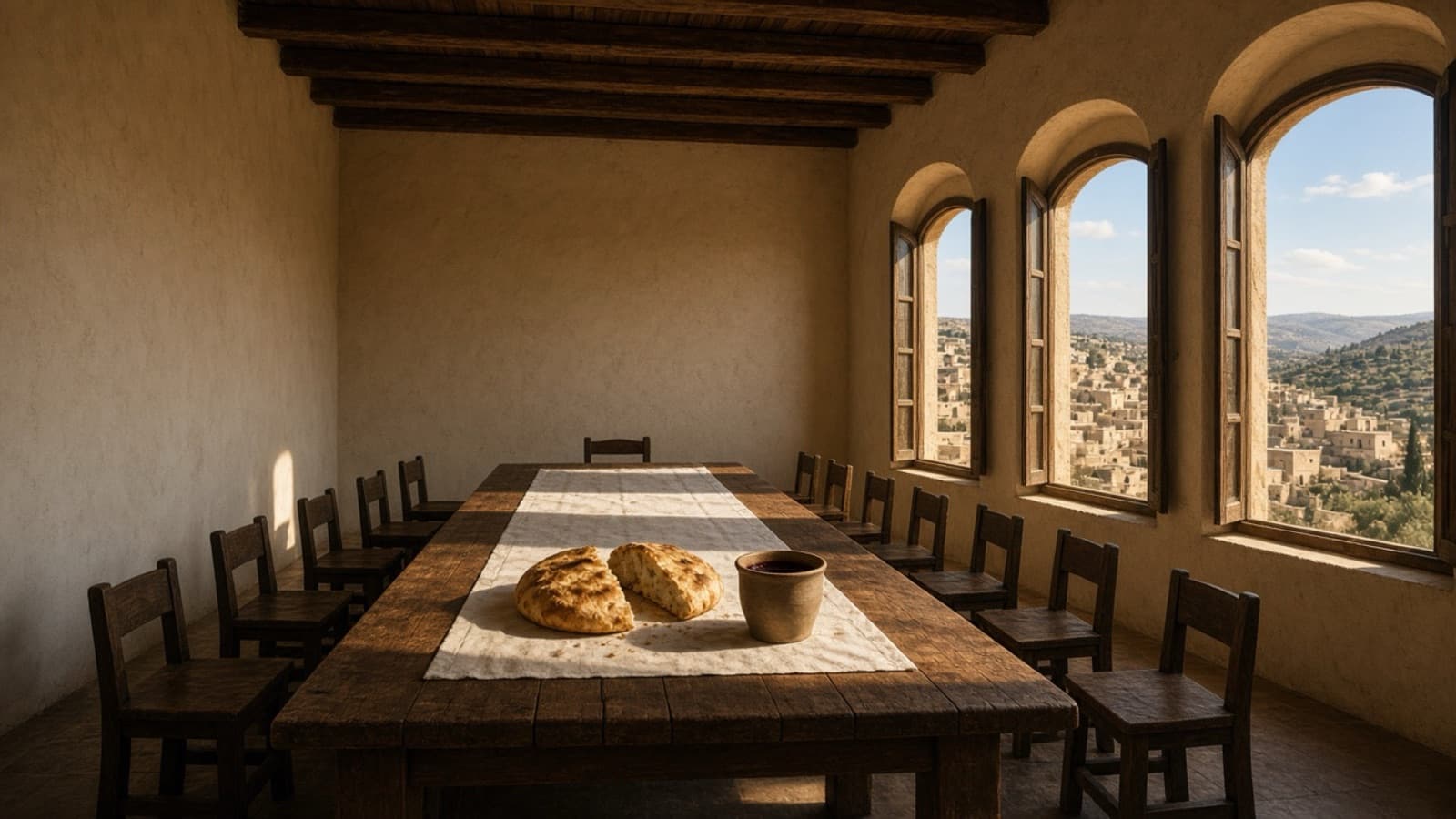
For roughly fourteen hundred years Israel kept that meal to remember a deliverance. Jesus sat down inside that same meal and moved the remembrance onto Himself.
The meal was always about remembering
Passover was a memorial from the first night it was kept.
“And this day shall be unto you for a memorial; and ye shall keep it a feast to the LORD throughout your generations;”
“Remember this day, in which ye came out from Egypt, out of the house of bondage; for by strength of hand the LORD brought you out from this place:”
The lamb, the blood on the doorposts, the unleavened bread, the haste of the night, all of it was designed so a people would not forget what God had done. Generation after generation sat at that table and said, in effect: he passed over us because of the blood.
Jesus sat in that meal
Luke is explicit:
“With desire I have desired to eat this passover with you before I suffer:”
It was Passover. Then, in that same setting, He took bread and said,
“This is my body which is given for you: this do in remembrance of me.”
The word is the same kind of word Passover had always carried. The object changed. Not “remember Egypt” any longer as the last word. Remember me.
Matthew and Mark give the same table. The cup is
“my blood of the new testament, which is shed for many for the remission of sins.”
The elements were already on the table. He did not invent bread and a cup. He named what they had always pointed toward.
Unleavened bread, no leaven and no corruption, and He said it was His body. The cup of the meal, and He said it was His blood of the new covenant. The lamb whose blood caused death to pass over the house (Exodus 12:13) now finds its meaning in Him. John had already pointed:
“Behold the Lamb of God, which taketh away the sin of the world.”
Peter later wrote of
“a lamb without blemish and without spot:”
Paul names the fulfillment
Paul does not leave the connection implicit.
“For even Christ our passover is sacrificed for us:”
That is the identification. The shadow had a substance. The meal that remembered deliverance by the blood of a lamb now remembers the Lamb who was slain. When the church takes the bread and the cup, it is not inventing a second memorial beside Passover. It is keeping the memorial now that the thing remembered has come.
Paul's words at the table itself keep the same line:
“this do in remembrance of me... For as often as ye eat this bread, and drink this cup, ye do shew the Lord's death till he come.”
Remembrance. Proclamation. Until he comes.
What the table is, then
Communion is Passover fulfilled. Israel remembered a night when judgment passed over because of blood on wood. The church remembers a day when judgment fell on the Son, and those who take shelter in His blood are passed over forever.
The later Jewish Seder, with its later developed forms, was shaped long after the apostles. It is not needed to see what the text already shows. Exodus called the night a memorial. Jesus sat in that memorial and moved the remembrance onto Himself. Paul said Christ is our Passover. The meal that pointed forward now looks back, and still looks forward, until he comes.
The table is not first an argument. It is a remembrance. He wanted it kept that way.
Scripture quoted from the King James Version, with the King James's own punctuation inside the quotation marks.
This devotional is original to The Whosoever Study Bible. All rights reserved. Platform use under Revelation 22:17, free to all who come.