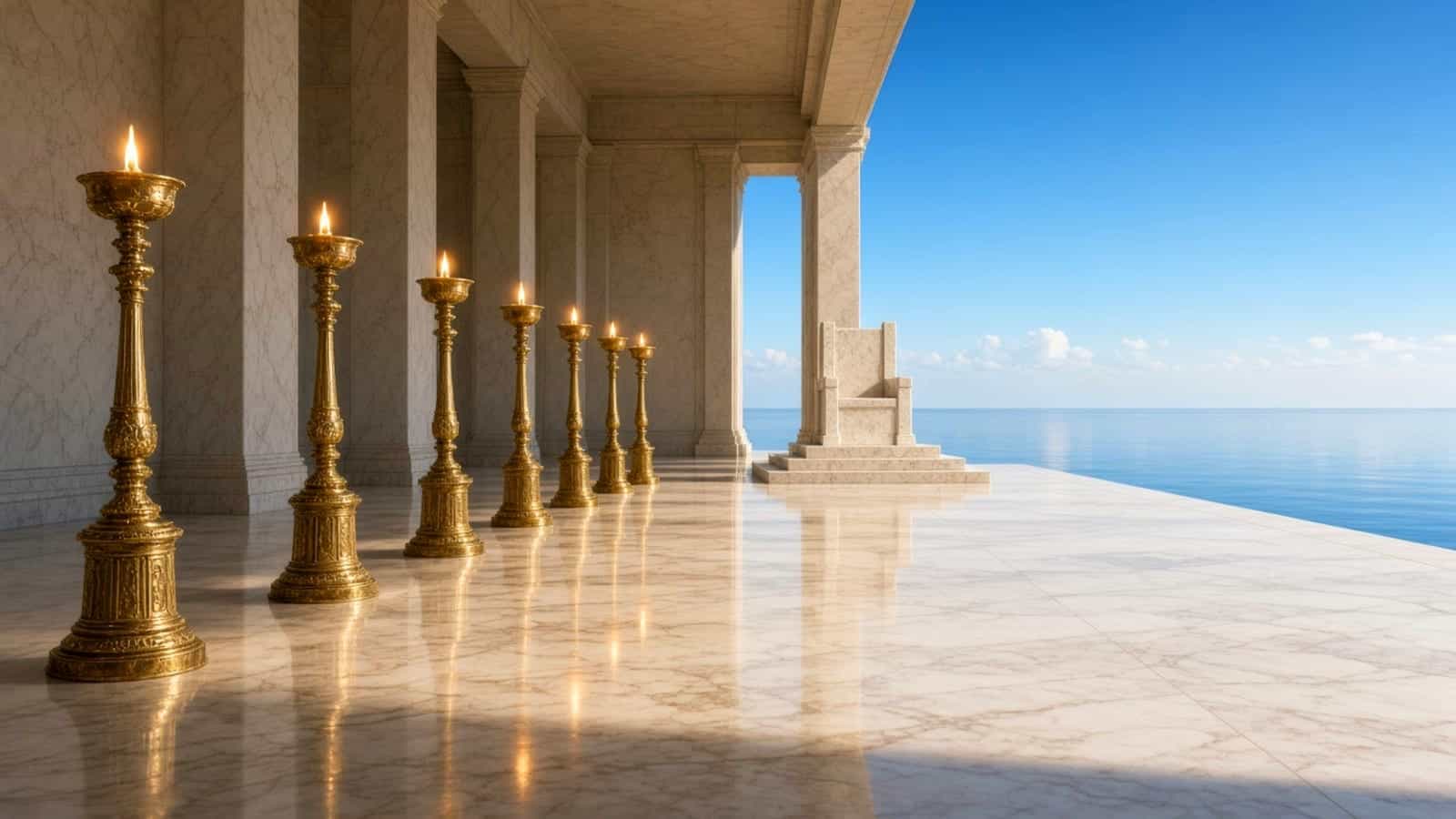
A new heaven and a new earth. The first have passed away. There is no more sea, the sea that in OT imagery represented the chaos and restlessness of the nations (Isaiah 57:20; Revelation 17:15) is absent from the new creation. What replaces it is not emptiness but the new Jerusalem coming down from God out of heaven: prepared as a bride adorned for her husband.
The holy city descends. It does not ascend. The new creation is not the saints going up to a spiritual heaven. It is the heavenly city coming down to the renewed earth. The direction matters: the dwelling of God is brought to humanity's realm, not humanity evacuated to God's realm. The garden-to-city arc that T.D. Alexander traced across the canon arrives: what began as a garden becomes a city, and the city comes down.
Behold the tabernacle of God is with men: hē skēnē tou theou meta tōn anthrōpōn. Thread 6 reaches its permanent destination in this phrase. The whole Tabernacle thread: Exodus 25:8 (let them make me a sanctuary that I may shakan among them), Numbers 9 (the cloud resting on the Mishkan), the glory filling the Temple (1 Kings 8:10-11), the glory departing in Ezekiel 10-11, the glory returning in Ezekiel 43, the Word becoming flesh and eskēnōsen in John 1:14, the Spirit indwelling believers (1 Corinthians 3:16), Christ in you (Colossians 1:27), all of it terminates here. God will tabernacle, skēnōsei, the same verb as John 1:14, permanently with men. Not temporarily. Not partially. Permanently.
He will wipe away every tear. Not most tears. Every. From their eyes. The action is personal, God's own hand wiping each tear. Death no more. Mourning no more. Crying no more. Pain no more. The former things have passed away.
Behold, I make all things new. Kaina poiō panta: not all new things but all things new. The same creation that groaned (Romans 8:22) is renewed, not discarded. The resurrection body is not a different body but the same body transformed. The new earth is not a different planet but the same earth renewed by the one who sits on the throne.
Then the throne-voice extends the invitation one final time before chapter 22's own invitation: I will give to the one who is thirsty from the spring of the water of life without cost. Thread 7 in the new creation: even at the establishment of the eternal state, the invitation language is the hoy kol-tsame of Isaiah 55, freely, to the thirsty, without cost. Thread 1 is in the wiping of tears: the God who cannot stop reaching will personally dry the eyes of every person who is there.
The tabernacle of God is with men, hē skēnē tou theou meta tōn anthrōpōn, the Tabernacle thread that ran from Exodus 25 through John 1:14 arrives at its permanent destination; and the throne-voice says I make all things new.
ἰδοὺ ἡ σκηνὴ τοῦ θεοῦ μετὰ τῶν ἀνθρώπων καὶ σκηνώσει μετ᾽ αὐτῶν (idou hē skēnē tou theou meta tōn anthrōpōn kai skēnōsei met' autōn): behold the tabernacle of God is with men and he will dwell with them: hē skēnē (the tabernacle, the same root as eskēnōsen in John 1:14; this is the word that carries the entire Tabernacle thread; the Mishkan word in Greek); meta tōn anthrōpōn (with men, not above, not near, not among as a visitor; the preposition meta denotes genuine accompaniment and fellowship); skēnōsei (he will tabernacle, future active; the same verb as John 1:14; the dwelling is the permanent arrival of what John 1:14 was the inauguration of) · ἰδοὺ καινὰ ποιῶ πάντα (idou kaina poiō panta): behold I make all things new: kaina (new in quality, kainos, not neos; not brand-new replacement but renewed, transformed, made fresh; the same creation renewed, not discarded and replaced); panta (all things, ta panta, the comprehensive scope; not some things, not spiritual things only, but all things including the physical creation that groaned in Romans 8:22)
threads t1 · t5 · t6 · t7 · see Exodus 25:8 · John 1:14 · Romans 8:22
A new heaven and a new earth. The first have passed away. There is no more sea, the sea that in OT imagery represented the chaos and restlessness of the nations (Isaiah 57:20; Revelation 17:15) is absent from the new creation. What replaces it is not emptiness but the new Jerusalem coming down from God out of heaven: prepared as a bride adorned for her husband.
The holy city descends. It does not ascend. The new creation is not the saints going up to a spiritual heaven. It is the heavenly city coming down to the renewed earth. The direction matters: the dwelling of God is brought to humanity's realm, not humanity evacuated to God's realm. The garden-to-city arc that T.D. Alexander traced across the canon arrives: what began as a garden becomes a city, and the city comes down.
Behold the tabernacle of God is with men: hē skēnē tou theou meta tōn anthrōpōn. Thread 6 reaches its permanent destination in this phrase. The whole Tabernacle thread: Exodus 25:8 (let them make me a sanctuary that I may shakan among them), Numbers 9 (the cloud resting on the Mishkan), the glory filling the Temple (1 Kings 8:10-11), the glory departing in Ezekiel 10-11, the glory returning in Ezekiel 43, the Word becoming flesh and eskēnōsen in John 1:14, the Spirit indwelling believers (1 Corinthians 3:16), Christ in you (Colossians 1:27), all of it terminates here. God will tabernacle, skēnōsei, the same verb as John 1:14, permanently with men. Not temporarily. Not partially. Permanently.
He will wipe away every tear. Not most tears. Every. From their eyes. The action is personal, God's own hand wiping each tear. Death no more. Mourning no more. Crying no more. Pain no more. The former things have passed away.
Behold, I make all things new. Kaina poiō panta: not all new things but all things new. The same creation that groaned (Romans 8:22) is renewed, not discarded. The resurrection body is not a different body but the same body transformed. The new earth is not a different planet but the same earth renewed by the one who sits on the throne.
Then the throne-voice extends the invitation one final time before chapter 22's own invitation: I will give to the one who is thirsty from the spring of the water of life without cost. Thread 7 in the new creation: even at the establishment of the eternal state, the invitation language is the hoy kol-tsame of Isaiah 55, freely, to the thirsty, without cost. Thread 1 is in the wiping of tears: the God who cannot stop reaching will personally dry the eyes of every person who is there.
The tabernacle of God is with men, hē skēnē tou theou meta tōn anthrōpōn, the Tabernacle thread that ran from Exodus 25 through John 1:14 arrives at its permanent destination; and the throne-voice says I make all things new.
ἰδοὺ ἡ σκηνὴ τοῦ θεοῦ μετὰ τῶν ἀνθρώπων καὶ σκηνώσει μετ᾽ αὐτῶν (idou hē skēnē tou theou meta tōn anthrōpōn kai skēnōsei met' autōn): behold the tabernacle of God is with men and he will dwell with them: hē skēnē (the tabernacle, the same root as eskēnōsen in John 1:14; this is the word that carries the entire Tabernacle thread; the Mishkan word in Greek); meta tōn anthrōpōn (with men, not above, not near, not among as a visitor; the preposition meta denotes genuine accompaniment and fellowship); skēnōsei (he will tabernacle, future active; the same verb as John 1:14; the dwelling is the permanent arrival of what John 1:14 was the inauguration of) · ἰδοὺ καινὰ ποιῶ πάντα (idou kaina poiō panta): behold I make all things new: kaina (new in quality, kainos, not neos; not brand-new replacement but renewed, transformed, made fresh; the same creation renewed, not discarded and replaced); panta (all things, ta panta, the comprehensive scope; not some things, not spiritual things only, but all things including the physical creation that groaned in Romans 8:22)
threads t1 · t5 · t6 · t7 · see Exodus 25:8 · John 1:14 · Romans 8:22
A new heaven and a new earth. The first have passed away. There is no more sea, the sea that in OT imagery represented the chaos and restlessness of the nations (Isaiah 57:20; Revelation 17:15) is absent from the new creation. What replaces it is not emptiness but the new Jerusalem coming down from God out of heaven: prepared as a bride adorned for her husband.
The holy city descends. It does not ascend. The new creation is not the saints going up to a spiritual heaven. It is the heavenly city coming down to the renewed earth. The direction matters: the dwelling of God is brought to humanity's realm, not humanity evacuated to God's realm. The garden-to-city arc that T.D. Alexander traced across the canon arrives: what began as a garden becomes a city, and the city comes down.
Behold the tabernacle of God is with men: hē skēnē tou theou meta tōn anthrōpōn. Thread 6 reaches its permanent destination in this phrase. The whole Tabernacle thread: Exodus 25:8 (let them make me a sanctuary that I may shakan among them), Numbers 9 (the cloud resting on the Mishkan), the glory filling the Temple (1 Kings 8:10-11), the glory departing in Ezekiel 10-11, the glory returning in Ezekiel 43, the Word becoming flesh and eskēnōsen in John 1:14, the Spirit indwelling believers (1 Corinthians 3:16), Christ in you (Colossians 1:27), all of it terminates here. God will tabernacle, skēnōsei, the same verb as John 1:14, permanently with men. Not temporarily. Not partially. Permanently.
He will wipe away every tear. Not most tears. Every. From their eyes. The action is personal, God's own hand wiping each tear. Death no more. Mourning no more. Crying no more. Pain no more. The former things have passed away.
Behold, I make all things new. Kaina poiō panta: not all new things but all things new. The same creation that groaned (Romans 8:22) is renewed, not discarded. The resurrection body is not a different body but the same body transformed. The new earth is not a different planet but the same earth renewed by the one who sits on the throne.
Then the throne-voice extends the invitation one final time before chapter 22's own invitation: I will give to the one who is thirsty from the spring of the water of life without cost. Thread 7 in the new creation: even at the establishment of the eternal state, the invitation language is the hoy kol-tsame of Isaiah 55, freely, to the thirsty, without cost. Thread 1 is in the wiping of tears: the God who cannot stop reaching will personally dry the eyes of every person who is there.
The tabernacle of God is with men, hē skēnē tou theou meta tōn anthrōpōn, the Tabernacle thread that ran from Exodus 25 through John 1:14 arrives at its permanent destination; and the throne-voice says I make all things new.
ἰδοὺ ἡ σκηνὴ τοῦ θεοῦ μετὰ τῶν ἀνθρώπων καὶ σκηνώσει μετ᾽ αὐτῶν (idou hē skēnē tou theou meta tōn anthrōpōn kai skēnōsei met' autōn): behold the tabernacle of God is with men and he will dwell with them: hē skēnē (the tabernacle, the same root as eskēnōsen in John 1:14; this is the word that carries the entire Tabernacle thread; the Mishkan word in Greek); meta tōn anthrōpōn (with men, not above, not near, not among as a visitor; the preposition meta denotes genuine accompaniment and fellowship); skēnōsei (he will tabernacle, future active; the same verb as John 1:14; the dwelling is the permanent arrival of what John 1:14 was the inauguration of) · ἰδοὺ καινὰ ποιῶ πάντα (idou kaina poiō panta): behold I make all things new: kaina (new in quality, kainos, not neos; not brand-new replacement but renewed, transformed, made fresh; the same creation renewed, not discarded and replaced); panta (all things, ta panta, the comprehensive scope; not some things, not spiritual things only, but all things including the physical creation that groaned in Romans 8:22)
threads t1 · t5 · t6 · t7 · see Exodus 25:8 · John 1:14 · Romans 8:22
A new heaven and a new earth. The first have passed away. There is no more sea, the sea that in OT imagery represented the chaos and restlessness of the nations (Isaiah 57:20; Revelation 17:15) is absent from the new creation. What replaces it is not emptiness but the new Jerusalem coming down from God out of heaven: prepared as a bride adorned for her husband.
The holy city descends. It does not ascend. The new creation is not the saints going up to a spiritual heaven. It is the heavenly city coming down to the renewed earth. The direction matters: the dwelling of God is brought to humanity's realm, not humanity evacuated to God's realm. The garden-to-city arc that T.D. Alexander traced across the canon arrives: what began as a garden becomes a city, and the city comes down.
Behold the tabernacle of God is with men: hē skēnē tou theou meta tōn anthrōpōn. Thread 6 reaches its permanent destination in this phrase. The whole Tabernacle thread: Exodus 25:8 (let them make me a sanctuary that I may shakan among them), Numbers 9 (the cloud resting on the Mishkan), the glory filling the Temple (1 Kings 8:10-11), the glory departing in Ezekiel 10-11, the glory returning in Ezekiel 43, the Word becoming flesh and eskēnōsen in John 1:14, the Spirit indwelling believers (1 Corinthians 3:16), Christ in you (Colossians 1:27), all of it terminates here. God will tabernacle, skēnōsei, the same verb as John 1:14, permanently with men. Not temporarily. Not partially. Permanently.
He will wipe away every tear. Not most tears. Every. From their eyes. The action is personal, God's own hand wiping each tear. Death no more. Mourning no more. Crying no more. Pain no more. The former things have passed away.
Behold, I make all things new. Kaina poiō panta: not all new things but all things new. The same creation that groaned (Romans 8:22) is renewed, not discarded. The resurrection body is not a different body but the same body transformed. The new earth is not a different planet but the same earth renewed by the one who sits on the throne.
Then the throne-voice extends the invitation one final time before chapter 22's own invitation: I will give to the one who is thirsty from the spring of the water of life without cost. Thread 7 in the new creation: even at the establishment of the eternal state, the invitation language is the hoy kol-tsame of Isaiah 55, freely, to the thirsty, without cost. Thread 1 is in the wiping of tears: the God who cannot stop reaching will personally dry the eyes of every person who is there.
The tabernacle of God is with men, hē skēnē tou theou meta tōn anthrōpōn, the Tabernacle thread that ran from Exodus 25 through John 1:14 arrives at its permanent destination; and the throne-voice says I make all things new.
ἰδοὺ ἡ σκηνὴ τοῦ θεοῦ μετὰ τῶν ἀνθρώπων καὶ σκηνώσει μετ᾽ αὐτῶν (idou hē skēnē tou theou meta tōn anthrōpōn kai skēnōsei met' autōn): behold the tabernacle of God is with men and he will dwell with them: hē skēnē (the tabernacle, the same root as eskēnōsen in John 1:14; this is the word that carries the entire Tabernacle thread; the Mishkan word in Greek); meta tōn anthrōpōn (with men, not above, not near, not among as a visitor; the preposition meta denotes genuine accompaniment and fellowship); skēnōsei (he will tabernacle, future active; the same verb as John 1:14; the dwelling is the permanent arrival of what John 1:14 was the inauguration of) · ἰδοὺ καινὰ ποιῶ πάντα (idou kaina poiō panta): behold I make all things new: kaina (new in quality, kainos, not neos; not brand-new replacement but renewed, transformed, made fresh; the same creation renewed, not discarded and replaced); panta (all things, ta panta, the comprehensive scope; not some things, not spiritual things only, but all things including the physical creation that groaned in Romans 8:22)
threads t1 · t5 · t6 · t7 · see Exodus 25:8 · John 1:14 · Romans 8:22
A new heaven and a new earth. The first have passed away. There is no more sea, the sea that in OT imagery represented the chaos and restlessness of the nations (Isaiah 57:20; Revelation 17:15) is absent from the new creation. What replaces it is not emptiness but the new Jerusalem coming down from God out of heaven: prepared as a bride adorned for her husband.
The holy city descends. It does not ascend. The new creation is not the saints going up to a spiritual heaven. It is the heavenly city coming down to the renewed earth. The direction matters: the dwelling of God is brought to humanity's realm, not humanity evacuated to God's realm. The garden-to-city arc that T.D. Alexander traced across the canon arrives: what began as a garden becomes a city, and the city comes down.
Behold the tabernacle of God is with men: hē skēnē tou theou meta tōn anthrōpōn. Thread 6 reaches its permanent destination in this phrase. The whole Tabernacle thread: Exodus 25:8 (let them make me a sanctuary that I may shakan among them), Numbers 9 (the cloud resting on the Mishkan), the glory filling the Temple (1 Kings 8:10-11), the glory departing in Ezekiel 10-11, the glory returning in Ezekiel 43, the Word becoming flesh and eskēnōsen in John 1:14, the Spirit indwelling believers (1 Corinthians 3:16), Christ in you (Colossians 1:27), all of it terminates here. God will tabernacle, skēnōsei, the same verb as John 1:14, permanently with men. Not temporarily. Not partially. Permanently.
He will wipe away every tear. Not most tears. Every. From their eyes. The action is personal, God's own hand wiping each tear. Death no more. Mourning no more. Crying no more. Pain no more. The former things have passed away.
Behold, I make all things new. Kaina poiō panta: not all new things but all things new. The same creation that groaned (Romans 8:22) is renewed, not discarded. The resurrection body is not a different body but the same body transformed. The new earth is not a different planet but the same earth renewed by the one who sits on the throne.
Then the throne-voice extends the invitation one final time before chapter 22's own invitation: I will give to the one who is thirsty from the spring of the water of life without cost. Thread 7 in the new creation: even at the establishment of the eternal state, the invitation language is the hoy kol-tsame of Isaiah 55, freely, to the thirsty, without cost. Thread 1 is in the wiping of tears: the God who cannot stop reaching will personally dry the eyes of every person who is there.
The tabernacle of God is with men, hē skēnē tou theou meta tōn anthrōpōn, the Tabernacle thread that ran from Exodus 25 through John 1:14 arrives at its permanent destination; and the throne-voice says I make all things new.
ἰδοὺ ἡ σκηνὴ τοῦ θεοῦ μετὰ τῶν ἀνθρώπων καὶ σκηνώσει μετ᾽ αὐτῶν (idou hē skēnē tou theou meta tōn anthrōpōn kai skēnōsei met' autōn): behold the tabernacle of God is with men and he will dwell with them: hē skēnē (the tabernacle, the same root as eskēnōsen in John 1:14; this is the word that carries the entire Tabernacle thread; the Mishkan word in Greek); meta tōn anthrōpōn (with men, not above, not near, not among as a visitor; the preposition meta denotes genuine accompaniment and fellowship); skēnōsei (he will tabernacle, future active; the same verb as John 1:14; the dwelling is the permanent arrival of what John 1:14 was the inauguration of) · ἰδοὺ καινὰ ποιῶ πάντα (idou kaina poiō panta): behold I make all things new: kaina (new in quality, kainos, not neos; not brand-new replacement but renewed, transformed, made fresh; the same creation renewed, not discarded and replaced); panta (all things, ta panta, the comprehensive scope; not some things, not spiritual things only, but all things including the physical creation that groaned in Romans 8:22)
threads t1 · t5 · t6 · t7 · see Exodus 25:8 · John 1:14 · Romans 8:22
A new heaven and a new earth. The first have passed away. There is no more sea, the sea that in OT imagery represented the chaos and restlessness of the nations (Isaiah 57:20; Revelation 17:15) is absent from the new creation. What replaces it is not emptiness but the new Jerusalem coming down from God out of heaven: prepared as a bride adorned for her husband.
The holy city descends. It does not ascend. The new creation is not the saints going up to a spiritual heaven. It is the heavenly city coming down to the renewed earth. The direction matters: the dwelling of God is brought to humanity's realm, not humanity evacuated to God's realm. The garden-to-city arc that T.D. Alexander traced across the canon arrives: what began as a garden becomes a city, and the city comes down.
Behold the tabernacle of God is with men: hē skēnē tou theou meta tōn anthrōpōn. Thread 6 reaches its permanent destination in this phrase. The whole Tabernacle thread: Exodus 25:8 (let them make me a sanctuary that I may shakan among them), Numbers 9 (the cloud resting on the Mishkan), the glory filling the Temple (1 Kings 8:10-11), the glory departing in Ezekiel 10-11, the glory returning in Ezekiel 43, the Word becoming flesh and eskēnōsen in John 1:14, the Spirit indwelling believers (1 Corinthians 3:16), Christ in you (Colossians 1:27), all of it terminates here. God will tabernacle, skēnōsei, the same verb as John 1:14, permanently with men. Not temporarily. Not partially. Permanently.
He will wipe away every tear. Not most tears. Every. From their eyes. The action is personal, God's own hand wiping each tear. Death no more. Mourning no more. Crying no more. Pain no more. The former things have passed away.
Behold, I make all things new. Kaina poiō panta: not all new things but all things new. The same creation that groaned (Romans 8:22) is renewed, not discarded. The resurrection body is not a different body but the same body transformed. The new earth is not a different planet but the same earth renewed by the one who sits on the throne.
Then the throne-voice extends the invitation one final time before chapter 22's own invitation: I will give to the one who is thirsty from the spring of the water of life without cost. Thread 7 in the new creation: even at the establishment of the eternal state, the invitation language is the hoy kol-tsame of Isaiah 55, freely, to the thirsty, without cost. Thread 1 is in the wiping of tears: the God who cannot stop reaching will personally dry the eyes of every person who is there.
The tabernacle of God is with men, hē skēnē tou theou meta tōn anthrōpōn, the Tabernacle thread that ran from Exodus 25 through John 1:14 arrives at its permanent destination; and the throne-voice says I make all things new.
ἰδοὺ ἡ σκηνὴ τοῦ θεοῦ μετὰ τῶν ἀνθρώπων καὶ σκηνώσει μετ᾽ αὐτῶν (idou hē skēnē tou theou meta tōn anthrōpōn kai skēnōsei met' autōn): behold the tabernacle of God is with men and he will dwell with them: hē skēnē (the tabernacle, the same root as eskēnōsen in John 1:14; this is the word that carries the entire Tabernacle thread; the Mishkan word in Greek); meta tōn anthrōpōn (with men, not above, not near, not among as a visitor; the preposition meta denotes genuine accompaniment and fellowship); skēnōsei (he will tabernacle, future active; the same verb as John 1:14; the dwelling is the permanent arrival of what John 1:14 was the inauguration of) · ἰδοὺ καινὰ ποιῶ πάντα (idou kaina poiō panta): behold I make all things new: kaina (new in quality, kainos, not neos; not brand-new replacement but renewed, transformed, made fresh; the same creation renewed, not discarded and replaced); panta (all things, ta panta, the comprehensive scope; not some things, not spiritual things only, but all things including the physical creation that groaned in Romans 8:22)
threads t1 · t5 · t6 · t7 · see Exodus 25:8 · John 1:14 · Romans 8:22
A new heaven and a new earth. The first have passed away. There is no more sea, the sea that in OT imagery represented the chaos and restlessness of the nations (Isaiah 57:20; Revelation 17:15) is absent from the new creation. What replaces it is not emptiness but the new Jerusalem coming down from God out of heaven: prepared as a bride adorned for her husband.
The holy city descends. It does not ascend. The new creation is not the saints going up to a spiritual heaven. It is the heavenly city coming down to the renewed earth. The direction matters: the dwelling of God is brought to humanity's realm, not humanity evacuated to God's realm. The garden-to-city arc that T.D. Alexander traced across the canon arrives: what began as a garden becomes a city, and the city comes down.
Behold the tabernacle of God is with men: hē skēnē tou theou meta tōn anthrōpōn. Thread 6 reaches its permanent destination in this phrase. The whole Tabernacle thread: Exodus 25:8 (let them make me a sanctuary that I may shakan among them), Numbers 9 (the cloud resting on the Mishkan), the glory filling the Temple (1 Kings 8:10-11), the glory departing in Ezekiel 10-11, the glory returning in Ezekiel 43, the Word becoming flesh and eskēnōsen in John 1:14, the Spirit indwelling believers (1 Corinthians 3:16), Christ in you (Colossians 1:27), all of it terminates here. God will tabernacle, skēnōsei, the same verb as John 1:14, permanently with men. Not temporarily. Not partially. Permanently.
He will wipe away every tear. Not most tears. Every. From their eyes. The action is personal, God's own hand wiping each tear. Death no more. Mourning no more. Crying no more. Pain no more. The former things have passed away.
Behold, I make all things new. Kaina poiō panta: not all new things but all things new. The same creation that groaned (Romans 8:22) is renewed, not discarded. The resurrection body is not a different body but the same body transformed. The new earth is not a different planet but the same earth renewed by the one who sits on the throne.
Then the throne-voice extends the invitation one final time before chapter 22's own invitation: I will give to the one who is thirsty from the spring of the water of life without cost. Thread 7 in the new creation: even at the establishment of the eternal state, the invitation language is the hoy kol-tsame of Isaiah 55, freely, to the thirsty, without cost. Thread 1 is in the wiping of tears: the God who cannot stop reaching will personally dry the eyes of every person who is there.
The tabernacle of God is with men, hē skēnē tou theou meta tōn anthrōpōn, the Tabernacle thread that ran from Exodus 25 through John 1:14 arrives at its permanent destination; and the throne-voice says I make all things new.
ἰδοὺ ἡ σκηνὴ τοῦ θεοῦ μετὰ τῶν ἀνθρώπων καὶ σκηνώσει μετ᾽ αὐτῶν (idou hē skēnē tou theou meta tōn anthrōpōn kai skēnōsei met' autōn): behold the tabernacle of God is with men and he will dwell with them: hē skēnē (the tabernacle, the same root as eskēnōsen in John 1:14; this is the word that carries the entire Tabernacle thread; the Mishkan word in Greek); meta tōn anthrōpōn (with men, not above, not near, not among as a visitor; the preposition meta denotes genuine accompaniment and fellowship); skēnōsei (he will tabernacle, future active; the same verb as John 1:14; the dwelling is the permanent arrival of what John 1:14 was the inauguration of) · ἰδοὺ καινὰ ποιῶ πάντα (idou kaina poiō panta): behold I make all things new: kaina (new in quality, kainos, not neos; not brand-new replacement but renewed, transformed, made fresh; the same creation renewed, not discarded and replaced); panta (all things, ta panta, the comprehensive scope; not some things, not spiritual things only, but all things including the physical creation that groaned in Romans 8:22)
threads t1 · t5 · t6 · t7 · see Exodus 25:8 · John 1:14 · Romans 8:22
A new heaven and a new earth. The first have passed away. There is no more sea, the sea that in OT imagery represented the chaos and restlessness of the nations (Isaiah 57:20; Revelation 17:15) is absent from the new creation. What replaces it is not emptiness but the new Jerusalem coming down from God out of heaven: prepared as a bride adorned for her husband.
The holy city descends. It does not ascend. The new creation is not the saints going up to a spiritual heaven. It is the heavenly city coming down to the renewed earth. The direction matters: the dwelling of God is brought to humanity's realm, not humanity evacuated to God's realm. The garden-to-city arc that T.D. Alexander traced across the canon arrives: what began as a garden becomes a city, and the city comes down.
Behold the tabernacle of God is with men: hē skēnē tou theou meta tōn anthrōpōn. Thread 6 reaches its permanent destination in this phrase. The whole Tabernacle thread: Exodus 25:8 (let them make me a sanctuary that I may shakan among them), Numbers 9 (the cloud resting on the Mishkan), the glory filling the Temple (1 Kings 8:10-11), the glory departing in Ezekiel 10-11, the glory returning in Ezekiel 43, the Word becoming flesh and eskēnōsen in John 1:14, the Spirit indwelling believers (1 Corinthians 3:16), Christ in you (Colossians 1:27), all of it terminates here. God will tabernacle, skēnōsei, the same verb as John 1:14, permanently with men. Not temporarily. Not partially. Permanently.
He will wipe away every tear. Not most tears. Every. From their eyes. The action is personal, God's own hand wiping each tear. Death no more. Mourning no more. Crying no more. Pain no more. The former things have passed away.
Behold, I make all things new. Kaina poiō panta: not all new things but all things new. The same creation that groaned (Romans 8:22) is renewed, not discarded. The resurrection body is not a different body but the same body transformed. The new earth is not a different planet but the same earth renewed by the one who sits on the throne.
Then the throne-voice extends the invitation one final time before chapter 22's own invitation: I will give to the one who is thirsty from the spring of the water of life without cost. Thread 7 in the new creation: even at the establishment of the eternal state, the invitation language is the hoy kol-tsame of Isaiah 55, freely, to the thirsty, without cost. Thread 1 is in the wiping of tears: the God who cannot stop reaching will personally dry the eyes of every person who is there.
The tabernacle of God is with men, hē skēnē tou theou meta tōn anthrōpōn, the Tabernacle thread that ran from Exodus 25 through John 1:14 arrives at its permanent destination; and the throne-voice says I make all things new.
ἰδοὺ ἡ σκηνὴ τοῦ θεοῦ μετὰ τῶν ἀνθρώπων καὶ σκηνώσει μετ᾽ αὐτῶν (idou hē skēnē tou theou meta tōn anthrōpōn kai skēnōsei met' autōn): behold the tabernacle of God is with men and he will dwell with them: hē skēnē (the tabernacle, the same root as eskēnōsen in John 1:14; this is the word that carries the entire Tabernacle thread; the Mishkan word in Greek); meta tōn anthrōpōn (with men, not above, not near, not among as a visitor; the preposition meta denotes genuine accompaniment and fellowship); skēnōsei (he will tabernacle, future active; the same verb as John 1:14; the dwelling is the permanent arrival of what John 1:14 was the inauguration of) · ἰδοὺ καινὰ ποιῶ πάντα (idou kaina poiō panta): behold I make all things new: kaina (new in quality, kainos, not neos; not brand-new replacement but renewed, transformed, made fresh; the same creation renewed, not discarded and replaced); panta (all things, ta panta, the comprehensive scope; not some things, not spiritual things only, but all things including the physical creation that groaned in Romans 8:22)
threads t1 · t5 · t6 · t7 · see Exodus 25:8 · John 1:14 · Romans 8:22
One of the bowl-angel escorts John to a great high mountain to see the bride, the wife of the Lamb. What he sees is the holy city, Jerusalem, descending out of heaven from God. The bride and the city are the same: the corporate people of God, the covenant community of Thread 2, is described architecturally as the city of God.
The city's architecture is a statement of canonical theology. Twelve gates, the entry points into the city, named for the twelve tribes of Israel. The dispensationalist insistence on the distinction between Israel and the Church is honored in the architecture of the eternal state: Israel is named at the gates and the twelve apostles at the foundations. Neither is erased. Neither replaces the other. Both are permanent features of the city where God dwells.
Thread 5 is the dispensational integrity: the city does not collapse Israel into the Church or the Church into Israel. It honors both with their own structure. The twelve tribes and the twelve apostles are both in the new Jerusalem, named at their respective architectural features.
The nations walk in its light. The kings of the earth bring their glory into it. The gates are never shut. There is no night requiring them to close. Everything that has happened in redemptive history, every nation that was reached by the gospel, every thread that ran from Genesis to Revelation: all of it flows into the city whose gates never close.
Twelve gates named for the twelve tribes of Israel and twelve foundations named for the twelve apostles: the new Jerusalem is built on the continuity of both testaments; Israel and the Church are not merged but both honored in the architecture of the eternal city.
οἱ πυλῶνες δώδεκα καὶ ἐπὶ τοῖς πυλῶσιν ὀνόματα ἐπιγεγραμμένα ἅ ἐστιν τῶν δώδεκα φυλῶν υἱῶν Ἰσραήλ (hoi pulōnes dōdeka kai epi tois pulōsin onomata epigegrammena ha estin tōn dōdeka phulōn huiōn Israēl): twelve gates with names written thereon which are the names of the twelve tribes of Israel: the twelve gates are the entry points into the city; the entry points are named for the twelve tribes; this is the canonical integrity of Israel's covenant identity: in the eternal city the twelve tribes are not erased or absorbed but named at every gate as the entry points of humanity into the dwelling of God
threads t2 · t3 · t5 · see Isaiah 60:11 · Ezekiel 48:30-35 · Revelation 7:9
One of the bowl-angel escorts John to a great high mountain to see the bride, the wife of the Lamb. What he sees is the holy city, Jerusalem, descending out of heaven from God. The bride and the city are the same: the corporate people of God, the covenant community of Thread 2, is described architecturally as the city of God.
The city's architecture is a statement of canonical theology. Twelve gates, the entry points into the city, named for the twelve tribes of Israel. The dispensationalist insistence on the distinction between Israel and the Church is honored in the architecture of the eternal state: Israel is named at the gates and the twelve apostles at the foundations. Neither is erased. Neither replaces the other. Both are permanent features of the city where God dwells.
Thread 5 is the dispensational integrity: the city does not collapse Israel into the Church or the Church into Israel. It honors both with their own structure. The twelve tribes and the twelve apostles are both in the new Jerusalem, named at their respective architectural features.
The nations walk in its light. The kings of the earth bring their glory into it. The gates are never shut. There is no night requiring them to close. Everything that has happened in redemptive history, every nation that was reached by the gospel, every thread that ran from Genesis to Revelation: all of it flows into the city whose gates never close.
Twelve gates named for the twelve tribes of Israel and twelve foundations named for the twelve apostles: the new Jerusalem is built on the continuity of both testaments; Israel and the Church are not merged but both honored in the architecture of the eternal city.
οἱ πυλῶνες δώδεκα καὶ ἐπὶ τοῖς πυλῶσιν ὀνόματα ἐπιγεγραμμένα ἅ ἐστιν τῶν δώδεκα φυλῶν υἱῶν Ἰσραήλ (hoi pulōnes dōdeka kai epi tois pulōsin onomata epigegrammena ha estin tōn dōdeka phulōn huiōn Israēl): twelve gates with names written thereon which are the names of the twelve tribes of Israel: the twelve gates are the entry points into the city; the entry points are named for the twelve tribes; this is the canonical integrity of Israel's covenant identity: in the eternal city the twelve tribes are not erased or absorbed but named at every gate as the entry points of humanity into the dwelling of God
threads t2 · t3 · t5 · see Isaiah 60:11 · Ezekiel 48:30-35 · Revelation 7:9
One of the bowl-angel escorts John to a great high mountain to see the bride, the wife of the Lamb. What he sees is the holy city, Jerusalem, descending out of heaven from God. The bride and the city are the same: the corporate people of God, the covenant community of Thread 2, is described architecturally as the city of God.
The city's architecture is a statement of canonical theology. Twelve gates, the entry points into the city, named for the twelve tribes of Israel. The dispensationalist insistence on the distinction between Israel and the Church is honored in the architecture of the eternal state: Israel is named at the gates and the twelve apostles at the foundations. Neither is erased. Neither replaces the other. Both are permanent features of the city where God dwells.
Thread 5 is the dispensational integrity: the city does not collapse Israel into the Church or the Church into Israel. It honors both with their own structure. The twelve tribes and the twelve apostles are both in the new Jerusalem, named at their respective architectural features.
The nations walk in its light. The kings of the earth bring their glory into it. The gates are never shut. There is no night requiring them to close. Everything that has happened in redemptive history, every nation that was reached by the gospel, every thread that ran from Genesis to Revelation: all of it flows into the city whose gates never close.
Twelve gates named for the twelve tribes of Israel and twelve foundations named for the twelve apostles: the new Jerusalem is built on the continuity of both testaments; Israel and the Church are not merged but both honored in the architecture of the eternal city.
οἱ πυλῶνες δώδεκα καὶ ἐπὶ τοῖς πυλῶσιν ὀνόματα ἐπιγεγραμμένα ἅ ἐστιν τῶν δώδεκα φυλῶν υἱῶν Ἰσραήλ (hoi pulōnes dōdeka kai epi tois pulōsin onomata epigegrammena ha estin tōn dōdeka phulōn huiōn Israēl): twelve gates with names written thereon which are the names of the twelve tribes of Israel: the twelve gates are the entry points into the city; the entry points are named for the twelve tribes; this is the canonical integrity of Israel's covenant identity: in the eternal city the twelve tribes are not erased or absorbed but named at every gate as the entry points of humanity into the dwelling of God
threads t2 · t3 · t5 · see Isaiah 60:11 · Ezekiel 48:30-35 · Revelation 7:9
One of the bowl-angel escorts John to a great high mountain to see the bride, the wife of the Lamb. What he sees is the holy city, Jerusalem, descending out of heaven from God. The bride and the city are the same: the corporate people of God, the covenant community of Thread 2, is described architecturally as the city of God.
The city's architecture is a statement of canonical theology. Twelve gates, the entry points into the city, named for the twelve tribes of Israel. The dispensationalist insistence on the distinction between Israel and the Church is honored in the architecture of the eternal state: Israel is named at the gates and the twelve apostles at the foundations. Neither is erased. Neither replaces the other. Both are permanent features of the city where God dwells.
Thread 5 is the dispensational integrity: the city does not collapse Israel into the Church or the Church into Israel. It honors both with their own structure. The twelve tribes and the twelve apostles are both in the new Jerusalem, named at their respective architectural features.
The nations walk in its light. The kings of the earth bring their glory into it. The gates are never shut. There is no night requiring them to close. Everything that has happened in redemptive history, every nation that was reached by the gospel, every thread that ran from Genesis to Revelation: all of it flows into the city whose gates never close.
Twelve gates named for the twelve tribes of Israel and twelve foundations named for the twelve apostles: the new Jerusalem is built on the continuity of both testaments; Israel and the Church are not merged but both honored in the architecture of the eternal city.
οἱ πυλῶνες δώδεκα καὶ ἐπὶ τοῖς πυλῶσιν ὀνόματα ἐπιγεγραμμένα ἅ ἐστιν τῶν δώδεκα φυλῶν υἱῶν Ἰσραήλ (hoi pulōnes dōdeka kai epi tois pulōsin onomata epigegrammena ha estin tōn dōdeka phulōn huiōn Israēl): twelve gates with names written thereon which are the names of the twelve tribes of Israel: the twelve gates are the entry points into the city; the entry points are named for the twelve tribes; this is the canonical integrity of Israel's covenant identity: in the eternal city the twelve tribes are not erased or absorbed but named at every gate as the entry points of humanity into the dwelling of God
threads t2 · t3 · t5 · see Isaiah 60:11 · Ezekiel 48:30-35 · Revelation 7:9
One of the bowl-angel escorts John to a great high mountain to see the bride, the wife of the Lamb. What he sees is the holy city, Jerusalem, descending out of heaven from God. The bride and the city are the same: the corporate people of God, the covenant community of Thread 2, is described architecturally as the city of God.
The city's architecture is a statement of canonical theology. Twelve gates, the entry points into the city, named for the twelve tribes of Israel. The dispensationalist insistence on the distinction between Israel and the Church is honored in the architecture of the eternal state: Israel is named at the gates and the twelve apostles at the foundations. Neither is erased. Neither replaces the other. Both are permanent features of the city where God dwells.
Thread 5 is the dispensational integrity: the city does not collapse Israel into the Church or the Church into Israel. It honors both with their own structure. The twelve tribes and the twelve apostles are both in the new Jerusalem, named at their respective architectural features.
The nations walk in its light. The kings of the earth bring their glory into it. The gates are never shut. There is no night requiring them to close. Everything that has happened in redemptive history, every nation that was reached by the gospel, every thread that ran from Genesis to Revelation: all of it flows into the city whose gates never close.
Twelve gates named for the twelve tribes of Israel and twelve foundations named for the twelve apostles: the new Jerusalem is built on the continuity of both testaments; Israel and the Church are not merged but both honored in the architecture of the eternal city.
οἱ πυλῶνες δώδεκα καὶ ἐπὶ τοῖς πυλῶσιν ὀνόματα ἐπιγεγραμμένα ἅ ἐστιν τῶν δώδεκα φυλῶν υἱῶν Ἰσραήλ (hoi pulōnes dōdeka kai epi tois pulōsin onomata epigegrammena ha estin tōn dōdeka phulōn huiōn Israēl): twelve gates with names written thereon which are the names of the twelve tribes of Israel: the twelve gates are the entry points into the city; the entry points are named for the twelve tribes; this is the canonical integrity of Israel's covenant identity: in the eternal city the twelve tribes are not erased or absorbed but named at every gate as the entry points of humanity into the dwelling of God
threads t2 · t3 · t5 · see Isaiah 60:11 · Ezekiel 48:30-35 · Revelation 7:9
One of the bowl-angel escorts John to a great high mountain to see the bride, the wife of the Lamb. What he sees is the holy city, Jerusalem, descending out of heaven from God. The bride and the city are the same: the corporate people of God, the covenant community of Thread 2, is described architecturally as the city of God.
The city's architecture is a statement of canonical theology. Twelve gates, the entry points into the city, named for the twelve tribes of Israel. The dispensationalist insistence on the distinction between Israel and the Church is honored in the architecture of the eternal state: Israel is named at the gates and the twelve apostles at the foundations. Neither is erased. Neither replaces the other. Both are permanent features of the city where God dwells.
Thread 5 is the dispensational integrity: the city does not collapse Israel into the Church or the Church into Israel. It honors both with their own structure. The twelve tribes and the twelve apostles are both in the new Jerusalem, named at their respective architectural features.
The nations walk in its light. The kings of the earth bring their glory into it. The gates are never shut. There is no night requiring them to close. Everything that has happened in redemptive history, every nation that was reached by the gospel, every thread that ran from Genesis to Revelation: all of it flows into the city whose gates never close.
Twelve gates named for the twelve tribes of Israel and twelve foundations named for the twelve apostles: the new Jerusalem is built on the continuity of both testaments; Israel and the Church are not merged but both honored in the architecture of the eternal city.
οἱ πυλῶνες δώδεκα καὶ ἐπὶ τοῖς πυλῶσιν ὀνόματα ἐπιγεγραμμένα ἅ ἐστιν τῶν δώδεκα φυλῶν υἱῶν Ἰσραήλ (hoi pulōnes dōdeka kai epi tois pulōsin onomata epigegrammena ha estin tōn dōdeka phulōn huiōn Israēl): twelve gates with names written thereon which are the names of the twelve tribes of Israel: the twelve gates are the entry points into the city; the entry points are named for the twelve tribes; this is the canonical integrity of Israel's covenant identity: in the eternal city the twelve tribes are not erased or absorbed but named at every gate as the entry points of humanity into the dwelling of God
threads t2 · t3 · t5 · see Isaiah 60:11 · Ezekiel 48:30-35 · Revelation 7:9
One of the bowl-angel escorts John to a great high mountain to see the bride, the wife of the Lamb. What he sees is the holy city, Jerusalem, descending out of heaven from God. The bride and the city are the same: the corporate people of God, the covenant community of Thread 2, is described architecturally as the city of God.
The city's architecture is a statement of canonical theology. Twelve gates, the entry points into the city, named for the twelve tribes of Israel. The dispensationalist insistence on the distinction between Israel and the Church is honored in the architecture of the eternal state: Israel is named at the gates and the twelve apostles at the foundations. Neither is erased. Neither replaces the other. Both are permanent features of the city where God dwells.
Thread 5 is the dispensational integrity: the city does not collapse Israel into the Church or the Church into Israel. It honors both with their own structure. The twelve tribes and the twelve apostles are both in the new Jerusalem, named at their respective architectural features.
The nations walk in its light. The kings of the earth bring their glory into it. The gates are never shut. There is no night requiring them to close. Everything that has happened in redemptive history, every nation that was reached by the gospel, every thread that ran from Genesis to Revelation: all of it flows into the city whose gates never close.
Twelve gates named for the twelve tribes of Israel and twelve foundations named for the twelve apostles: the new Jerusalem is built on the continuity of both testaments; Israel and the Church are not merged but both honored in the architecture of the eternal city.
οἱ πυλῶνες δώδεκα καὶ ἐπὶ τοῖς πυλῶσιν ὀνόματα ἐπιγεγραμμένα ἅ ἐστιν τῶν δώδεκα φυλῶν υἱῶν Ἰσραήλ (hoi pulōnes dōdeka kai epi tois pulōsin onomata epigegrammena ha estin tōn dōdeka phulōn huiōn Israēl): twelve gates with names written thereon which are the names of the twelve tribes of Israel: the twelve gates are the entry points into the city; the entry points are named for the twelve tribes; this is the canonical integrity of Israel's covenant identity: in the eternal city the twelve tribes are not erased or absorbed but named at every gate as the entry points of humanity into the dwelling of God
threads t2 · t3 · t5 · see Isaiah 60:11 · Ezekiel 48:30-35 · Revelation 7:9
One of the bowl-angel escorts John to a great high mountain to see the bride, the wife of the Lamb. What he sees is the holy city, Jerusalem, descending out of heaven from God. The bride and the city are the same: the corporate people of God, the covenant community of Thread 2, is described architecturally as the city of God.
The city's architecture is a statement of canonical theology. Twelve gates, the entry points into the city, named for the twelve tribes of Israel. The dispensationalist insistence on the distinction between Israel and the Church is honored in the architecture of the eternal state: Israel is named at the gates and the twelve apostles at the foundations. Neither is erased. Neither replaces the other. Both are permanent features of the city where God dwells.
Thread 5 is the dispensational integrity: the city does not collapse Israel into the Church or the Church into Israel. It honors both with their own structure. The twelve tribes and the twelve apostles are both in the new Jerusalem, named at their respective architectural features.
The nations walk in its light. The kings of the earth bring their glory into it. The gates are never shut. There is no night requiring them to close. Everything that has happened in redemptive history, every nation that was reached by the gospel, every thread that ran from Genesis to Revelation: all of it flows into the city whose gates never close.
Twelve gates named for the twelve tribes of Israel and twelve foundations named for the twelve apostles: the new Jerusalem is built on the continuity of both testaments; Israel and the Church are not merged but both honored in the architecture of the eternal city.
οἱ πυλῶνες δώδεκα καὶ ἐπὶ τοῖς πυλῶσιν ὀνόματα ἐπιγεγραμμένα ἅ ἐστιν τῶν δώδεκα φυλῶν υἱῶν Ἰσραήλ (hoi pulōnes dōdeka kai epi tois pulōsin onomata epigegrammena ha estin tōn dōdeka phulōn huiōn Israēl): twelve gates with names written thereon which are the names of the twelve tribes of Israel: the twelve gates are the entry points into the city; the entry points are named for the twelve tribes; this is the canonical integrity of Israel's covenant identity: in the eternal city the twelve tribes are not erased or absorbed but named at every gate as the entry points of humanity into the dwelling of God
threads t2 · t3 · t5 · see Isaiah 60:11 · Ezekiel 48:30-35 · Revelation 7:9
One of the bowl-angel escorts John to a great high mountain to see the bride, the wife of the Lamb. What he sees is the holy city, Jerusalem, descending out of heaven from God. The bride and the city are the same: the corporate people of God, the covenant community of Thread 2, is described architecturally as the city of God.
The city's architecture is a statement of canonical theology. Twelve gates, the entry points into the city, named for the twelve tribes of Israel. The dispensationalist insistence on the distinction between Israel and the Church is honored in the architecture of the eternal state: Israel is named at the gates and the twelve apostles at the foundations. Neither is erased. Neither replaces the other. Both are permanent features of the city where God dwells.
Thread 5 is the dispensational integrity: the city does not collapse Israel into the Church or the Church into Israel. It honors both with their own structure. The twelve tribes and the twelve apostles are both in the new Jerusalem, named at their respective architectural features.
The nations walk in its light. The kings of the earth bring their glory into it. The gates are never shut. There is no night requiring them to close. Everything that has happened in redemptive history, every nation that was reached by the gospel, every thread that ran from Genesis to Revelation: all of it flows into the city whose gates never close.
Twelve gates named for the twelve tribes of Israel and twelve foundations named for the twelve apostles: the new Jerusalem is built on the continuity of both testaments; Israel and the Church are not merged but both honored in the architecture of the eternal city.
οἱ πυλῶνες δώδεκα καὶ ἐπὶ τοῖς πυλῶσιν ὀνόματα ἐπιγεγραμμένα ἅ ἐστιν τῶν δώδεκα φυλῶν υἱῶν Ἰσραήλ (hoi pulōnes dōdeka kai epi tois pulōsin onomata epigegrammena ha estin tōn dōdeka phulōn huiōn Israēl): twelve gates with names written thereon which are the names of the twelve tribes of Israel: the twelve gates are the entry points into the city; the entry points are named for the twelve tribes; this is the canonical integrity of Israel's covenant identity: in the eternal city the twelve tribes are not erased or absorbed but named at every gate as the entry points of humanity into the dwelling of God
threads t2 · t3 · t5 · see Isaiah 60:11 · Ezekiel 48:30-35 · Revelation 7:9
One of the bowl-angel escorts John to a great high mountain to see the bride, the wife of the Lamb. What he sees is the holy city, Jerusalem, descending out of heaven from God. The bride and the city are the same: the corporate people of God, the covenant community of Thread 2, is described architecturally as the city of God.
The city's architecture is a statement of canonical theology. Twelve gates, the entry points into the city, named for the twelve tribes of Israel. The dispensationalist insistence on the distinction between Israel and the Church is honored in the architecture of the eternal state: Israel is named at the gates and the twelve apostles at the foundations. Neither is erased. Neither replaces the other. Both are permanent features of the city where God dwells.
Thread 5 is the dispensational integrity: the city does not collapse Israel into the Church or the Church into Israel. It honors both with their own structure. The twelve tribes and the twelve apostles are both in the new Jerusalem, named at their respective architectural features.
The nations walk in its light. The kings of the earth bring their glory into it. The gates are never shut. There is no night requiring them to close. Everything that has happened in redemptive history, every nation that was reached by the gospel, every thread that ran from Genesis to Revelation: all of it flows into the city whose gates never close.
Twelve gates named for the twelve tribes of Israel and twelve foundations named for the twelve apostles: the new Jerusalem is built on the continuity of both testaments; Israel and the Church are not merged but both honored in the architecture of the eternal city.
οἱ πυλῶνες δώδεκα καὶ ἐπὶ τοῖς πυλῶσιν ὀνόματα ἐπιγεγραμμένα ἅ ἐστιν τῶν δώδεκα φυλῶν υἱῶν Ἰσραήλ (hoi pulōnes dōdeka kai epi tois pulōsin onomata epigegrammena ha estin tōn dōdeka phulōn huiōn Israēl): twelve gates with names written thereon which are the names of the twelve tribes of Israel: the twelve gates are the entry points into the city; the entry points are named for the twelve tribes; this is the canonical integrity of Israel's covenant identity: in the eternal city the twelve tribes are not erased or absorbed but named at every gate as the entry points of humanity into the dwelling of God
threads t2 · t3 · t5 · see Isaiah 60:11 · Ezekiel 48:30-35 · Revelation 7:9
One of the bowl-angel escorts John to a great high mountain to see the bride, the wife of the Lamb. What he sees is the holy city, Jerusalem, descending out of heaven from God. The bride and the city are the same: the corporate people of God, the covenant community of Thread 2, is described architecturally as the city of God.
The city's architecture is a statement of canonical theology. Twelve gates, the entry points into the city, named for the twelve tribes of Israel. The dispensationalist insistence on the distinction between Israel and the Church is honored in the architecture of the eternal state: Israel is named at the gates and the twelve apostles at the foundations. Neither is erased. Neither replaces the other. Both are permanent features of the city where God dwells.
Thread 5 is the dispensational integrity: the city does not collapse Israel into the Church or the Church into Israel. It honors both with their own structure. The twelve tribes and the twelve apostles are both in the new Jerusalem, named at their respective architectural features.
The nations walk in its light. The kings of the earth bring their glory into it. The gates are never shut. There is no night requiring them to close. Everything that has happened in redemptive history, every nation that was reached by the gospel, every thread that ran from Genesis to Revelation: all of it flows into the city whose gates never close.
Twelve gates named for the twelve tribes of Israel and twelve foundations named for the twelve apostles: the new Jerusalem is built on the continuity of both testaments; Israel and the Church are not merged but both honored in the architecture of the eternal city.
οἱ πυλῶνες δώδεκα καὶ ἐπὶ τοῖς πυλῶσιν ὀνόματα ἐπιγεγραμμένα ἅ ἐστιν τῶν δώδεκα φυλῶν υἱῶν Ἰσραήλ (hoi pulōnes dōdeka kai epi tois pulōsin onomata epigegrammena ha estin tōn dōdeka phulōn huiōn Israēl): twelve gates with names written thereon which are the names of the twelve tribes of Israel: the twelve gates are the entry points into the city; the entry points are named for the twelve tribes; this is the canonical integrity of Israel's covenant identity: in the eternal city the twelve tribes are not erased or absorbed but named at every gate as the entry points of humanity into the dwelling of God
threads t2 · t3 · t5 · see Isaiah 60:11 · Ezekiel 48:30-35 · Revelation 7:9
One of the bowl-angel escorts John to a great high mountain to see the bride, the wife of the Lamb. What he sees is the holy city, Jerusalem, descending out of heaven from God. The bride and the city are the same: the corporate people of God, the covenant community of Thread 2, is described architecturally as the city of God.
The city's architecture is a statement of canonical theology. Twelve gates, the entry points into the city, named for the twelve tribes of Israel. The dispensationalist insistence on the distinction between Israel and the Church is honored in the architecture of the eternal state: Israel is named at the gates and the twelve apostles at the foundations. Neither is erased. Neither replaces the other. Both are permanent features of the city where God dwells.
Thread 5 is the dispensational integrity: the city does not collapse Israel into the Church or the Church into Israel. It honors both with their own structure. The twelve tribes and the twelve apostles are both in the new Jerusalem, named at their respective architectural features.
The nations walk in its light. The kings of the earth bring their glory into it. The gates are never shut. There is no night requiring them to close. Everything that has happened in redemptive history, every nation that was reached by the gospel, every thread that ran from Genesis to Revelation: all of it flows into the city whose gates never close.
Twelve gates named for the twelve tribes of Israel and twelve foundations named for the twelve apostles: the new Jerusalem is built on the continuity of both testaments; Israel and the Church are not merged but both honored in the architecture of the eternal city.
οἱ πυλῶνες δώδεκα καὶ ἐπὶ τοῖς πυλῶσιν ὀνόματα ἐπιγεγραμμένα ἅ ἐστιν τῶν δώδεκα φυλῶν υἱῶν Ἰσραήλ (hoi pulōnes dōdeka kai epi tois pulōsin onomata epigegrammena ha estin tōn dōdeka phulōn huiōn Israēl): twelve gates with names written thereon which are the names of the twelve tribes of Israel: the twelve gates are the entry points into the city; the entry points are named for the twelve tribes; this is the canonical integrity of Israel's covenant identity: in the eternal city the twelve tribes are not erased or absorbed but named at every gate as the entry points of humanity into the dwelling of God
threads t2 · t3 · t5 · see Isaiah 60:11 · Ezekiel 48:30-35 · Revelation 7:9
One of the bowl-angel escorts John to a great high mountain to see the bride, the wife of the Lamb. What he sees is the holy city, Jerusalem, descending out of heaven from God. The bride and the city are the same: the corporate people of God, the covenant community of Thread 2, is described architecturally as the city of God.
The city's architecture is a statement of canonical theology. Twelve gates, the entry points into the city, named for the twelve tribes of Israel. The dispensationalist insistence on the distinction between Israel and the Church is honored in the architecture of the eternal state: Israel is named at the gates and the twelve apostles at the foundations. Neither is erased. Neither replaces the other. Both are permanent features of the city where God dwells.
Thread 5 is the dispensational integrity: the city does not collapse Israel into the Church or the Church into Israel. It honors both with their own structure. The twelve tribes and the twelve apostles are both in the new Jerusalem, named at their respective architectural features.
The nations walk in its light. The kings of the earth bring their glory into it. The gates are never shut. There is no night requiring them to close. Everything that has happened in redemptive history, every nation that was reached by the gospel, every thread that ran from Genesis to Revelation: all of it flows into the city whose gates never close.
Twelve gates named for the twelve tribes of Israel and twelve foundations named for the twelve apostles: the new Jerusalem is built on the continuity of both testaments; Israel and the Church are not merged but both honored in the architecture of the eternal city.
οἱ πυλῶνες δώδεκα καὶ ἐπὶ τοῖς πυλῶσιν ὀνόματα ἐπιγεγραμμένα ἅ ἐστιν τῶν δώδεκα φυλῶν υἱῶν Ἰσραήλ (hoi pulōnes dōdeka kai epi tois pulōsin onomata epigegrammena ha estin tōn dōdeka phulōn huiōn Israēl): twelve gates with names written thereon which are the names of the twelve tribes of Israel: the twelve gates are the entry points into the city; the entry points are named for the twelve tribes; this is the canonical integrity of Israel's covenant identity: in the eternal city the twelve tribes are not erased or absorbed but named at every gate as the entry points of humanity into the dwelling of God
threads t2 · t3 · t5 · see Isaiah 60:11 · Ezekiel 48:30-35 · Revelation 7:9
No temple. The most compressed statement of Thread 6's destination. The entire Tabernacle thread, from Exodus 25 (build me a sanctuary) through Solomon's Temple through the kavod's departure and return through John 1:14's eskēnōsen through the Spirit's indwelling of believers, arrives at this: no temple, because the Lord God Almighty and the Lamb are the temple.
The temple was always the location of God's presence, the structure that said: here, in this place, God is accessible. When the presence is everywhere and accessible from every point without mediation or structure, the location-marking function of the temple is complete. It is not destroyed. It is fulfilled. The absence of the temple in Revelation 21:22 is the same kind of fulfillment as the absence of the paidagōgos in Galatians 3:25. The purpose has been achieved and the structure that served that purpose is no longer needed.
The Lamb is the light. The nations walk in its light. The kings of the earth bring their glory into it. Everything that was created and redeemed flows into the city of the Lamb. Thread 2 is in the nations: the corporate covenant people who are the city are joined by all the nations that were saved, the global harvest of every generation of the gospel reaching every tribe, tongue, and people.
Nothing that defiles enters. No one who practices abomination or falsehood. Only those written in the Lamb's book of life. The open gates and the exclusion principle are not in contradiction: the gates are open because no threat exists; the exclusion is permanent because the judgment has already occurred. The gates are open to those who are there. What could not enter did not.
I saw no temple: the absence of the temple is the arrival of what the temple was always pointing toward; the Lord God Almighty and the Lamb are its temple because the presence that the temple housed is now everywhere, accessible without a building.
ναὸν οὐκ εἶδον ἐν αὐτῇ ὁ γὰρ κύριος ὁ θεὸς ὁ παντοκράτωρ ναὸς αὐτῆς ἐστιν καὶ τὸ ἀρνίον (naon ouk eidon en autē ho gar kurios ho theos ho pantokratōr naos autēs estin kai to arnion): I saw no temple therein for the Lord God Almighty and the Lamb are the temple: naon ouk eidon (no temple did I see, the absence is the point; the temple was the structure that housed the presence; when the presence is everywhere, no structure is needed to locate it); naos autēs estin (is its temple, the Lord and the Lamb are not housed in the temple; they are the temple; the container and the contained have merged)
threads t2 · t5 · t6 · see John 2:19-21 · 1 Corinthians 3:16 · Galatians 3:25
No temple. The most compressed statement of Thread 6's destination. The entire Tabernacle thread, from Exodus 25 (build me a sanctuary) through Solomon's Temple through the kavod's departure and return through John 1:14's eskēnōsen through the Spirit's indwelling of believers, arrives at this: no temple, because the Lord God Almighty and the Lamb are the temple.
The temple was always the location of God's presence, the structure that said: here, in this place, God is accessible. When the presence is everywhere and accessible from every point without mediation or structure, the location-marking function of the temple is complete. It is not destroyed. It is fulfilled. The absence of the temple in Revelation 21:22 is the same kind of fulfillment as the absence of the paidagōgos in Galatians 3:25. The purpose has been achieved and the structure that served that purpose is no longer needed.
The Lamb is the light. The nations walk in its light. The kings of the earth bring their glory into it. Everything that was created and redeemed flows into the city of the Lamb. Thread 2 is in the nations: the corporate covenant people who are the city are joined by all the nations that were saved, the global harvest of every generation of the gospel reaching every tribe, tongue, and people.
Nothing that defiles enters. No one who practices abomination or falsehood. Only those written in the Lamb's book of life. The open gates and the exclusion principle are not in contradiction: the gates are open because no threat exists; the exclusion is permanent because the judgment has already occurred. The gates are open to those who are there. What could not enter did not.
I saw no temple: the absence of the temple is the arrival of what the temple was always pointing toward; the Lord God Almighty and the Lamb are its temple because the presence that the temple housed is now everywhere, accessible without a building.
ναὸν οὐκ εἶδον ἐν αὐτῇ ὁ γὰρ κύριος ὁ θεὸς ὁ παντοκράτωρ ναὸς αὐτῆς ἐστιν καὶ τὸ ἀρνίον (naon ouk eidon en autē ho gar kurios ho theos ho pantokratōr naos autēs estin kai to arnion): I saw no temple therein for the Lord God Almighty and the Lamb are the temple: naon ouk eidon (no temple did I see, the absence is the point; the temple was the structure that housed the presence; when the presence is everywhere, no structure is needed to locate it); naos autēs estin (is its temple, the Lord and the Lamb are not housed in the temple; they are the temple; the container and the contained have merged)
threads t2 · t5 · t6 · see John 2:19-21 · 1 Corinthians 3:16 · Galatians 3:25
No temple. The most compressed statement of Thread 6's destination. The entire Tabernacle thread, from Exodus 25 (build me a sanctuary) through Solomon's Temple through the kavod's departure and return through John 1:14's eskēnōsen through the Spirit's indwelling of believers, arrives at this: no temple, because the Lord God Almighty and the Lamb are the temple.
The temple was always the location of God's presence, the structure that said: here, in this place, God is accessible. When the presence is everywhere and accessible from every point without mediation or structure, the location-marking function of the temple is complete. It is not destroyed. It is fulfilled. The absence of the temple in Revelation 21:22 is the same kind of fulfillment as the absence of the paidagōgos in Galatians 3:25. The purpose has been achieved and the structure that served that purpose is no longer needed.
The Lamb is the light. The nations walk in its light. The kings of the earth bring their glory into it. Everything that was created and redeemed flows into the city of the Lamb. Thread 2 is in the nations: the corporate covenant people who are the city are joined by all the nations that were saved, the global harvest of every generation of the gospel reaching every tribe, tongue, and people.
Nothing that defiles enters. No one who practices abomination or falsehood. Only those written in the Lamb's book of life. The open gates and the exclusion principle are not in contradiction: the gates are open because no threat exists; the exclusion is permanent because the judgment has already occurred. The gates are open to those who are there. What could not enter did not.
I saw no temple: the absence of the temple is the arrival of what the temple was always pointing toward; the Lord God Almighty and the Lamb are its temple because the presence that the temple housed is now everywhere, accessible without a building.
ναὸν οὐκ εἶδον ἐν αὐτῇ ὁ γὰρ κύριος ὁ θεὸς ὁ παντοκράτωρ ναὸς αὐτῆς ἐστιν καὶ τὸ ἀρνίον (naon ouk eidon en autē ho gar kurios ho theos ho pantokratōr naos autēs estin kai to arnion): I saw no temple therein for the Lord God Almighty and the Lamb are the temple: naon ouk eidon (no temple did I see, the absence is the point; the temple was the structure that housed the presence; when the presence is everywhere, no structure is needed to locate it); naos autēs estin (is its temple, the Lord and the Lamb are not housed in the temple; they are the temple; the container and the contained have merged)
threads t2 · t5 · t6 · see John 2:19-21 · 1 Corinthians 3:16 · Galatians 3:25
No temple. The most compressed statement of Thread 6's destination. The entire Tabernacle thread, from Exodus 25 (build me a sanctuary) through Solomon's Temple through the kavod's departure and return through John 1:14's eskēnōsen through the Spirit's indwelling of believers, arrives at this: no temple, because the Lord God Almighty and the Lamb are the temple.
The temple was always the location of God's presence, the structure that said: here, in this place, God is accessible. When the presence is everywhere and accessible from every point without mediation or structure, the location-marking function of the temple is complete. It is not destroyed. It is fulfilled. The absence of the temple in Revelation 21:22 is the same kind of fulfillment as the absence of the paidagōgos in Galatians 3:25. The purpose has been achieved and the structure that served that purpose is no longer needed.
The Lamb is the light. The nations walk in its light. The kings of the earth bring their glory into it. Everything that was created and redeemed flows into the city of the Lamb. Thread 2 is in the nations: the corporate covenant people who are the city are joined by all the nations that were saved, the global harvest of every generation of the gospel reaching every tribe, tongue, and people.
Nothing that defiles enters. No one who practices abomination or falsehood. Only those written in the Lamb's book of life. The open gates and the exclusion principle are not in contradiction: the gates are open because no threat exists; the exclusion is permanent because the judgment has already occurred. The gates are open to those who are there. What could not enter did not.
I saw no temple: the absence of the temple is the arrival of what the temple was always pointing toward; the Lord God Almighty and the Lamb are its temple because the presence that the temple housed is now everywhere, accessible without a building.
ναὸν οὐκ εἶδον ἐν αὐτῇ ὁ γὰρ κύριος ὁ θεὸς ὁ παντοκράτωρ ναὸς αὐτῆς ἐστιν καὶ τὸ ἀρνίον (naon ouk eidon en autē ho gar kurios ho theos ho pantokratōr naos autēs estin kai to arnion): I saw no temple therein for the Lord God Almighty and the Lamb are the temple: naon ouk eidon (no temple did I see, the absence is the point; the temple was the structure that housed the presence; when the presence is everywhere, no structure is needed to locate it); naos autēs estin (is its temple, the Lord and the Lamb are not housed in the temple; they are the temple; the container and the contained have merged)
threads t2 · t5 · t6 · see John 2:19-21 · 1 Corinthians 3:16 · Galatians 3:25
No temple. The most compressed statement of Thread 6's destination. The entire Tabernacle thread, from Exodus 25 (build me a sanctuary) through Solomon's Temple through the kavod's departure and return through John 1:14's eskēnōsen through the Spirit's indwelling of believers, arrives at this: no temple, because the Lord God Almighty and the Lamb are the temple.
The temple was always the location of God's presence, the structure that said: here, in this place, God is accessible. When the presence is everywhere and accessible from every point without mediation or structure, the location-marking function of the temple is complete. It is not destroyed. It is fulfilled. The absence of the temple in Revelation 21:22 is the same kind of fulfillment as the absence of the paidagōgos in Galatians 3:25. The purpose has been achieved and the structure that served that purpose is no longer needed.
The Lamb is the light. The nations walk in its light. The kings of the earth bring their glory into it. Everything that was created and redeemed flows into the city of the Lamb. Thread 2 is in the nations: the corporate covenant people who are the city are joined by all the nations that were saved, the global harvest of every generation of the gospel reaching every tribe, tongue, and people.
Nothing that defiles enters. No one who practices abomination or falsehood. Only those written in the Lamb's book of life. The open gates and the exclusion principle are not in contradiction: the gates are open because no threat exists; the exclusion is permanent because the judgment has already occurred. The gates are open to those who are there. What could not enter did not.
I saw no temple: the absence of the temple is the arrival of what the temple was always pointing toward; the Lord God Almighty and the Lamb are its temple because the presence that the temple housed is now everywhere, accessible without a building.
ναὸν οὐκ εἶδον ἐν αὐτῇ ὁ γὰρ κύριος ὁ θεὸς ὁ παντοκράτωρ ναὸς αὐτῆς ἐστιν καὶ τὸ ἀρνίον (naon ouk eidon en autē ho gar kurios ho theos ho pantokratōr naos autēs estin kai to arnion): I saw no temple therein for the Lord God Almighty and the Lamb are the temple: naon ouk eidon (no temple did I see, the absence is the point; the temple was the structure that housed the presence; when the presence is everywhere, no structure is needed to locate it); naos autēs estin (is its temple, the Lord and the Lamb are not housed in the temple; they are the temple; the container and the contained have merged)
threads t2 · t5 · t6 · see John 2:19-21 · 1 Corinthians 3:16 · Galatians 3:25
No temple. The most compressed statement of Thread 6's destination. The entire Tabernacle thread, from Exodus 25 (build me a sanctuary) through Solomon's Temple through the kavod's departure and return through John 1:14's eskēnōsen through the Spirit's indwelling of believers, arrives at this: no temple, because the Lord God Almighty and the Lamb are the temple.
The temple was always the location of God's presence, the structure that said: here, in this place, God is accessible. When the presence is everywhere and accessible from every point without mediation or structure, the location-marking function of the temple is complete. It is not destroyed. It is fulfilled. The absence of the temple in Revelation 21:22 is the same kind of fulfillment as the absence of the paidagōgos in Galatians 3:25. The purpose has been achieved and the structure that served that purpose is no longer needed.
The Lamb is the light. The nations walk in its light. The kings of the earth bring their glory into it. Everything that was created and redeemed flows into the city of the Lamb. Thread 2 is in the nations: the corporate covenant people who are the city are joined by all the nations that were saved, the global harvest of every generation of the gospel reaching every tribe, tongue, and people.
Nothing that defiles enters. No one who practices abomination or falsehood. Only those written in the Lamb's book of life. The open gates and the exclusion principle are not in contradiction: the gates are open because no threat exists; the exclusion is permanent because the judgment has already occurred. The gates are open to those who are there. What could not enter did not.
I saw no temple: the absence of the temple is the arrival of what the temple was always pointing toward; the Lord God Almighty and the Lamb are its temple because the presence that the temple housed is now everywhere, accessible without a building.
ναὸν οὐκ εἶδον ἐν αὐτῇ ὁ γὰρ κύριος ὁ θεὸς ὁ παντοκράτωρ ναὸς αὐτῆς ἐστιν καὶ τὸ ἀρνίον (naon ouk eidon en autē ho gar kurios ho theos ho pantokratōr naos autēs estin kai to arnion): I saw no temple therein for the Lord God Almighty and the Lamb are the temple: naon ouk eidon (no temple did I see, the absence is the point; the temple was the structure that housed the presence; when the presence is everywhere, no structure is needed to locate it); naos autēs estin (is its temple, the Lord and the Lamb are not housed in the temple; they are the temple; the container and the contained have merged)
threads t2 · t5 · t6 · see John 2:19-21 · 1 Corinthians 3:16 · Galatians 3:25