Psalm 23 stands between the Passion Psalm (22) and the coronation Psalm (24). The shepherd who suffers in Psalm 22 is the same shepherd who keeps his sheep in Psalm 23 and the same King who enters the gates in Psalm 24. The three psalms form a theological triptych: death, life, glory.
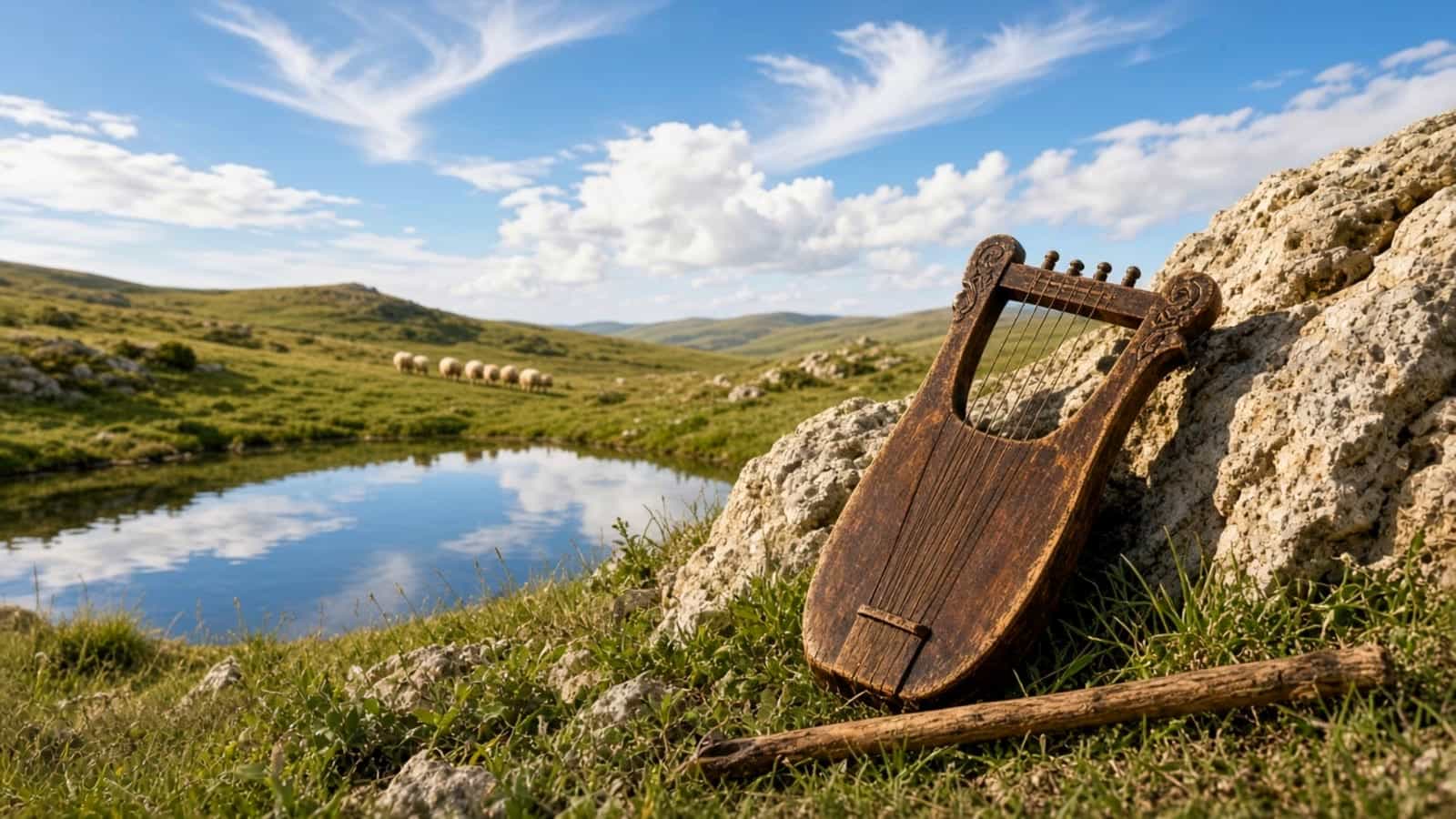
The LORD is my shepherd. David the shepherd-king writes from inside the metaphor. He knows what it is to keep sheep: the green pastures he sought for them, the still waters, the paths that led safely. He is now applying to himself what he gave his sheep: YHWH keeps me with that same quality of care.
The psalm moves from provision to danger to restoration to abundance. Green pastures and still waters, provision. The valley of the shadow of death, danger. Thou art with me: presence, not absence, not rescue from the valley but accompaniment through it. The table prepared in the presence of enemies, not after the enemies are gone, but while they still surround; abundance in the midst of threat. The cup running over, more than enough. Goodness and chesed following all the days: not occasional visits but continuous pursuit.
And the ending: I will dwell in the house of the LORD le-orekh yamim, for the length of days, forever. The return to the Tabernacle thread: the dwelling that Thread 6 has been tracing reaches its personal form here. Not the cosmic dwelling of Revelation 21 but the personal dwelling of the person who has walked through the valley with the shepherd and arrived in the house.
Thread 1 is the whole psalm: the shepherd's active, continuous reaching toward the sheep, restoring, leading, accompanying, preparing, anointing, pursuing. Thread 6 is the dwelling in the house of the LORD: the shakan presence that the tabernacle signified is now experienced personally by the one who knows YHWH as shepherd.
The LORD is my shepherd, six verses that have sustained more people through more darkness than almost any other passage in Scripture; the psalm that stands between the Passion (Psalm 22) and the coronation (Psalm 24) describes the life lived between suffering and glory.
יְהוָה רֹעִי לֹא אֶחְסָר (YHWH ro'i lo echsar): the LORD is my shepherd I shall not want: ro'i (my shepherd, Qal active participle of ra'ah; the participle describes ongoing continuous action: YHWH is continuously shepherding; the same verb as 2 Samuel 5:2's you shall shepherd my people Israel; the King of 2 Samuel 5 is the Shepherd of Psalm 23); lo echsar (I shall not want, echsar from chasar, to lack, to be in want; the negated imperfect: there is nothing I will be lacking; the comprehensive sufficiency of the divine shepherd) · גַּם כִּי אֵלֵךְ בְּגֵיא צַלְמָוֶת לֹא אִירָא רָע (gam ki elekh be-gey tsalmavet lo ira ra): yea though I walk through the valley of the shadow of death I will fear no evil: tsalmavet (deep darkness, shadow of death, from tsel, shadow + mavet, death; the darkest possible path; not a temporary inconvenience but the valley where death casts its shadow); gam ki elekh (even when I walk, the condition is real; the valley is real; the darkness is real; the psalm does not minimize the threat, it answers it with presence: for thou art with me)
threads t1 · t6 · see John 10:11 · Hebrews 13:20 · Revelation 7:17
Psalm 23 stands between the Passion Psalm (22) and the coronation Psalm (24). The shepherd who suffers in Psalm 22 is the same shepherd who keeps his sheep in Psalm 23 and the same King who enters the gates in Psalm 24. The three psalms form a theological triptych: death, life, glory.
The LORD is my shepherd. David the shepherd-king writes from inside the metaphor. He knows what it is to keep sheep: the green pastures he sought for them, the still waters, the paths that led safely. He is now applying to himself what he gave his sheep: YHWH keeps me with that same quality of care.
The psalm moves from provision to danger to restoration to abundance. Green pastures and still waters, provision. The valley of the shadow of death, danger. Thou art with me: presence, not absence, not rescue from the valley but accompaniment through it. The table prepared in the presence of enemies, not after the enemies are gone, but while they still surround; abundance in the midst of threat. The cup running over, more than enough. Goodness and chesed following all the days: not occasional visits but continuous pursuit.
And the ending: I will dwell in the house of the LORD le-orekh yamim, for the length of days, forever. The return to the Tabernacle thread: the dwelling that Thread 6 has been tracing reaches its personal form here. Not the cosmic dwelling of Revelation 21 but the personal dwelling of the person who has walked through the valley with the shepherd and arrived in the house.
Thread 1 is the whole psalm: the shepherd's active, continuous reaching toward the sheep, restoring, leading, accompanying, preparing, anointing, pursuing. Thread 6 is the dwelling in the house of the LORD: the shakan presence that the tabernacle signified is now experienced personally by the one who knows YHWH as shepherd.
The LORD is my shepherd, six verses that have sustained more people through more darkness than almost any other passage in Scripture; the psalm that stands between the Passion (Psalm 22) and the coronation (Psalm 24) describes the life lived between suffering and glory.
יְהוָה רֹעִי לֹא אֶחְסָר (YHWH ro'i lo echsar): the LORD is my shepherd I shall not want: ro'i (my shepherd, Qal active participle of ra'ah; the participle describes ongoing continuous action: YHWH is continuously shepherding; the same verb as 2 Samuel 5:2's you shall shepherd my people Israel; the King of 2 Samuel 5 is the Shepherd of Psalm 23); lo echsar (I shall not want, echsar from chasar, to lack, to be in want; the negated imperfect: there is nothing I will be lacking; the comprehensive sufficiency of the divine shepherd) · גַּם כִּי אֵלֵךְ בְּגֵיא צַלְמָוֶת לֹא אִירָא רָע (gam ki elekh be-gey tsalmavet lo ira ra): yea though I walk through the valley of the shadow of death I will fear no evil: tsalmavet (deep darkness, shadow of death, from tsel, shadow + mavet, death; the darkest possible path; not a temporary inconvenience but the valley where death casts its shadow); gam ki elekh (even when I walk, the condition is real; the valley is real; the darkness is real; the psalm does not minimize the threat, it answers it with presence: for thou art with me)
threads t1 · t6 · see John 10:11 · Hebrews 13:20 · Revelation 7:17
Psalm 23 stands between the Passion Psalm (22) and the coronation Psalm (24). The shepherd who suffers in Psalm 22 is the same shepherd who keeps his sheep in Psalm 23 and the same King who enters the gates in Psalm 24. The three psalms form a theological triptych: death, life, glory.
The LORD is my shepherd. David the shepherd-king writes from inside the metaphor. He knows what it is to keep sheep: the green pastures he sought for them, the still waters, the paths that led safely. He is now applying to himself what he gave his sheep: YHWH keeps me with that same quality of care.
The psalm moves from provision to danger to restoration to abundance. Green pastures and still waters, provision. The valley of the shadow of death, danger. Thou art with me: presence, not absence, not rescue from the valley but accompaniment through it. The table prepared in the presence of enemies, not after the enemies are gone, but while they still surround; abundance in the midst of threat. The cup running over, more than enough. Goodness and chesed following all the days: not occasional visits but continuous pursuit.
And the ending: I will dwell in the house of the LORD le-orekh yamim, for the length of days, forever. The return to the Tabernacle thread: the dwelling that Thread 6 has been tracing reaches its personal form here. Not the cosmic dwelling of Revelation 21 but the personal dwelling of the person who has walked through the valley with the shepherd and arrived in the house.
Thread 1 is the whole psalm: the shepherd's active, continuous reaching toward the sheep, restoring, leading, accompanying, preparing, anointing, pursuing. Thread 6 is the dwelling in the house of the LORD: the shakan presence that the tabernacle signified is now experienced personally by the one who knows YHWH as shepherd.
The LORD is my shepherd, six verses that have sustained more people through more darkness than almost any other passage in Scripture; the psalm that stands between the Passion (Psalm 22) and the coronation (Psalm 24) describes the life lived between suffering and glory.
יְהוָה רֹעִי לֹא אֶחְסָר (YHWH ro'i lo echsar): the LORD is my shepherd I shall not want: ro'i (my shepherd, Qal active participle of ra'ah; the participle describes ongoing continuous action: YHWH is continuously shepherding; the same verb as 2 Samuel 5:2's you shall shepherd my people Israel; the King of 2 Samuel 5 is the Shepherd of Psalm 23); lo echsar (I shall not want, echsar from chasar, to lack, to be in want; the negated imperfect: there is nothing I will be lacking; the comprehensive sufficiency of the divine shepherd) · גַּם כִּי אֵלֵךְ בְּגֵיא צַלְמָוֶת לֹא אִירָא רָע (gam ki elekh be-gey tsalmavet lo ira ra): yea though I walk through the valley of the shadow of death I will fear no evil: tsalmavet (deep darkness, shadow of death, from tsel, shadow + mavet, death; the darkest possible path; not a temporary inconvenience but the valley where death casts its shadow); gam ki elekh (even when I walk, the condition is real; the valley is real; the darkness is real; the psalm does not minimize the threat, it answers it with presence: for thou art with me)
threads t1 · t6 · see John 10:11 · Hebrews 13:20 · Revelation 7:17
Psalm 23 stands between the Passion Psalm (22) and the coronation Psalm (24). The shepherd who suffers in Psalm 22 is the same shepherd who keeps his sheep in Psalm 23 and the same King who enters the gates in Psalm 24. The three psalms form a theological triptych: death, life, glory.
The LORD is my shepherd. David the shepherd-king writes from inside the metaphor. He knows what it is to keep sheep: the green pastures he sought for them, the still waters, the paths that led safely. He is now applying to himself what he gave his sheep: YHWH keeps me with that same quality of care.
The psalm moves from provision to danger to restoration to abundance. Green pastures and still waters, provision. The valley of the shadow of death, danger. Thou art with me: presence, not absence, not rescue from the valley but accompaniment through it. The table prepared in the presence of enemies, not after the enemies are gone, but while they still surround; abundance in the midst of threat. The cup running over, more than enough. Goodness and chesed following all the days: not occasional visits but continuous pursuit.
And the ending: I will dwell in the house of the LORD le-orekh yamim, for the length of days, forever. The return to the Tabernacle thread: the dwelling that Thread 6 has been tracing reaches its personal form here. Not the cosmic dwelling of Revelation 21 but the personal dwelling of the person who has walked through the valley with the shepherd and arrived in the house.
Thread 1 is the whole psalm: the shepherd's active, continuous reaching toward the sheep, restoring, leading, accompanying, preparing, anointing, pursuing. Thread 6 is the dwelling in the house of the LORD: the shakan presence that the tabernacle signified is now experienced personally by the one who knows YHWH as shepherd.
The LORD is my shepherd, six verses that have sustained more people through more darkness than almost any other passage in Scripture; the psalm that stands between the Passion (Psalm 22) and the coronation (Psalm 24) describes the life lived between suffering and glory.
יְהוָה רֹעִי לֹא אֶחְסָר (YHWH ro'i lo echsar): the LORD is my shepherd I shall not want: ro'i (my shepherd, Qal active participle of ra'ah; the participle describes ongoing continuous action: YHWH is continuously shepherding; the same verb as 2 Samuel 5:2's you shall shepherd my people Israel; the King of 2 Samuel 5 is the Shepherd of Psalm 23); lo echsar (I shall not want, echsar from chasar, to lack, to be in want; the negated imperfect: there is nothing I will be lacking; the comprehensive sufficiency of the divine shepherd) · גַּם כִּי אֵלֵךְ בְּגֵיא צַלְמָוֶת לֹא אִירָא רָע (gam ki elekh be-gey tsalmavet lo ira ra): yea though I walk through the valley of the shadow of death I will fear no evil: tsalmavet (deep darkness, shadow of death, from tsel, shadow + mavet, death; the darkest possible path; not a temporary inconvenience but the valley where death casts its shadow); gam ki elekh (even when I walk, the condition is real; the valley is real; the darkness is real; the psalm does not minimize the threat, it answers it with presence: for thou art with me)
threads t1 · t6 · see John 10:11 · Hebrews 13:20 · Revelation 7:17
Psalm 23 stands between the Passion Psalm (22) and the coronation Psalm (24). The shepherd who suffers in Psalm 22 is the same shepherd who keeps his sheep in Psalm 23 and the same King who enters the gates in Psalm 24. The three psalms form a theological triptych: death, life, glory.
The LORD is my shepherd. David the shepherd-king writes from inside the metaphor. He knows what it is to keep sheep: the green pastures he sought for them, the still waters, the paths that led safely. He is now applying to himself what he gave his sheep: YHWH keeps me with that same quality of care.
The psalm moves from provision to danger to restoration to abundance. Green pastures and still waters, provision. The valley of the shadow of death, danger. Thou art with me: presence, not absence, not rescue from the valley but accompaniment through it. The table prepared in the presence of enemies, not after the enemies are gone, but while they still surround; abundance in the midst of threat. The cup running over, more than enough. Goodness and chesed following all the days: not occasional visits but continuous pursuit.
And the ending: I will dwell in the house of the LORD le-orekh yamim, for the length of days, forever. The return to the Tabernacle thread: the dwelling that Thread 6 has been tracing reaches its personal form here. Not the cosmic dwelling of Revelation 21 but the personal dwelling of the person who has walked through the valley with the shepherd and arrived in the house.
Thread 1 is the whole psalm: the shepherd's active, continuous reaching toward the sheep, restoring, leading, accompanying, preparing, anointing, pursuing. Thread 6 is the dwelling in the house of the LORD: the shakan presence that the tabernacle signified is now experienced personally by the one who knows YHWH as shepherd.
The LORD is my shepherd, six verses that have sustained more people through more darkness than almost any other passage in Scripture; the psalm that stands between the Passion (Psalm 22) and the coronation (Psalm 24) describes the life lived between suffering and glory.
יְהוָה רֹעִי לֹא אֶחְסָר (YHWH ro'i lo echsar): the LORD is my shepherd I shall not want: ro'i (my shepherd, Qal active participle of ra'ah; the participle describes ongoing continuous action: YHWH is continuously shepherding; the same verb as 2 Samuel 5:2's you shall shepherd my people Israel; the King of 2 Samuel 5 is the Shepherd of Psalm 23); lo echsar (I shall not want, echsar from chasar, to lack, to be in want; the negated imperfect: there is nothing I will be lacking; the comprehensive sufficiency of the divine shepherd) · גַּם כִּי אֵלֵךְ בְּגֵיא צַלְמָוֶת לֹא אִירָא רָע (gam ki elekh be-gey tsalmavet lo ira ra): yea though I walk through the valley of the shadow of death I will fear no evil: tsalmavet (deep darkness, shadow of death, from tsel, shadow + mavet, death; the darkest possible path; not a temporary inconvenience but the valley where death casts its shadow); gam ki elekh (even when I walk, the condition is real; the valley is real; the darkness is real; the psalm does not minimize the threat, it answers it with presence: for thou art with me)
threads t1 · t6 · see John 10:11 · Hebrews 13:20 · Revelation 7:17
Psalm 23 stands between the Passion Psalm (22) and the coronation Psalm (24). The shepherd who suffers in Psalm 22 is the same shepherd who keeps his sheep in Psalm 23 and the same King who enters the gates in Psalm 24. The three psalms form a theological triptych: death, life, glory.
The LORD is my shepherd. David the shepherd-king writes from inside the metaphor. He knows what it is to keep sheep: the green pastures he sought for them, the still waters, the paths that led safely. He is now applying to himself what he gave his sheep: YHWH keeps me with that same quality of care.
The psalm moves from provision to danger to restoration to abundance. Green pastures and still waters, provision. The valley of the shadow of death, danger. Thou art with me: presence, not absence, not rescue from the valley but accompaniment through it. The table prepared in the presence of enemies, not after the enemies are gone, but while they still surround; abundance in the midst of threat. The cup running over, more than enough. Goodness and chesed following all the days: not occasional visits but continuous pursuit.
And the ending: I will dwell in the house of the LORD le-orekh yamim, for the length of days, forever. The return to the Tabernacle thread: the dwelling that Thread 6 has been tracing reaches its personal form here. Not the cosmic dwelling of Revelation 21 but the personal dwelling of the person who has walked through the valley with the shepherd and arrived in the house.
Thread 1 is the whole psalm: the shepherd's active, continuous reaching toward the sheep, restoring, leading, accompanying, preparing, anointing, pursuing. Thread 6 is the dwelling in the house of the LORD: the shakan presence that the tabernacle signified is now experienced personally by the one who knows YHWH as shepherd.
The LORD is my shepherd, six verses that have sustained more people through more darkness than almost any other passage in Scripture; the psalm that stands between the Passion (Psalm 22) and the coronation (Psalm 24) describes the life lived between suffering and glory.
יְהוָה רֹעִי לֹא אֶחְסָר (YHWH ro'i lo echsar): the LORD is my shepherd I shall not want: ro'i (my shepherd, Qal active participle of ra'ah; the participle describes ongoing continuous action: YHWH is continuously shepherding; the same verb as 2 Samuel 5:2's you shall shepherd my people Israel; the King of 2 Samuel 5 is the Shepherd of Psalm 23); lo echsar (I shall not want, echsar from chasar, to lack, to be in want; the negated imperfect: there is nothing I will be lacking; the comprehensive sufficiency of the divine shepherd) · גַּם כִּי אֵלֵךְ בְּגֵיא צַלְמָוֶת לֹא אִירָא רָע (gam ki elekh be-gey tsalmavet lo ira ra): yea though I walk through the valley of the shadow of death I will fear no evil: tsalmavet (deep darkness, shadow of death, from tsel, shadow + mavet, death; the darkest possible path; not a temporary inconvenience but the valley where death casts its shadow); gam ki elekh (even when I walk, the condition is real; the valley is real; the darkness is real; the psalm does not minimize the threat, it answers it with presence: for thou art with me)
threads t1 · t6 · see John 10:11 · Hebrews 13:20 · Revelation 7:17