Hebrews 8
Chuck Smith on Hebrews 8
Verse by verse, the C2000 series. Permission granted by The Word For Today.
Verses 1-13
Now of the things which we have spoken this is the essence: We have such a high priest, who is set on the right hand of the throne of the Majesty in heavens; he is a minister of the sanctuary, and of the true tabernacle, which the Lord pitched, and not man. For every high priest is ordained to offer gifts and sacrifices: wherefore it is of necessity that this man have somewhat also to offer [that is the ministry of the priest to offer the gifts and the sacrifices]. For if he were on earth, he should not be a priest, seeing that there are priests that offer the gifts according to the law: Who serve unto the example and the shadow of heavenly things, as Moses was admonished of God when he was about to make the tabernacle: See, said the Lord, that you make all things according to the pattern that was shown you on the mount ( Hebrews 8:1-5 ).
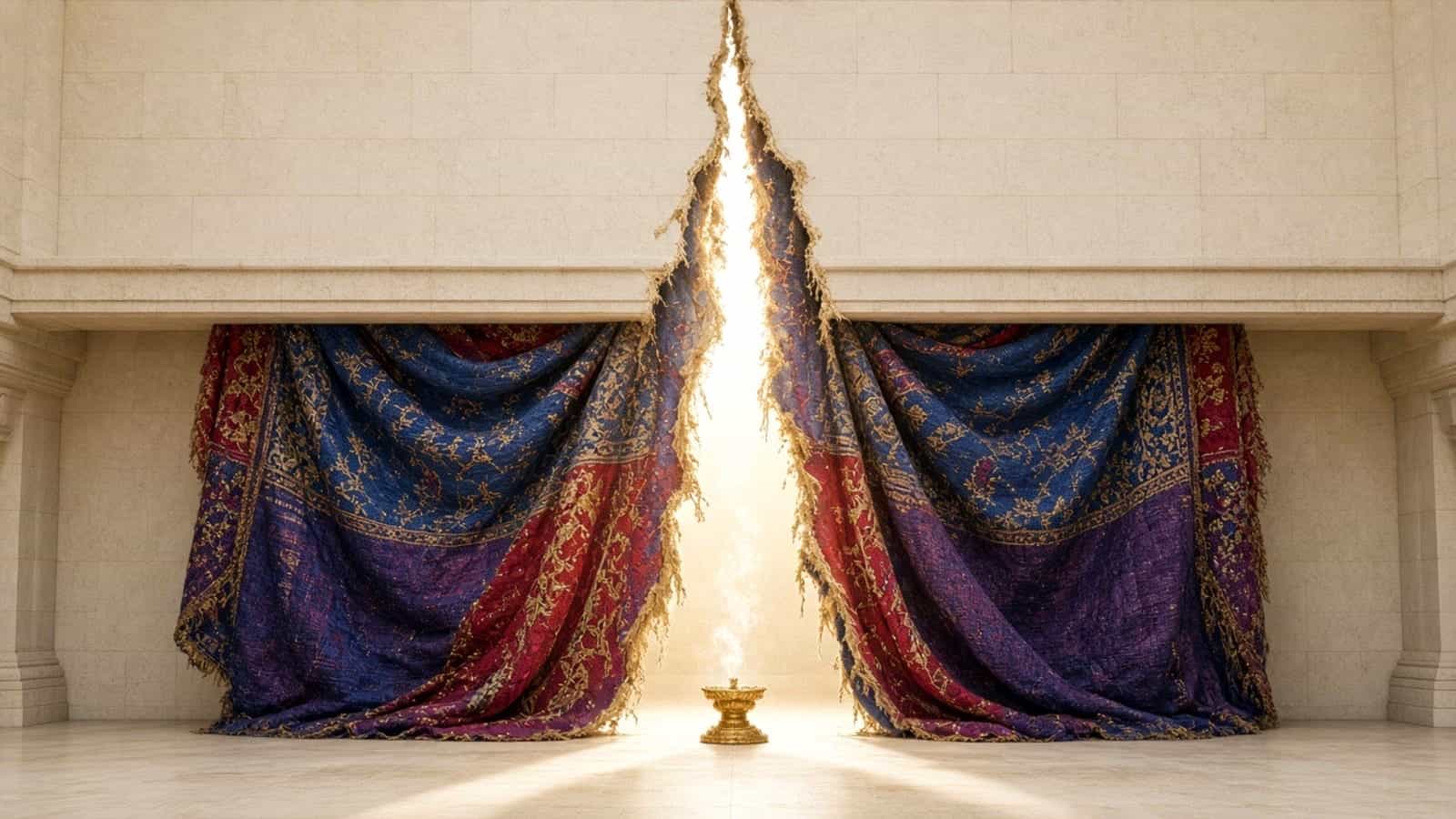
The reason why there had to be such complete carefulness in the making of the tabernacle, that he makes it exactly according to the plan that God gave to Moses on the mount, is that the tabernacle is a model of heaven. You want to know what heaven is like? Do you want to know what it looks like and all? then study the tabernacle. The Holy of Holies is a model of the throne of God in heaven. The cherubim there in the tabernacle overshadowing the mercy seat. And so it is a model of the heaven. Jesus didn't enter into the earthly temple that had been built by Herod the Great. He didn't enter into the Holy of Holies of the earthly temple, but He entered into the heaven, of which the earthly temple was a model. The earthly temple is not the real McCoy. It is just a model of what is real. So Jesus didn't enter into the model, He entered into the real thing. The earthly temple is only a shadow or a model of that which is in heaven. Our great High Priest entered directly into the heavens, of which the earthly tabernacle was only a model, and there He is representing me before God in heaven, not before a model of that whole thing in the Holy of Holies in the temple here on the earth. These things were to serve as an example and a shadow of the heavenly things. That is why, though oftentimes we get bogged down in Leviticus, if we understand as we are reading in Exodus and Leviticus, we are reading about the temple and the dimensions and the things that were in it. And you go into Leviticus and read about the offerings, then you'll understand more about heaven and the heavenly things. And just to read it as a part of an old dead system that can destroy you. It's like Latin language. In my Latin book in high school someone had written, "Latin is a language dead, as dead as dead can be. First it killed the Romans and now it is killing me." The earthly system was now being abrogated, passing away, because the real has come. The earthly was only pointing forward to when the real should come. Once the real had arrived, no longer necessary for the model, that can be set aside. Now the reality is here.
But now hath he obtained a more excellent ministry, by how much also he is the mediator of a better covenant, which was established upon better promises ( Hebrews 8:6 ).
Now as you go back in Exodus chapter 19, and you read the covenant that God made with the nation of Israel, in the giving of the law, the establishing of the priesthood. This covenant that God made with Israel was predicated upon the people's faithfulness and the people's obedience. Verse Hebrews 8:5 of chapter 19, "Now therefore," God said, "if you will obey my voice indeed..." "If," conditional, the covenant just isn't a straight out, flat covenant, unilateral. It is a conditional covenant. "If you will obey my voice indeed and keep my covenant, then ye shall be a peculiar treasure unto Me above all the people. For all the earth is mine, and ye shall be unto Me a kingdom of priests, and a holy nation. These are the words which thou shalt speak," God said to Moses, "to the children of Israel." "And so Moses came down and called for the elders and all and told them of the people, and the people said, 'All that the Lord hath spoken we will do.' And so Moses returned the words of the people of the Lord" ( Exodus 19:5-8 ). Moses went back to the Lord and said, "Hey, they said they will do everything You say." They said that, but they didn't. But you see, the covenant was "if" you will obey my commands, "if," but they did not. And therefore, the first covenant was broken, not by God but by man, because it was predicated upon man's obedience, man's faithfulness. But man was not obedient or faithful.