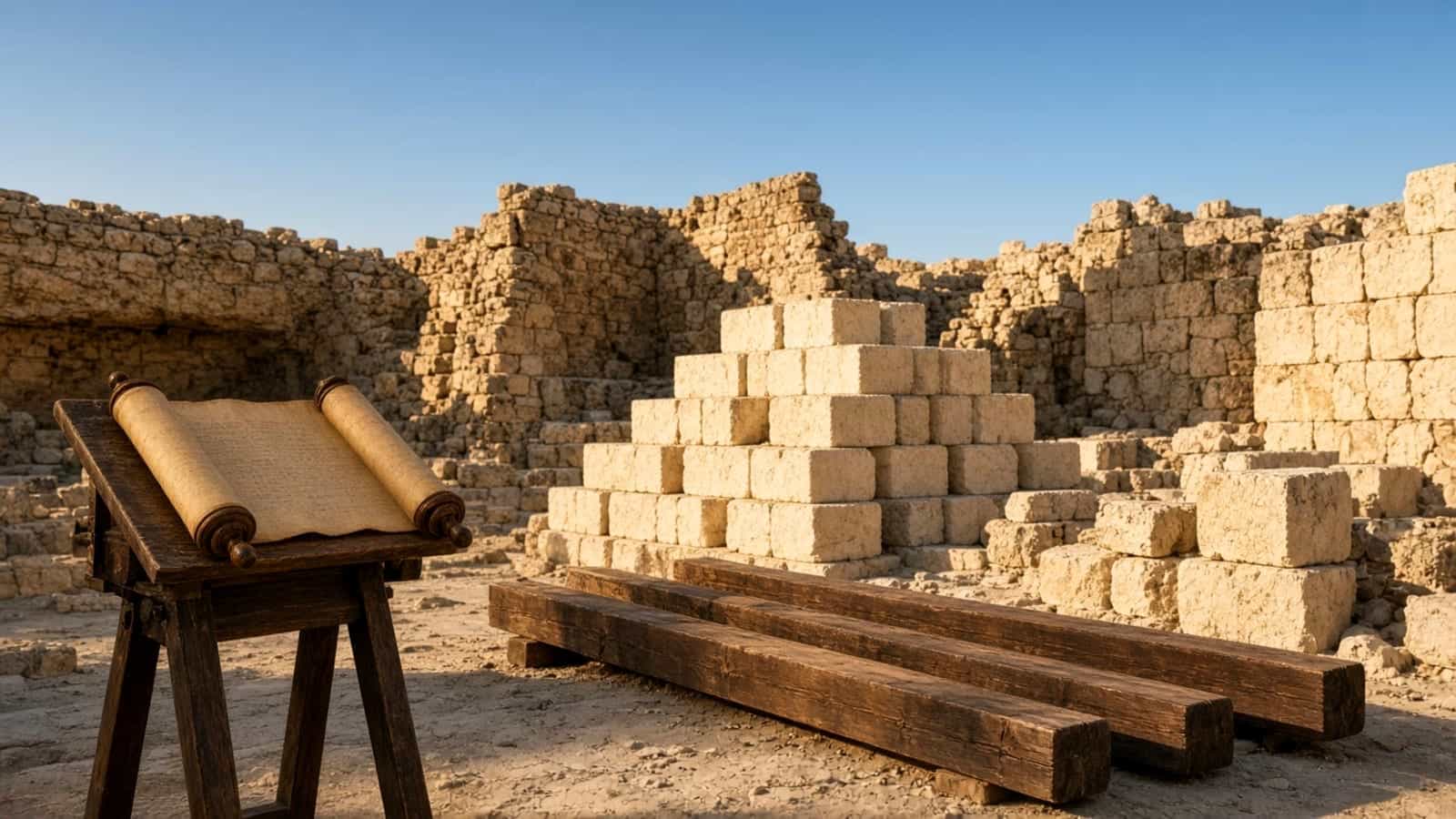
The returnees arrive in Jerusalem and find rubble. The city's walls are broken down. The temple mount is desolate. But the first priority is not the wall and not even the temple building: it is the altar. Before a single stone of the new temple is laid, they rebuild the altar of burnt offering and restore the daily sacrifice. The worship precedes the building because the worship is the reason for the building.
When the foundation of the temple is finally laid, the celebration is extraordinary, and extraordinarily mixed. The priests blow trumpets. The Levites strike cymbals. The people sing: for he is good, for his chesed endures forever toward Israel. The young people who have grown up in exile and never seen Solomon's temple shout for joy at what is being built.
And the old priests and Levites who remember the first temple weep. They remember the glory that filled Solomon's temple at its dedication. They know what has been lost: the ark, the Shekinah glory, the first house in all its cedar and gold and divine presence. The sound of the shouting and the sound of the weeping are indistinguishable from a distance. Both are genuine. Neither cancels the other.
Thread 1 is the faithfulness the returnees are celebrating in the chorus, ki tov, ki le-olam chasdo. The God who cannot stop reaching has brought them home. Thread 2 is the corporate covenant people reconstituting their worship around the altar before the walls are up. Thread 5 is the dispensational restoration: the Mosaic administration is being reasserted in the returned community, sacrifice, priesthood, calendar, though without the ark and without the Shekinah glory that gave the first temple its defining reality.
The young shout for joy and the old weep: both responses are genuine and both are right; the foundation of the Second Temple carries both the hope of what is beginning and the grief of what has been lost.
כִּי טוֹב כִּי לְעוֹלָם חַסְדּוֹ עַל יִשְׂרָאֵל (ki tov ki le-olam chasdo al Yisrael): for he is good and his chesed endures forever toward Israel: the refrain of Psalm 136 sung at the foundation-laying; ki tov (for he is good, the foundational character declaration that precedes all specific acts of chesed); le-olam chasdo (his covenant love endures forever, the same phrase that will anchor Psalm 136's twenty-six repetitions; the returnees are singing the same song Israel sang at the first temple dedication in 1 Kings 8:66)
threads t1 · t2 · t5 · see Psalm 136:1 · 1 Kings 8:10-11 · Haggai 2:3
The returnees arrive in Jerusalem and find rubble. The city's walls are broken down. The temple mount is desolate. But the first priority is not the wall and not even the temple building: it is the altar. Before a single stone of the new temple is laid, they rebuild the altar of burnt offering and restore the daily sacrifice. The worship precedes the building because the worship is the reason for the building.
When the foundation of the temple is finally laid, the celebration is extraordinary, and extraordinarily mixed. The priests blow trumpets. The Levites strike cymbals. The people sing: for he is good, for his chesed endures forever toward Israel. The young people who have grown up in exile and never seen Solomon's temple shout for joy at what is being built.
And the old priests and Levites who remember the first temple weep. They remember the glory that filled Solomon's temple at its dedication. They know what has been lost: the ark, the Shekinah glory, the first house in all its cedar and gold and divine presence. The sound of the shouting and the sound of the weeping are indistinguishable from a distance. Both are genuine. Neither cancels the other.
Thread 1 is the faithfulness the returnees are celebrating in the chorus, ki tov, ki le-olam chasdo. The God who cannot stop reaching has brought them home. Thread 2 is the corporate covenant people reconstituting their worship around the altar before the walls are up. Thread 5 is the dispensational restoration: the Mosaic administration is being reasserted in the returned community, sacrifice, priesthood, calendar, though without the ark and without the Shekinah glory that gave the first temple its defining reality.
The young shout for joy and the old weep: both responses are genuine and both are right; the foundation of the Second Temple carries both the hope of what is beginning and the grief of what has been lost.
כִּי טוֹב כִּי לְעוֹלָם חַסְדּוֹ עַל יִשְׂרָאֵל (ki tov ki le-olam chasdo al Yisrael): for he is good and his chesed endures forever toward Israel: the refrain of Psalm 136 sung at the foundation-laying; ki tov (for he is good, the foundational character declaration that precedes all specific acts of chesed); le-olam chasdo (his covenant love endures forever, the same phrase that will anchor Psalm 136's twenty-six repetitions; the returnees are singing the same song Israel sang at the first temple dedication in 1 Kings 8:66)
threads t1 · t2 · t5 · see Psalm 136:1 · 1 Kings 8:10-11 · Haggai 2:3
The returnees arrive in Jerusalem and find rubble. The city's walls are broken down. The temple mount is desolate. But the first priority is not the wall and not even the temple building: it is the altar. Before a single stone of the new temple is laid, they rebuild the altar of burnt offering and restore the daily sacrifice. The worship precedes the building because the worship is the reason for the building.
When the foundation of the temple is finally laid, the celebration is extraordinary, and extraordinarily mixed. The priests blow trumpets. The Levites strike cymbals. The people sing: for he is good, for his chesed endures forever toward Israel. The young people who have grown up in exile and never seen Solomon's temple shout for joy at what is being built.
And the old priests and Levites who remember the first temple weep. They remember the glory that filled Solomon's temple at its dedication. They know what has been lost: the ark, the Shekinah glory, the first house in all its cedar and gold and divine presence. The sound of the shouting and the sound of the weeping are indistinguishable from a distance. Both are genuine. Neither cancels the other.
Thread 1 is the faithfulness the returnees are celebrating in the chorus, ki tov, ki le-olam chasdo. The God who cannot stop reaching has brought them home. Thread 2 is the corporate covenant people reconstituting their worship around the altar before the walls are up. Thread 5 is the dispensational restoration: the Mosaic administration is being reasserted in the returned community, sacrifice, priesthood, calendar, though without the ark and without the Shekinah glory that gave the first temple its defining reality.
The young shout for joy and the old weep: both responses are genuine and both are right; the foundation of the Second Temple carries both the hope of what is beginning and the grief of what has been lost.
כִּי טוֹב כִּי לְעוֹלָם חַסְדּוֹ עַל יִשְׂרָאֵל (ki tov ki le-olam chasdo al Yisrael): for he is good and his chesed endures forever toward Israel: the refrain of Psalm 136 sung at the foundation-laying; ki tov (for he is good, the foundational character declaration that precedes all specific acts of chesed); le-olam chasdo (his covenant love endures forever, the same phrase that will anchor Psalm 136's twenty-six repetitions; the returnees are singing the same song Israel sang at the first temple dedication in 1 Kings 8:66)
threads t1 · t2 · t5 · see Psalm 136:1 · 1 Kings 8:10-11 · Haggai 2:3
The returnees arrive in Jerusalem and find rubble. The city's walls are broken down. The temple mount is desolate. But the first priority is not the wall and not even the temple building: it is the altar. Before a single stone of the new temple is laid, they rebuild the altar of burnt offering and restore the daily sacrifice. The worship precedes the building because the worship is the reason for the building.
When the foundation of the temple is finally laid, the celebration is extraordinary, and extraordinarily mixed. The priests blow trumpets. The Levites strike cymbals. The people sing: for he is good, for his chesed endures forever toward Israel. The young people who have grown up in exile and never seen Solomon's temple shout for joy at what is being built.
And the old priests and Levites who remember the first temple weep. They remember the glory that filled Solomon's temple at its dedication. They know what has been lost: the ark, the Shekinah glory, the first house in all its cedar and gold and divine presence. The sound of the shouting and the sound of the weeping are indistinguishable from a distance. Both are genuine. Neither cancels the other.
Thread 1 is the faithfulness the returnees are celebrating in the chorus, ki tov, ki le-olam chasdo. The God who cannot stop reaching has brought them home. Thread 2 is the corporate covenant people reconstituting their worship around the altar before the walls are up. Thread 5 is the dispensational restoration: the Mosaic administration is being reasserted in the returned community, sacrifice, priesthood, calendar, though without the ark and without the Shekinah glory that gave the first temple its defining reality.
The young shout for joy and the old weep: both responses are genuine and both are right; the foundation of the Second Temple carries both the hope of what is beginning and the grief of what has been lost.
כִּי טוֹב כִּי לְעוֹלָם חַסְדּוֹ עַל יִשְׂרָאֵל (ki tov ki le-olam chasdo al Yisrael): for he is good and his chesed endures forever toward Israel: the refrain of Psalm 136 sung at the foundation-laying; ki tov (for he is good, the foundational character declaration that precedes all specific acts of chesed); le-olam chasdo (his covenant love endures forever, the same phrase that will anchor Psalm 136's twenty-six repetitions; the returnees are singing the same song Israel sang at the first temple dedication in 1 Kings 8:66)
threads t1 · t2 · t5 · see Psalm 136:1 · 1 Kings 8:10-11 · Haggai 2:3