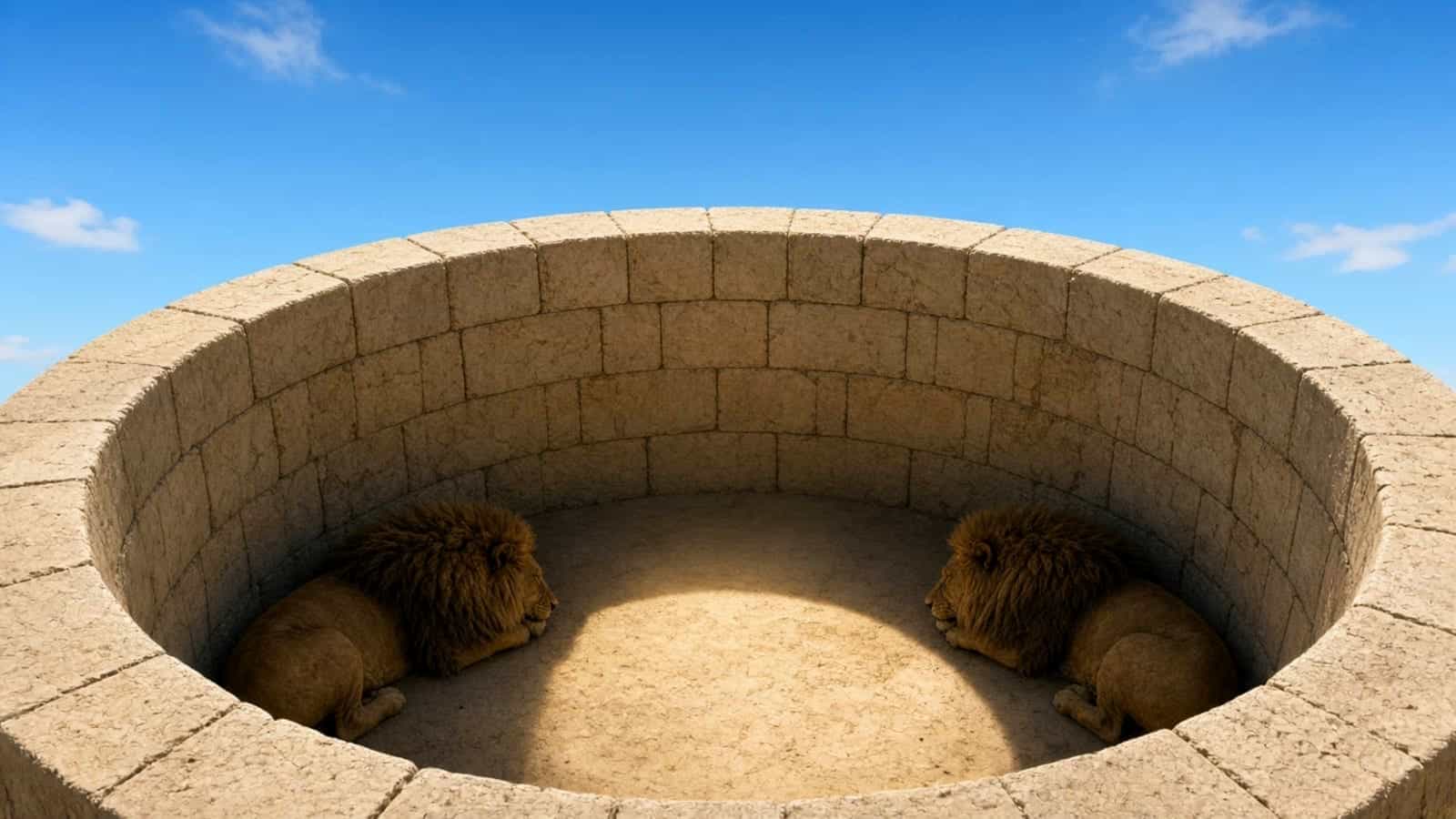
Chapter 7 covers the same ground as chapter 2 but from a different vantage point. Chapter 2 showed the sequence to Nebuchadnezzar: from the human king's perspective, the empires are magnificent metals, each grander than the last. Chapter 7 shows the same sequence to Daniel: from God's perspective, the same empires are dangerous predatory animals arising from a churning sea.
The sea in prophetic imagery represents the Gentile nations in their restless, chaotic state. Four beasts emerge from it. The lion with eagle's wings whose wings are plucked, Babylon in its rise and fall. The lopsided bear with three ribs in its mouth: Persia, already tilted toward conquest, devouring three major powers (Lydia, Babylon, Egypt). The four-winged, four-headed leopard: Greece under Alexander, moving with speed no previous empire matched, then dividing into four successor kingdoms at Alexander's death. And the terrible fourth beast: no animal analogy is offered because none fits; it is unlike all the others, with iron teeth that devour and crush and stamp.
Ten horns on the fourth beast. Among them a little horn arising, uprooting three others, with eyes like a man and a mouth speaking great things. This little horn is the figure Jesus calls the abomination of desolation (Matthew 24:15) and Paul calls the man of lawlessness (2 Thessalonians 2:3-4). Daniel 7 provides the OT profile of the final opposition to the returning King.
The four beasts from the sea are the same four kingdoms as the statue of chapter 2, but where chapter 2 shows them from the human perspective (magnificent metals), chapter 7 shows them from God's perspective (predatory animals).
אַרְבַּע חֵיוָן רַבְרְבָן (arba cheivan ravrevan): four great beasts: cheivan (beast, living creature); ravrevan (great, mighty); the four beasts correspond to the four sections of the statue: lion with eagle's wings = Babylon; lopsided bear = Persia; leopard with four wings and four heads = Greece (Alexander's swift conquest, four successors); the terrible iron-toothed fourth beast = Rome
threads t3 · t5 · see Daniel 2:31-43 · Matthew 24:15 · Revelation 13:1-8
Chapter 7 covers the same ground as chapter 2 but from a different vantage point. Chapter 2 showed the sequence to Nebuchadnezzar: from the human king's perspective, the empires are magnificent metals, each grander than the last. Chapter 7 shows the same sequence to Daniel: from God's perspective, the same empires are dangerous predatory animals arising from a churning sea.
The sea in prophetic imagery represents the Gentile nations in their restless, chaotic state. Four beasts emerge from it. The lion with eagle's wings whose wings are plucked, Babylon in its rise and fall. The lopsided bear with three ribs in its mouth: Persia, already tilted toward conquest, devouring three major powers (Lydia, Babylon, Egypt). The four-winged, four-headed leopard: Greece under Alexander, moving with speed no previous empire matched, then dividing into four successor kingdoms at Alexander's death. And the terrible fourth beast: no animal analogy is offered because none fits; it is unlike all the others, with iron teeth that devour and crush and stamp.
Ten horns on the fourth beast. Among them a little horn arising, uprooting three others, with eyes like a man and a mouth speaking great things. This little horn is the figure Jesus calls the abomination of desolation (Matthew 24:15) and Paul calls the man of lawlessness (2 Thessalonians 2:3-4). Daniel 7 provides the OT profile of the final opposition to the returning King.
The four beasts from the sea are the same four kingdoms as the statue of chapter 2, but where chapter 2 shows them from the human perspective (magnificent metals), chapter 7 shows them from God's perspective (predatory animals).
אַרְבַּע חֵיוָן רַבְרְבָן (arba cheivan ravrevan): four great beasts: cheivan (beast, living creature); ravrevan (great, mighty); the four beasts correspond to the four sections of the statue: lion with eagle's wings = Babylon; lopsided bear = Persia; leopard with four wings and four heads = Greece (Alexander's swift conquest, four successors); the terrible iron-toothed fourth beast = Rome
threads t3 · t5 · see Daniel 2:31-43 · Matthew 24:15 · Revelation 13:1-8
Chapter 7 covers the same ground as chapter 2 but from a different vantage point. Chapter 2 showed the sequence to Nebuchadnezzar: from the human king's perspective, the empires are magnificent metals, each grander than the last. Chapter 7 shows the same sequence to Daniel: from God's perspective, the same empires are dangerous predatory animals arising from a churning sea.
The sea in prophetic imagery represents the Gentile nations in their restless, chaotic state. Four beasts emerge from it. The lion with eagle's wings whose wings are plucked, Babylon in its rise and fall. The lopsided bear with three ribs in its mouth: Persia, already tilted toward conquest, devouring three major powers (Lydia, Babylon, Egypt). The four-winged, four-headed leopard: Greece under Alexander, moving with speed no previous empire matched, then dividing into four successor kingdoms at Alexander's death. And the terrible fourth beast: no animal analogy is offered because none fits; it is unlike all the others, with iron teeth that devour and crush and stamp.
Ten horns on the fourth beast. Among them a little horn arising, uprooting three others, with eyes like a man and a mouth speaking great things. This little horn is the figure Jesus calls the abomination of desolation (Matthew 24:15) and Paul calls the man of lawlessness (2 Thessalonians 2:3-4). Daniel 7 provides the OT profile of the final opposition to the returning King.
The four beasts from the sea are the same four kingdoms as the statue of chapter 2, but where chapter 2 shows them from the human perspective (magnificent metals), chapter 7 shows them from God's perspective (predatory animals).
אַרְבַּע חֵיוָן רַבְרְבָן (arba cheivan ravrevan): four great beasts: cheivan (beast, living creature); ravrevan (great, mighty); the four beasts correspond to the four sections of the statue: lion with eagle's wings = Babylon; lopsided bear = Persia; leopard with four wings and four heads = Greece (Alexander's swift conquest, four successors); the terrible iron-toothed fourth beast = Rome
threads t3 · t5 · see Daniel 2:31-43 · Matthew 24:15 · Revelation 13:1-8
Chapter 7 covers the same ground as chapter 2 but from a different vantage point. Chapter 2 showed the sequence to Nebuchadnezzar: from the human king's perspective, the empires are magnificent metals, each grander than the last. Chapter 7 shows the same sequence to Daniel: from God's perspective, the same empires are dangerous predatory animals arising from a churning sea.
The sea in prophetic imagery represents the Gentile nations in their restless, chaotic state. Four beasts emerge from it. The lion with eagle's wings whose wings are plucked, Babylon in its rise and fall. The lopsided bear with three ribs in its mouth: Persia, already tilted toward conquest, devouring three major powers (Lydia, Babylon, Egypt). The four-winged, four-headed leopard: Greece under Alexander, moving with speed no previous empire matched, then dividing into four successor kingdoms at Alexander's death. And the terrible fourth beast: no animal analogy is offered because none fits; it is unlike all the others, with iron teeth that devour and crush and stamp.
Ten horns on the fourth beast. Among them a little horn arising, uprooting three others, with eyes like a man and a mouth speaking great things. This little horn is the figure Jesus calls the abomination of desolation (Matthew 24:15) and Paul calls the man of lawlessness (2 Thessalonians 2:3-4). Daniel 7 provides the OT profile of the final opposition to the returning King.
The four beasts from the sea are the same four kingdoms as the statue of chapter 2, but where chapter 2 shows them from the human perspective (magnificent metals), chapter 7 shows them from God's perspective (predatory animals).
אַרְבַּע חֵיוָן רַבְרְבָן (arba cheivan ravrevan): four great beasts: cheivan (beast, living creature); ravrevan (great, mighty); the four beasts correspond to the four sections of the statue: lion with eagle's wings = Babylon; lopsided bear = Persia; leopard with four wings and four heads = Greece (Alexander's swift conquest, four successors); the terrible iron-toothed fourth beast = Rome
threads t3 · t5 · see Daniel 2:31-43 · Matthew 24:15 · Revelation 13:1-8
Chapter 7 covers the same ground as chapter 2 but from a different vantage point. Chapter 2 showed the sequence to Nebuchadnezzar: from the human king's perspective, the empires are magnificent metals, each grander than the last. Chapter 7 shows the same sequence to Daniel: from God's perspective, the same empires are dangerous predatory animals arising from a churning sea.
The sea in prophetic imagery represents the Gentile nations in their restless, chaotic state. Four beasts emerge from it. The lion with eagle's wings whose wings are plucked, Babylon in its rise and fall. The lopsided bear with three ribs in its mouth: Persia, already tilted toward conquest, devouring three major powers (Lydia, Babylon, Egypt). The four-winged, four-headed leopard: Greece under Alexander, moving with speed no previous empire matched, then dividing into four successor kingdoms at Alexander's death. And the terrible fourth beast: no animal analogy is offered because none fits; it is unlike all the others, with iron teeth that devour and crush and stamp.
Ten horns on the fourth beast. Among them a little horn arising, uprooting three others, with eyes like a man and a mouth speaking great things. This little horn is the figure Jesus calls the abomination of desolation (Matthew 24:15) and Paul calls the man of lawlessness (2 Thessalonians 2:3-4). Daniel 7 provides the OT profile of the final opposition to the returning King.
The four beasts from the sea are the same four kingdoms as the statue of chapter 2, but where chapter 2 shows them from the human perspective (magnificent metals), chapter 7 shows them from God's perspective (predatory animals).
אַרְבַּע חֵיוָן רַבְרְבָן (arba cheivan ravrevan): four great beasts: cheivan (beast, living creature); ravrevan (great, mighty); the four beasts correspond to the four sections of the statue: lion with eagle's wings = Babylon; lopsided bear = Persia; leopard with four wings and four heads = Greece (Alexander's swift conquest, four successors); the terrible iron-toothed fourth beast = Rome
threads t3 · t5 · see Daniel 2:31-43 · Matthew 24:15 · Revelation 13:1-8
Chapter 7 covers the same ground as chapter 2 but from a different vantage point. Chapter 2 showed the sequence to Nebuchadnezzar: from the human king's perspective, the empires are magnificent metals, each grander than the last. Chapter 7 shows the same sequence to Daniel: from God's perspective, the same empires are dangerous predatory animals arising from a churning sea.
The sea in prophetic imagery represents the Gentile nations in their restless, chaotic state. Four beasts emerge from it. The lion with eagle's wings whose wings are plucked, Babylon in its rise and fall. The lopsided bear with three ribs in its mouth: Persia, already tilted toward conquest, devouring three major powers (Lydia, Babylon, Egypt). The four-winged, four-headed leopard: Greece under Alexander, moving with speed no previous empire matched, then dividing into four successor kingdoms at Alexander's death. And the terrible fourth beast: no animal analogy is offered because none fits; it is unlike all the others, with iron teeth that devour and crush and stamp.
Ten horns on the fourth beast. Among them a little horn arising, uprooting three others, with eyes like a man and a mouth speaking great things. This little horn is the figure Jesus calls the abomination of desolation (Matthew 24:15) and Paul calls the man of lawlessness (2 Thessalonians 2:3-4). Daniel 7 provides the OT profile of the final opposition to the returning King.
The four beasts from the sea are the same four kingdoms as the statue of chapter 2, but where chapter 2 shows them from the human perspective (magnificent metals), chapter 7 shows them from God's perspective (predatory animals).
אַרְבַּע חֵיוָן רַבְרְבָן (arba cheivan ravrevan): four great beasts: cheivan (beast, living creature); ravrevan (great, mighty); the four beasts correspond to the four sections of the statue: lion with eagle's wings = Babylon; lopsided bear = Persia; leopard with four wings and four heads = Greece (Alexander's swift conquest, four successors); the terrible iron-toothed fourth beast = Rome
threads t3 · t5 · see Daniel 2:31-43 · Matthew 24:15 · Revelation 13:1-8
Chapter 7 covers the same ground as chapter 2 but from a different vantage point. Chapter 2 showed the sequence to Nebuchadnezzar: from the human king's perspective, the empires are magnificent metals, each grander than the last. Chapter 7 shows the same sequence to Daniel: from God's perspective, the same empires are dangerous predatory animals arising from a churning sea.
The sea in prophetic imagery represents the Gentile nations in their restless, chaotic state. Four beasts emerge from it. The lion with eagle's wings whose wings are plucked, Babylon in its rise and fall. The lopsided bear with three ribs in its mouth: Persia, already tilted toward conquest, devouring three major powers (Lydia, Babylon, Egypt). The four-winged, four-headed leopard: Greece under Alexander, moving with speed no previous empire matched, then dividing into four successor kingdoms at Alexander's death. And the terrible fourth beast: no animal analogy is offered because none fits; it is unlike all the others, with iron teeth that devour and crush and stamp.
Ten horns on the fourth beast. Among them a little horn arising, uprooting three others, with eyes like a man and a mouth speaking great things. This little horn is the figure Jesus calls the abomination of desolation (Matthew 24:15) and Paul calls the man of lawlessness (2 Thessalonians 2:3-4). Daniel 7 provides the OT profile of the final opposition to the returning King.
The four beasts from the sea are the same four kingdoms as the statue of chapter 2, but where chapter 2 shows them from the human perspective (magnificent metals), chapter 7 shows them from God's perspective (predatory animals).
אַרְבַּע חֵיוָן רַבְרְבָן (arba cheivan ravrevan): four great beasts: cheivan (beast, living creature); ravrevan (great, mighty); the four beasts correspond to the four sections of the statue: lion with eagle's wings = Babylon; lopsided bear = Persia; leopard with four wings and four heads = Greece (Alexander's swift conquest, four successors); the terrible iron-toothed fourth beast = Rome
threads t3 · t5 · see Daniel 2:31-43 · Matthew 24:15 · Revelation 13:1-8
Chapter 7 covers the same ground as chapter 2 but from a different vantage point. Chapter 2 showed the sequence to Nebuchadnezzar: from the human king's perspective, the empires are magnificent metals, each grander than the last. Chapter 7 shows the same sequence to Daniel: from God's perspective, the same empires are dangerous predatory animals arising from a churning sea.
The sea in prophetic imagery represents the Gentile nations in their restless, chaotic state. Four beasts emerge from it. The lion with eagle's wings whose wings are plucked, Babylon in its rise and fall. The lopsided bear with three ribs in its mouth: Persia, already tilted toward conquest, devouring three major powers (Lydia, Babylon, Egypt). The four-winged, four-headed leopard: Greece under Alexander, moving with speed no previous empire matched, then dividing into four successor kingdoms at Alexander's death. And the terrible fourth beast: no animal analogy is offered because none fits; it is unlike all the others, with iron teeth that devour and crush and stamp.
Ten horns on the fourth beast. Among them a little horn arising, uprooting three others, with eyes like a man and a mouth speaking great things. This little horn is the figure Jesus calls the abomination of desolation (Matthew 24:15) and Paul calls the man of lawlessness (2 Thessalonians 2:3-4). Daniel 7 provides the OT profile of the final opposition to the returning King.
The four beasts from the sea are the same four kingdoms as the statue of chapter 2, but where chapter 2 shows them from the human perspective (magnificent metals), chapter 7 shows them from God's perspective (predatory animals).
אַרְבַּע חֵיוָן רַבְרְבָן (arba cheivan ravrevan): four great beasts: cheivan (beast, living creature); ravrevan (great, mighty); the four beasts correspond to the four sections of the statue: lion with eagle's wings = Babylon; lopsided bear = Persia; leopard with four wings and four heads = Greece (Alexander's swift conquest, four successors); the terrible iron-toothed fourth beast = Rome
threads t3 · t5 · see Daniel 2:31-43 · Matthew 24:15 · Revelation 13:1-8
The courtroom of heaven. The Ancient of Days, God himself, takes his seat. His garment is white as snow, his hair white as wool. Throne of fire, wheels of burning fire, a river of fire flowing from before him. Thousands upon thousands serve him. Ten thousand times ten thousand stand before him. The court sits. The books are opened.
The little horn is judged. The fourth beast is slain. The other beasts have their dominion taken away but their lives extended for a season. And then, in the midst of this cosmic courtroom, Daniel sees something else.
Ke-var enash, one like a son of man. A human figure. Not an angel, not a celestial being with wings and fire: someone who looks like a human person. But this human person comes with the clouds of heaven. In the OT, riding the clouds is exclusively what God does. Psalm 104:3. He makes the clouds his chariot. Isaiah 19:1. The LORD rides on a swift cloud. Coming with clouds is divine activity. The figure who is human in his title is divine in his mode of arrival.
He is brought near to the Ancient of Days. And he is given: passive, received, not seized, dominion, glory, and a kingdom. All peoples, nations, and languages will serve him. His dominion is everlasting. His kingdom will not be destroyed.
Jesus claims this text as his own identity over eighty times in the Gospels by calling himself the Son of Man, not as a title of humility alone but as the encoded claim to Daniel 7:13. At his trial before the high priest he makes it explicit: you will see the Son of Man seated at the right hand of Power and coming with the clouds of heaven (Mark 14:62). The high priest recognizes the claim and tears his robes. Thread 3 arrives at its OT apex: the King is identified, his kingdom is eternal, and the scope of his dominion is all peoples, nations, and languages, as wide as the creation itself.
Ke-var enash, one like a son of man, comes with the clouds of heaven to the Ancient of Days and receives dominion over all peoples, nations, and languages; the most specific OT identification of the coming King, and the title Jesus claims for himself eighty times in the Gospels.
כְּבַר אֱנָשׁ (ke-var enash): one like a son of man: ke (like, as) + var enash (son of man, aramaic for a human being); the most humble possible self-designation: a human person; yet this human person comes with the clouds of heaven, which in the OT is exclusively divine activity (Psalm 68:4, 104:3; Isaiah 19:1); the figure is simultaneously human in title and divine in activity; Jesus uses this title 80+ times as his primary self-reference, claiming Daniel 7:13 as his identity · שָׁלְטָן וִיקָר וּמַלְכוּ (shaltan vi-yqar u-malku): dominion and glory and a kingdom: shaltan (sovereign dominion, authority to rule); yeqar (honor, glory, weight); malku (kingdom, reign); three words for three aspects of what is given; all three are received, passive reception from the Ancient of Days; the kingdom is not seized but given
threads t3 · t5 · see Matthew 28:18 · Mark 14:62 · Revelation 1:7
The courtroom of heaven. The Ancient of Days, God himself, takes his seat. His garment is white as snow, his hair white as wool. Throne of fire, wheels of burning fire, a river of fire flowing from before him. Thousands upon thousands serve him. Ten thousand times ten thousand stand before him. The court sits. The books are opened.
The little horn is judged. The fourth beast is slain. The other beasts have their dominion taken away but their lives extended for a season. And then, in the midst of this cosmic courtroom, Daniel sees something else.
Ke-var enash, one like a son of man. A human figure. Not an angel, not a celestial being with wings and fire: someone who looks like a human person. But this human person comes with the clouds of heaven. In the OT, riding the clouds is exclusively what God does. Psalm 104:3. He makes the clouds his chariot. Isaiah 19:1. The LORD rides on a swift cloud. Coming with clouds is divine activity. The figure who is human in his title is divine in his mode of arrival.
He is brought near to the Ancient of Days. And he is given: passive, received, not seized, dominion, glory, and a kingdom. All peoples, nations, and languages will serve him. His dominion is everlasting. His kingdom will not be destroyed.
Jesus claims this text as his own identity over eighty times in the Gospels by calling himself the Son of Man, not as a title of humility alone but as the encoded claim to Daniel 7:13. At his trial before the high priest he makes it explicit: you will see the Son of Man seated at the right hand of Power and coming with the clouds of heaven (Mark 14:62). The high priest recognizes the claim and tears his robes. Thread 3 arrives at its OT apex: the King is identified, his kingdom is eternal, and the scope of his dominion is all peoples, nations, and languages, as wide as the creation itself.
Ke-var enash, one like a son of man, comes with the clouds of heaven to the Ancient of Days and receives dominion over all peoples, nations, and languages; the most specific OT identification of the coming King, and the title Jesus claims for himself eighty times in the Gospels.
כְּבַר אֱנָשׁ (ke-var enash): one like a son of man: ke (like, as) + var enash (son of man, aramaic for a human being); the most humble possible self-designation: a human person; yet this human person comes with the clouds of heaven, which in the OT is exclusively divine activity (Psalm 68:4, 104:3; Isaiah 19:1); the figure is simultaneously human in title and divine in activity; Jesus uses this title 80+ times as his primary self-reference, claiming Daniel 7:13 as his identity · שָׁלְטָן וִיקָר וּמַלְכוּ (shaltan vi-yqar u-malku): dominion and glory and a kingdom: shaltan (sovereign dominion, authority to rule); yeqar (honor, glory, weight); malku (kingdom, reign); three words for three aspects of what is given; all three are received, passive reception from the Ancient of Days; the kingdom is not seized but given
threads t3 · t5 · see Matthew 28:18 · Mark 14:62 · Revelation 1:7
The courtroom of heaven. The Ancient of Days, God himself, takes his seat. His garment is white as snow, his hair white as wool. Throne of fire, wheels of burning fire, a river of fire flowing from before him. Thousands upon thousands serve him. Ten thousand times ten thousand stand before him. The court sits. The books are opened.
The little horn is judged. The fourth beast is slain. The other beasts have their dominion taken away but their lives extended for a season. And then, in the midst of this cosmic courtroom, Daniel sees something else.
Ke-var enash, one like a son of man. A human figure. Not an angel, not a celestial being with wings and fire: someone who looks like a human person. But this human person comes with the clouds of heaven. In the OT, riding the clouds is exclusively what God does. Psalm 104:3. He makes the clouds his chariot. Isaiah 19:1. The LORD rides on a swift cloud. Coming with clouds is divine activity. The figure who is human in his title is divine in his mode of arrival.
He is brought near to the Ancient of Days. And he is given: passive, received, not seized, dominion, glory, and a kingdom. All peoples, nations, and languages will serve him. His dominion is everlasting. His kingdom will not be destroyed.
Jesus claims this text as his own identity over eighty times in the Gospels by calling himself the Son of Man, not as a title of humility alone but as the encoded claim to Daniel 7:13. At his trial before the high priest he makes it explicit: you will see the Son of Man seated at the right hand of Power and coming with the clouds of heaven (Mark 14:62). The high priest recognizes the claim and tears his robes. Thread 3 arrives at its OT apex: the King is identified, his kingdom is eternal, and the scope of his dominion is all peoples, nations, and languages, as wide as the creation itself.
Ke-var enash, one like a son of man, comes with the clouds of heaven to the Ancient of Days and receives dominion over all peoples, nations, and languages; the most specific OT identification of the coming King, and the title Jesus claims for himself eighty times in the Gospels.
כְּבַר אֱנָשׁ (ke-var enash): one like a son of man: ke (like, as) + var enash (son of man, aramaic for a human being); the most humble possible self-designation: a human person; yet this human person comes with the clouds of heaven, which in the OT is exclusively divine activity (Psalm 68:4, 104:3; Isaiah 19:1); the figure is simultaneously human in title and divine in activity; Jesus uses this title 80+ times as his primary self-reference, claiming Daniel 7:13 as his identity · שָׁלְטָן וִיקָר וּמַלְכוּ (shaltan vi-yqar u-malku): dominion and glory and a kingdom: shaltan (sovereign dominion, authority to rule); yeqar (honor, glory, weight); malku (kingdom, reign); three words for three aspects of what is given; all three are received, passive reception from the Ancient of Days; the kingdom is not seized but given
threads t3 · t5 · see Matthew 28:18 · Mark 14:62 · Revelation 1:7
The courtroom of heaven. The Ancient of Days, God himself, takes his seat. His garment is white as snow, his hair white as wool. Throne of fire, wheels of burning fire, a river of fire flowing from before him. Thousands upon thousands serve him. Ten thousand times ten thousand stand before him. The court sits. The books are opened.
The little horn is judged. The fourth beast is slain. The other beasts have their dominion taken away but their lives extended for a season. And then, in the midst of this cosmic courtroom, Daniel sees something else.
Ke-var enash, one like a son of man. A human figure. Not an angel, not a celestial being with wings and fire: someone who looks like a human person. But this human person comes with the clouds of heaven. In the OT, riding the clouds is exclusively what God does. Psalm 104:3. He makes the clouds his chariot. Isaiah 19:1. The LORD rides on a swift cloud. Coming with clouds is divine activity. The figure who is human in his title is divine in his mode of arrival.
He is brought near to the Ancient of Days. And he is given: passive, received, not seized, dominion, glory, and a kingdom. All peoples, nations, and languages will serve him. His dominion is everlasting. His kingdom will not be destroyed.
Jesus claims this text as his own identity over eighty times in the Gospels by calling himself the Son of Man, not as a title of humility alone but as the encoded claim to Daniel 7:13. At his trial before the high priest he makes it explicit: you will see the Son of Man seated at the right hand of Power and coming with the clouds of heaven (Mark 14:62). The high priest recognizes the claim and tears his robes. Thread 3 arrives at its OT apex: the King is identified, his kingdom is eternal, and the scope of his dominion is all peoples, nations, and languages, as wide as the creation itself.
Ke-var enash, one like a son of man, comes with the clouds of heaven to the Ancient of Days and receives dominion over all peoples, nations, and languages; the most specific OT identification of the coming King, and the title Jesus claims for himself eighty times in the Gospels.
כְּבַר אֱנָשׁ (ke-var enash): one like a son of man: ke (like, as) + var enash (son of man, aramaic for a human being); the most humble possible self-designation: a human person; yet this human person comes with the clouds of heaven, which in the OT is exclusively divine activity (Psalm 68:4, 104:3; Isaiah 19:1); the figure is simultaneously human in title and divine in activity; Jesus uses this title 80+ times as his primary self-reference, claiming Daniel 7:13 as his identity · שָׁלְטָן וִיקָר וּמַלְכוּ (shaltan vi-yqar u-malku): dominion and glory and a kingdom: shaltan (sovereign dominion, authority to rule); yeqar (honor, glory, weight); malku (kingdom, reign); three words for three aspects of what is given; all three are received, passive reception from the Ancient of Days; the kingdom is not seized but given
threads t3 · t5 · see Matthew 28:18 · Mark 14:62 · Revelation 1:7
The courtroom of heaven. The Ancient of Days, God himself, takes his seat. His garment is white as snow, his hair white as wool. Throne of fire, wheels of burning fire, a river of fire flowing from before him. Thousands upon thousands serve him. Ten thousand times ten thousand stand before him. The court sits. The books are opened.
The little horn is judged. The fourth beast is slain. The other beasts have their dominion taken away but their lives extended for a season. And then, in the midst of this cosmic courtroom, Daniel sees something else.
Ke-var enash, one like a son of man. A human figure. Not an angel, not a celestial being with wings and fire: someone who looks like a human person. But this human person comes with the clouds of heaven. In the OT, riding the clouds is exclusively what God does. Psalm 104:3. He makes the clouds his chariot. Isaiah 19:1. The LORD rides on a swift cloud. Coming with clouds is divine activity. The figure who is human in his title is divine in his mode of arrival.
He is brought near to the Ancient of Days. And he is given: passive, received, not seized, dominion, glory, and a kingdom. All peoples, nations, and languages will serve him. His dominion is everlasting. His kingdom will not be destroyed.
Jesus claims this text as his own identity over eighty times in the Gospels by calling himself the Son of Man, not as a title of humility alone but as the encoded claim to Daniel 7:13. At his trial before the high priest he makes it explicit: you will see the Son of Man seated at the right hand of Power and coming with the clouds of heaven (Mark 14:62). The high priest recognizes the claim and tears his robes. Thread 3 arrives at its OT apex: the King is identified, his kingdom is eternal, and the scope of his dominion is all peoples, nations, and languages, as wide as the creation itself.
Ke-var enash, one like a son of man, comes with the clouds of heaven to the Ancient of Days and receives dominion over all peoples, nations, and languages; the most specific OT identification of the coming King, and the title Jesus claims for himself eighty times in the Gospels.
כְּבַר אֱנָשׁ (ke-var enash): one like a son of man: ke (like, as) + var enash (son of man, aramaic for a human being); the most humble possible self-designation: a human person; yet this human person comes with the clouds of heaven, which in the OT is exclusively divine activity (Psalm 68:4, 104:3; Isaiah 19:1); the figure is simultaneously human in title and divine in activity; Jesus uses this title 80+ times as his primary self-reference, claiming Daniel 7:13 as his identity · שָׁלְטָן וִיקָר וּמַלְכוּ (shaltan vi-yqar u-malku): dominion and glory and a kingdom: shaltan (sovereign dominion, authority to rule); yeqar (honor, glory, weight); malku (kingdom, reign); three words for three aspects of what is given; all three are received, passive reception from the Ancient of Days; the kingdom is not seized but given
threads t3 · t5 · see Matthew 28:18 · Mark 14:62 · Revelation 1:7
The courtroom of heaven. The Ancient of Days, God himself, takes his seat. His garment is white as snow, his hair white as wool. Throne of fire, wheels of burning fire, a river of fire flowing from before him. Thousands upon thousands serve him. Ten thousand times ten thousand stand before him. The court sits. The books are opened.
The little horn is judged. The fourth beast is slain. The other beasts have their dominion taken away but their lives extended for a season. And then, in the midst of this cosmic courtroom, Daniel sees something else.
Ke-var enash, one like a son of man. A human figure. Not an angel, not a celestial being with wings and fire: someone who looks like a human person. But this human person comes with the clouds of heaven. In the OT, riding the clouds is exclusively what God does. Psalm 104:3. He makes the clouds his chariot. Isaiah 19:1. The LORD rides on a swift cloud. Coming with clouds is divine activity. The figure who is human in his title is divine in his mode of arrival.
He is brought near to the Ancient of Days. And he is given: passive, received, not seized, dominion, glory, and a kingdom. All peoples, nations, and languages will serve him. His dominion is everlasting. His kingdom will not be destroyed.
Jesus claims this text as his own identity over eighty times in the Gospels by calling himself the Son of Man, not as a title of humility alone but as the encoded claim to Daniel 7:13. At his trial before the high priest he makes it explicit: you will see the Son of Man seated at the right hand of Power and coming with the clouds of heaven (Mark 14:62). The high priest recognizes the claim and tears his robes. Thread 3 arrives at its OT apex: the King is identified, his kingdom is eternal, and the scope of his dominion is all peoples, nations, and languages, as wide as the creation itself.
Ke-var enash, one like a son of man, comes with the clouds of heaven to the Ancient of Days and receives dominion over all peoples, nations, and languages; the most specific OT identification of the coming King, and the title Jesus claims for himself eighty times in the Gospels.
כְּבַר אֱנָשׁ (ke-var enash): one like a son of man: ke (like, as) + var enash (son of man, aramaic for a human being); the most humble possible self-designation: a human person; yet this human person comes with the clouds of heaven, which in the OT is exclusively divine activity (Psalm 68:4, 104:3; Isaiah 19:1); the figure is simultaneously human in title and divine in activity; Jesus uses this title 80+ times as his primary self-reference, claiming Daniel 7:13 as his identity · שָׁלְטָן וִיקָר וּמַלְכוּ (shaltan vi-yqar u-malku): dominion and glory and a kingdom: shaltan (sovereign dominion, authority to rule); yeqar (honor, glory, weight); malku (kingdom, reign); three words for three aspects of what is given; all three are received, passive reception from the Ancient of Days; the kingdom is not seized but given
threads t3 · t5 · see Matthew 28:18 · Mark 14:62 · Revelation 1:7
Daniel is grieved. The vision has troubled him. He asks one of the heavenly attendants to explain. Four beasts, four kings, four kingdoms: they shall arise and then the saints of the Most High will possess the kingdom forever.
The little horn of verses 7-8 makes war with the saints and prevails over them, until the Ancient of Days comes and judgment is given in favor of the saints. Time and law will be handed to the little horn for three and a half times, the same period as the great tribulation's final half (Revelation 11:2-3, 12:6, 13:5). Then his dominion is removed.
And the kingdom under the whole heaven is given to the people of the saints of the Most High. Thread 2 is present: the covenant people, the saints, the holy ones, are the recipients of the eternal kingdom alongside the Son of Man. What the Son of Man receives in verse 14, the people of the saints receive in verse 27. The dominion is not just his alone; it is shared with his corporate people. This is Thread 3 and Thread 2 arriving at the same destination simultaneously: the King reigns and his covenant people reign with him. Revelation 22:5 is this verse in its final fulfillment: and they shall reign forever and ever.
The saints of the Most High possess the kingdom forever: the corporate people of God, Thread 2's covenant community, share in the eternal dominion that the Son of Man receives; the kingdom is his and theirs simultaneously.
קַדִּישֵׁי עֶלְיוֹנִין יְקַבְּלוּן מַלְכוּתָא (qaddishe elyonin yeqabblon malkhuta): the saints of the Most High shall receive the kingdom: qaddishe (the holy ones, the saints, those set apart); elyonin (of the Most High, the Highest); yeqabblon (shall receive, take, pael imperfect); the same passive reception that described the Son of Man receiving the kingdom now describes the saints; they receive what he receives
threads t2 · t3 · t5 · see 1 Corinthians 6:2 · Revelation 20:4-6 · Revelation 22:5
Daniel is grieved. The vision has troubled him. He asks one of the heavenly attendants to explain. Four beasts, four kings, four kingdoms: they shall arise and then the saints of the Most High will possess the kingdom forever.
The little horn of verses 7-8 makes war with the saints and prevails over them, until the Ancient of Days comes and judgment is given in favor of the saints. Time and law will be handed to the little horn for three and a half times, the same period as the great tribulation's final half (Revelation 11:2-3, 12:6, 13:5). Then his dominion is removed.
And the kingdom under the whole heaven is given to the people of the saints of the Most High. Thread 2 is present: the covenant people, the saints, the holy ones, are the recipients of the eternal kingdom alongside the Son of Man. What the Son of Man receives in verse 14, the people of the saints receive in verse 27. The dominion is not just his alone; it is shared with his corporate people. This is Thread 3 and Thread 2 arriving at the same destination simultaneously: the King reigns and his covenant people reign with him. Revelation 22:5 is this verse in its final fulfillment: and they shall reign forever and ever.
The saints of the Most High possess the kingdom forever: the corporate people of God, Thread 2's covenant community, share in the eternal dominion that the Son of Man receives; the kingdom is his and theirs simultaneously.
קַדִּישֵׁי עֶלְיוֹנִין יְקַבְּלוּן מַלְכוּתָא (qaddishe elyonin yeqabblon malkhuta): the saints of the Most High shall receive the kingdom: qaddishe (the holy ones, the saints, those set apart); elyonin (of the Most High, the Highest); yeqabblon (shall receive, take, pael imperfect); the same passive reception that described the Son of Man receiving the kingdom now describes the saints; they receive what he receives
threads t2 · t3 · t5 · see 1 Corinthians 6:2 · Revelation 20:4-6 · Revelation 22:5
Daniel is grieved. The vision has troubled him. He asks one of the heavenly attendants to explain. Four beasts, four kings, four kingdoms: they shall arise and then the saints of the Most High will possess the kingdom forever.
The little horn of verses 7-8 makes war with the saints and prevails over them, until the Ancient of Days comes and judgment is given in favor of the saints. Time and law will be handed to the little horn for three and a half times, the same period as the great tribulation's final half (Revelation 11:2-3, 12:6, 13:5). Then his dominion is removed.
And the kingdom under the whole heaven is given to the people of the saints of the Most High. Thread 2 is present: the covenant people, the saints, the holy ones, are the recipients of the eternal kingdom alongside the Son of Man. What the Son of Man receives in verse 14, the people of the saints receive in verse 27. The dominion is not just his alone; it is shared with his corporate people. This is Thread 3 and Thread 2 arriving at the same destination simultaneously: the King reigns and his covenant people reign with him. Revelation 22:5 is this verse in its final fulfillment: and they shall reign forever and ever.
The saints of the Most High possess the kingdom forever: the corporate people of God, Thread 2's covenant community, share in the eternal dominion that the Son of Man receives; the kingdom is his and theirs simultaneously.
קַדִּישֵׁי עֶלְיוֹנִין יְקַבְּלוּן מַלְכוּתָא (qaddishe elyonin yeqabblon malkhuta): the saints of the Most High shall receive the kingdom: qaddishe (the holy ones, the saints, those set apart); elyonin (of the Most High, the Highest); yeqabblon (shall receive, take, pael imperfect); the same passive reception that described the Son of Man receiving the kingdom now describes the saints; they receive what he receives
threads t2 · t3 · t5 · see 1 Corinthians 6:2 · Revelation 20:4-6 · Revelation 22:5
Daniel is grieved. The vision has troubled him. He asks one of the heavenly attendants to explain. Four beasts, four kings, four kingdoms: they shall arise and then the saints of the Most High will possess the kingdom forever.
The little horn of verses 7-8 makes war with the saints and prevails over them, until the Ancient of Days comes and judgment is given in favor of the saints. Time and law will be handed to the little horn for three and a half times, the same period as the great tribulation's final half (Revelation 11:2-3, 12:6, 13:5). Then his dominion is removed.
And the kingdom under the whole heaven is given to the people of the saints of the Most High. Thread 2 is present: the covenant people, the saints, the holy ones, are the recipients of the eternal kingdom alongside the Son of Man. What the Son of Man receives in verse 14, the people of the saints receive in verse 27. The dominion is not just his alone; it is shared with his corporate people. This is Thread 3 and Thread 2 arriving at the same destination simultaneously: the King reigns and his covenant people reign with him. Revelation 22:5 is this verse in its final fulfillment: and they shall reign forever and ever.
The saints of the Most High possess the kingdom forever: the corporate people of God, Thread 2's covenant community, share in the eternal dominion that the Son of Man receives; the kingdom is his and theirs simultaneously.
קַדִּישֵׁי עֶלְיוֹנִין יְקַבְּלוּן מַלְכוּתָא (qaddishe elyonin yeqabblon malkhuta): the saints of the Most High shall receive the kingdom: qaddishe (the holy ones, the saints, those set apart); elyonin (of the Most High, the Highest); yeqabblon (shall receive, take, pael imperfect); the same passive reception that described the Son of Man receiving the kingdom now describes the saints; they receive what he receives
threads t2 · t3 · t5 · see 1 Corinthians 6:2 · Revelation 20:4-6 · Revelation 22:5
Daniel is grieved. The vision has troubled him. He asks one of the heavenly attendants to explain. Four beasts, four kings, four kingdoms: they shall arise and then the saints of the Most High will possess the kingdom forever.
The little horn of verses 7-8 makes war with the saints and prevails over them, until the Ancient of Days comes and judgment is given in favor of the saints. Time and law will be handed to the little horn for three and a half times, the same period as the great tribulation's final half (Revelation 11:2-3, 12:6, 13:5). Then his dominion is removed.
And the kingdom under the whole heaven is given to the people of the saints of the Most High. Thread 2 is present: the covenant people, the saints, the holy ones, are the recipients of the eternal kingdom alongside the Son of Man. What the Son of Man receives in verse 14, the people of the saints receive in verse 27. The dominion is not just his alone; it is shared with his corporate people. This is Thread 3 and Thread 2 arriving at the same destination simultaneously: the King reigns and his covenant people reign with him. Revelation 22:5 is this verse in its final fulfillment: and they shall reign forever and ever.
The saints of the Most High possess the kingdom forever: the corporate people of God, Thread 2's covenant community, share in the eternal dominion that the Son of Man receives; the kingdom is his and theirs simultaneously.
קַדִּישֵׁי עֶלְיוֹנִין יְקַבְּלוּן מַלְכוּתָא (qaddishe elyonin yeqabblon malkhuta): the saints of the Most High shall receive the kingdom: qaddishe (the holy ones, the saints, those set apart); elyonin (of the Most High, the Highest); yeqabblon (shall receive, take, pael imperfect); the same passive reception that described the Son of Man receiving the kingdom now describes the saints; they receive what he receives
threads t2 · t3 · t5 · see 1 Corinthians 6:2 · Revelation 20:4-6 · Revelation 22:5
Daniel is grieved. The vision has troubled him. He asks one of the heavenly attendants to explain. Four beasts, four kings, four kingdoms: they shall arise and then the saints of the Most High will possess the kingdom forever.
The little horn of verses 7-8 makes war with the saints and prevails over them, until the Ancient of Days comes and judgment is given in favor of the saints. Time and law will be handed to the little horn for three and a half times, the same period as the great tribulation's final half (Revelation 11:2-3, 12:6, 13:5). Then his dominion is removed.
And the kingdom under the whole heaven is given to the people of the saints of the Most High. Thread 2 is present: the covenant people, the saints, the holy ones, are the recipients of the eternal kingdom alongside the Son of Man. What the Son of Man receives in verse 14, the people of the saints receive in verse 27. The dominion is not just his alone; it is shared with his corporate people. This is Thread 3 and Thread 2 arriving at the same destination simultaneously: the King reigns and his covenant people reign with him. Revelation 22:5 is this verse in its final fulfillment: and they shall reign forever and ever.
The saints of the Most High possess the kingdom forever: the corporate people of God, Thread 2's covenant community, share in the eternal dominion that the Son of Man receives; the kingdom is his and theirs simultaneously.
קַדִּישֵׁי עֶלְיוֹנִין יְקַבְּלוּן מַלְכוּתָא (qaddishe elyonin yeqabblon malkhuta): the saints of the Most High shall receive the kingdom: qaddishe (the holy ones, the saints, those set apart); elyonin (of the Most High, the Highest); yeqabblon (shall receive, take, pael imperfect); the same passive reception that described the Son of Man receiving the kingdom now describes the saints; they receive what he receives
threads t2 · t3 · t5 · see 1 Corinthians 6:2 · Revelation 20:4-6 · Revelation 22:5
Daniel is grieved. The vision has troubled him. He asks one of the heavenly attendants to explain. Four beasts, four kings, four kingdoms: they shall arise and then the saints of the Most High will possess the kingdom forever.
The little horn of verses 7-8 makes war with the saints and prevails over them, until the Ancient of Days comes and judgment is given in favor of the saints. Time and law will be handed to the little horn for three and a half times, the same period as the great tribulation's final half (Revelation 11:2-3, 12:6, 13:5). Then his dominion is removed.
And the kingdom under the whole heaven is given to the people of the saints of the Most High. Thread 2 is present: the covenant people, the saints, the holy ones, are the recipients of the eternal kingdom alongside the Son of Man. What the Son of Man receives in verse 14, the people of the saints receive in verse 27. The dominion is not just his alone; it is shared with his corporate people. This is Thread 3 and Thread 2 arriving at the same destination simultaneously: the King reigns and his covenant people reign with him. Revelation 22:5 is this verse in its final fulfillment: and they shall reign forever and ever.
The saints of the Most High possess the kingdom forever: the corporate people of God, Thread 2's covenant community, share in the eternal dominion that the Son of Man receives; the kingdom is his and theirs simultaneously.
קַדִּישֵׁי עֶלְיוֹנִין יְקַבְּלוּן מַלְכוּתָא (qaddishe elyonin yeqabblon malkhuta): the saints of the Most High shall receive the kingdom: qaddishe (the holy ones, the saints, those set apart); elyonin (of the Most High, the Highest); yeqabblon (shall receive, take, pael imperfect); the same passive reception that described the Son of Man receiving the kingdom now describes the saints; they receive what he receives
threads t2 · t3 · t5 · see 1 Corinthians 6:2 · Revelation 20:4-6 · Revelation 22:5
Daniel is grieved. The vision has troubled him. He asks one of the heavenly attendants to explain. Four beasts, four kings, four kingdoms: they shall arise and then the saints of the Most High will possess the kingdom forever.
The little horn of verses 7-8 makes war with the saints and prevails over them, until the Ancient of Days comes and judgment is given in favor of the saints. Time and law will be handed to the little horn for three and a half times, the same period as the great tribulation's final half (Revelation 11:2-3, 12:6, 13:5). Then his dominion is removed.
And the kingdom under the whole heaven is given to the people of the saints of the Most High. Thread 2 is present: the covenant people, the saints, the holy ones, are the recipients of the eternal kingdom alongside the Son of Man. What the Son of Man receives in verse 14, the people of the saints receive in verse 27. The dominion is not just his alone; it is shared with his corporate people. This is Thread 3 and Thread 2 arriving at the same destination simultaneously: the King reigns and his covenant people reign with him. Revelation 22:5 is this verse in its final fulfillment: and they shall reign forever and ever.
The saints of the Most High possess the kingdom forever: the corporate people of God, Thread 2's covenant community, share in the eternal dominion that the Son of Man receives; the kingdom is his and theirs simultaneously.
קַדִּישֵׁי עֶלְיוֹנִין יְקַבְּלוּן מַלְכוּתָא (qaddishe elyonin yeqabblon malkhuta): the saints of the Most High shall receive the kingdom: qaddishe (the holy ones, the saints, those set apart); elyonin (of the Most High, the Highest); yeqabblon (shall receive, take, pael imperfect); the same passive reception that described the Son of Man receiving the kingdom now describes the saints; they receive what he receives
threads t2 · t3 · t5 · see 1 Corinthians 6:2 · Revelation 20:4-6 · Revelation 22:5
Daniel is grieved. The vision has troubled him. He asks one of the heavenly attendants to explain. Four beasts, four kings, four kingdoms: they shall arise and then the saints of the Most High will possess the kingdom forever.
The little horn of verses 7-8 makes war with the saints and prevails over them, until the Ancient of Days comes and judgment is given in favor of the saints. Time and law will be handed to the little horn for three and a half times, the same period as the great tribulation's final half (Revelation 11:2-3, 12:6, 13:5). Then his dominion is removed.
And the kingdom under the whole heaven is given to the people of the saints of the Most High. Thread 2 is present: the covenant people, the saints, the holy ones, are the recipients of the eternal kingdom alongside the Son of Man. What the Son of Man receives in verse 14, the people of the saints receive in verse 27. The dominion is not just his alone; it is shared with his corporate people. This is Thread 3 and Thread 2 arriving at the same destination simultaneously: the King reigns and his covenant people reign with him. Revelation 22:5 is this verse in its final fulfillment: and they shall reign forever and ever.
The saints of the Most High possess the kingdom forever: the corporate people of God, Thread 2's covenant community, share in the eternal dominion that the Son of Man receives; the kingdom is his and theirs simultaneously.
קַדִּישֵׁי עֶלְיוֹנִין יְקַבְּלוּן מַלְכוּתָא (qaddishe elyonin yeqabblon malkhuta): the saints of the Most High shall receive the kingdom: qaddishe (the holy ones, the saints, those set apart); elyonin (of the Most High, the Highest); yeqabblon (shall receive, take, pael imperfect); the same passive reception that described the Son of Man receiving the kingdom now describes the saints; they receive what he receives
threads t2 · t3 · t5 · see 1 Corinthians 6:2 · Revelation 20:4-6 · Revelation 22:5
Daniel is grieved. The vision has troubled him. He asks one of the heavenly attendants to explain. Four beasts, four kings, four kingdoms: they shall arise and then the saints of the Most High will possess the kingdom forever.
The little horn of verses 7-8 makes war with the saints and prevails over them, until the Ancient of Days comes and judgment is given in favor of the saints. Time and law will be handed to the little horn for three and a half times, the same period as the great tribulation's final half (Revelation 11:2-3, 12:6, 13:5). Then his dominion is removed.
And the kingdom under the whole heaven is given to the people of the saints of the Most High. Thread 2 is present: the covenant people, the saints, the holy ones, are the recipients of the eternal kingdom alongside the Son of Man. What the Son of Man receives in verse 14, the people of the saints receive in verse 27. The dominion is not just his alone; it is shared with his corporate people. This is Thread 3 and Thread 2 arriving at the same destination simultaneously: the King reigns and his covenant people reign with him. Revelation 22:5 is this verse in its final fulfillment: and they shall reign forever and ever.
The saints of the Most High possess the kingdom forever: the corporate people of God, Thread 2's covenant community, share in the eternal dominion that the Son of Man receives; the kingdom is his and theirs simultaneously.
קַדִּישֵׁי עֶלְיוֹנִין יְקַבְּלוּן מַלְכוּתָא (qaddishe elyonin yeqabblon malkhuta): the saints of the Most High shall receive the kingdom: qaddishe (the holy ones, the saints, those set apart); elyonin (of the Most High, the Highest); yeqabblon (shall receive, take, pael imperfect); the same passive reception that described the Son of Man receiving the kingdom now describes the saints; they receive what he receives
threads t2 · t3 · t5 · see 1 Corinthians 6:2 · Revelation 20:4-6 · Revelation 22:5
Daniel is grieved. The vision has troubled him. He asks one of the heavenly attendants to explain. Four beasts, four kings, four kingdoms: they shall arise and then the saints of the Most High will possess the kingdom forever.
The little horn of verses 7-8 makes war with the saints and prevails over them, until the Ancient of Days comes and judgment is given in favor of the saints. Time and law will be handed to the little horn for three and a half times, the same period as the great tribulation's final half (Revelation 11:2-3, 12:6, 13:5). Then his dominion is removed.
And the kingdom under the whole heaven is given to the people of the saints of the Most High. Thread 2 is present: the covenant people, the saints, the holy ones, are the recipients of the eternal kingdom alongside the Son of Man. What the Son of Man receives in verse 14, the people of the saints receive in verse 27. The dominion is not just his alone; it is shared with his corporate people. This is Thread 3 and Thread 2 arriving at the same destination simultaneously: the King reigns and his covenant people reign with him. Revelation 22:5 is this verse in its final fulfillment: and they shall reign forever and ever.
The saints of the Most High possess the kingdom forever: the corporate people of God, Thread 2's covenant community, share in the eternal dominion that the Son of Man receives; the kingdom is his and theirs simultaneously.
קַדִּישֵׁי עֶלְיוֹנִין יְקַבְּלוּן מַלְכוּתָא (qaddishe elyonin yeqabblon malkhuta): the saints of the Most High shall receive the kingdom: qaddishe (the holy ones, the saints, those set apart); elyonin (of the Most High, the Highest); yeqabblon (shall receive, take, pael imperfect); the same passive reception that described the Son of Man receiving the kingdom now describes the saints; they receive what he receives
threads t2 · t3 · t5 · see 1 Corinthians 6:2 · Revelation 20:4-6 · Revelation 22:5
Daniel is grieved. The vision has troubled him. He asks one of the heavenly attendants to explain. Four beasts, four kings, four kingdoms: they shall arise and then the saints of the Most High will possess the kingdom forever.
The little horn of verses 7-8 makes war with the saints and prevails over them, until the Ancient of Days comes and judgment is given in favor of the saints. Time and law will be handed to the little horn for three and a half times, the same period as the great tribulation's final half (Revelation 11:2-3, 12:6, 13:5). Then his dominion is removed.
And the kingdom under the whole heaven is given to the people of the saints of the Most High. Thread 2 is present: the covenant people, the saints, the holy ones, are the recipients of the eternal kingdom alongside the Son of Man. What the Son of Man receives in verse 14, the people of the saints receive in verse 27. The dominion is not just his alone; it is shared with his corporate people. This is Thread 3 and Thread 2 arriving at the same destination simultaneously: the King reigns and his covenant people reign with him. Revelation 22:5 is this verse in its final fulfillment: and they shall reign forever and ever.
The saints of the Most High possess the kingdom forever: the corporate people of God, Thread 2's covenant community, share in the eternal dominion that the Son of Man receives; the kingdom is his and theirs simultaneously.
קַדִּישֵׁי עֶלְיוֹנִין יְקַבְּלוּן מַלְכוּתָא (qaddishe elyonin yeqabblon malkhuta): the saints of the Most High shall receive the kingdom: qaddishe (the holy ones, the saints, those set apart); elyonin (of the Most High, the Highest); yeqabblon (shall receive, take, pael imperfect); the same passive reception that described the Son of Man receiving the kingdom now describes the saints; they receive what he receives
threads t2 · t3 · t5 · see 1 Corinthians 6:2 · Revelation 20:4-6 · Revelation 22:5
Daniel is grieved. The vision has troubled him. He asks one of the heavenly attendants to explain. Four beasts, four kings, four kingdoms: they shall arise and then the saints of the Most High will possess the kingdom forever.
The little horn of verses 7-8 makes war with the saints and prevails over them, until the Ancient of Days comes and judgment is given in favor of the saints. Time and law will be handed to the little horn for three and a half times, the same period as the great tribulation's final half (Revelation 11:2-3, 12:6, 13:5). Then his dominion is removed.
And the kingdom under the whole heaven is given to the people of the saints of the Most High. Thread 2 is present: the covenant people, the saints, the holy ones, are the recipients of the eternal kingdom alongside the Son of Man. What the Son of Man receives in verse 14, the people of the saints receive in verse 27. The dominion is not just his alone; it is shared with his corporate people. This is Thread 3 and Thread 2 arriving at the same destination simultaneously: the King reigns and his covenant people reign with him. Revelation 22:5 is this verse in its final fulfillment: and they shall reign forever and ever.
The saints of the Most High possess the kingdom forever: the corporate people of God, Thread 2's covenant community, share in the eternal dominion that the Son of Man receives; the kingdom is his and theirs simultaneously.
קַדִּישֵׁי עֶלְיוֹנִין יְקַבְּלוּן מַלְכוּתָא (qaddishe elyonin yeqabblon malkhuta): the saints of the Most High shall receive the kingdom: qaddishe (the holy ones, the saints, those set apart); elyonin (of the Most High, the Highest); yeqabblon (shall receive, take, pael imperfect); the same passive reception that described the Son of Man receiving the kingdom now describes the saints; they receive what he receives
threads t2 · t3 · t5 · see 1 Corinthians 6:2 · Revelation 20:4-6 · Revelation 22:5
Daniel is grieved. The vision has troubled him. He asks one of the heavenly attendants to explain. Four beasts, four kings, four kingdoms: they shall arise and then the saints of the Most High will possess the kingdom forever.
The little horn of verses 7-8 makes war with the saints and prevails over them, until the Ancient of Days comes and judgment is given in favor of the saints. Time and law will be handed to the little horn for three and a half times, the same period as the great tribulation's final half (Revelation 11:2-3, 12:6, 13:5). Then his dominion is removed.
And the kingdom under the whole heaven is given to the people of the saints of the Most High. Thread 2 is present: the covenant people, the saints, the holy ones, are the recipients of the eternal kingdom alongside the Son of Man. What the Son of Man receives in verse 14, the people of the saints receive in verse 27. The dominion is not just his alone; it is shared with his corporate people. This is Thread 3 and Thread 2 arriving at the same destination simultaneously: the King reigns and his covenant people reign with him. Revelation 22:5 is this verse in its final fulfillment: and they shall reign forever and ever.
The saints of the Most High possess the kingdom forever: the corporate people of God, Thread 2's covenant community, share in the eternal dominion that the Son of Man receives; the kingdom is his and theirs simultaneously.
קַדִּישֵׁי עֶלְיוֹנִין יְקַבְּלוּן מַלְכוּתָא (qaddishe elyonin yeqabblon malkhuta): the saints of the Most High shall receive the kingdom: qaddishe (the holy ones, the saints, those set apart); elyonin (of the Most High, the Highest); yeqabblon (shall receive, take, pael imperfect); the same passive reception that described the Son of Man receiving the kingdom now describes the saints; they receive what he receives
threads t2 · t3 · t5 · see 1 Corinthians 6:2 · Revelation 20:4-6 · Revelation 22:5