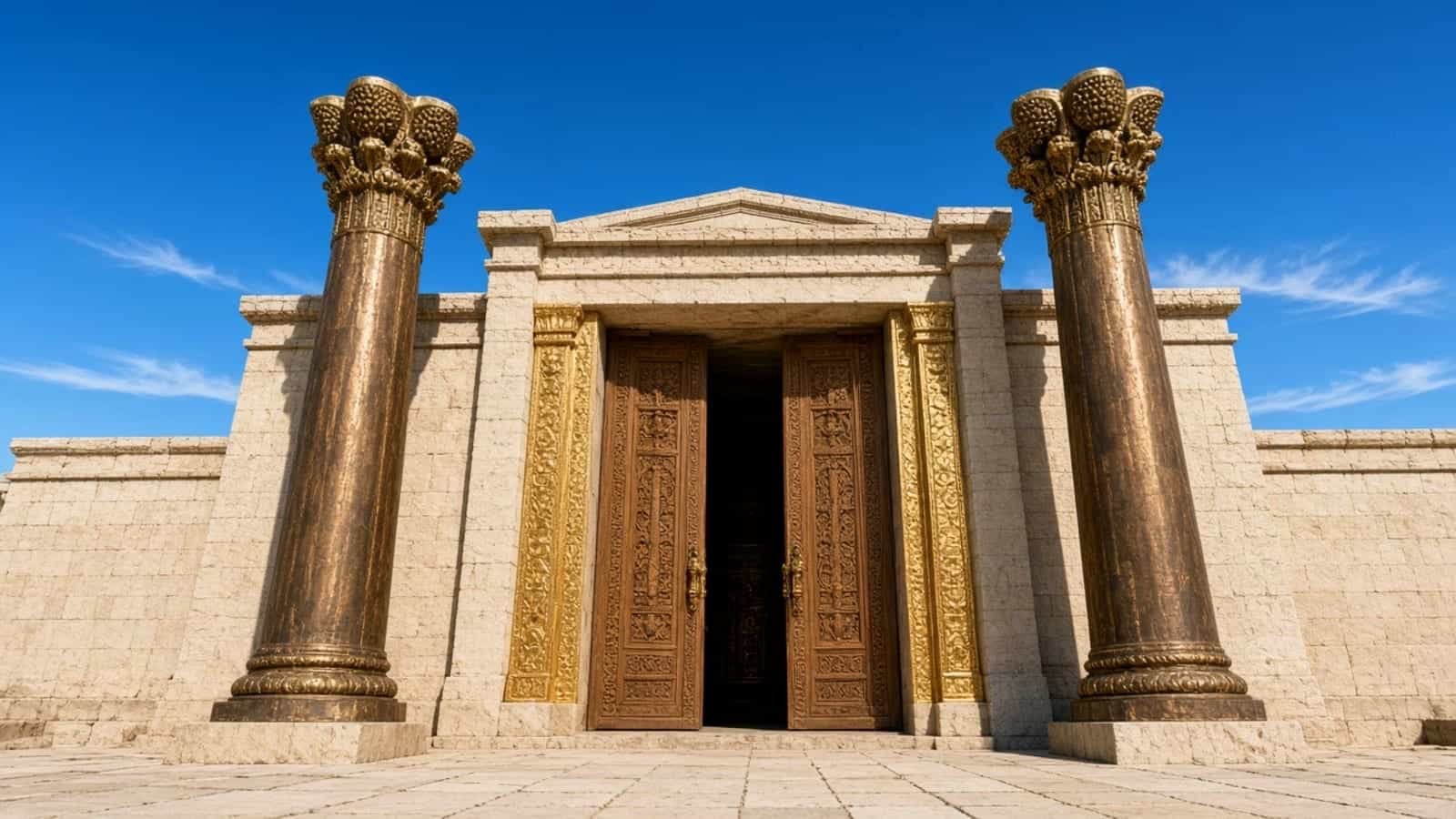
The trajectory of the monarchy in concentrated form: the man who built the temple builds high places for Chemosh the god of Moab and Molech the god of Ammon on the mountain east of Jerusalem, in full sight of the temple he built for YHWH. On that same mountain. The man with the lev shome'a.
God appears to Solomon a second time: since you have not kept my covenant and my statutes, I will tear the kingdom from you and give it to your servant. Because of David your father I will not do it in your day. I will tear it from the hand of your son. And even so I will not tear the entire kingdom, one tribe for the sake of David my servant and for the sake of Jerusalem which I have chosen.
Thread 3 is the Davidic covenant holding even in the judgment: the kingdom splits but does not disappear. One tribe (Judah) remains with the Davidic dynasty. The unconditional character of the covenant means that the discipline takes place within the covenant, not as the termination of it. Thread 4 is Solomon's genuine drift: the wisest man who ever lived, given everything he needed to rule well, chose the path that the law of Deuteronomy 17 had explicitly warned kings against. Thread 5 is the dispensational consequence: the united monarchy is ending; the divided kingdom period is beginning.
His wives turned away his heart: the lev shome'a given at Gibeon is now turned away; the man who asked for the hearing heart has stopped hearing; and the kingdom is about to split, which the Davidic covenant guarantees will not be permanent.
וַיַּטּוּ נָשָׁיו אֶת לִבּוֹ אַחֲרֵי אֱלֹהִים אֲחֵרִים (vayyattu nashav et libbo acharei Elohim acherim): his wives turned away his heart after other gods: vayyattu (they turned, inclined, Hiphil wayyiqtol of natah; the causative: they caused his heart to turn; the same natah used in Deuteronomy 31:20 for the people turning to other gods; the Hiphil shows the foreign wives as the active cause, but Solomon's own willingness is implicit, no one can turn a heart that chooses not to be turned)
threads t3 · t4 · t5 · see Deuteronomy 17:17 · 2 Samuel 7:14-15 · 1 Kings 11:29-39
The trajectory of the monarchy in concentrated form: the man who built the temple builds high places for Chemosh the god of Moab and Molech the god of Ammon on the mountain east of Jerusalem, in full sight of the temple he built for YHWH. On that same mountain. The man with the lev shome'a.
God appears to Solomon a second time: since you have not kept my covenant and my statutes, I will tear the kingdom from you and give it to your servant. Because of David your father I will not do it in your day. I will tear it from the hand of your son. And even so I will not tear the entire kingdom, one tribe for the sake of David my servant and for the sake of Jerusalem which I have chosen.
Thread 3 is the Davidic covenant holding even in the judgment: the kingdom splits but does not disappear. One tribe (Judah) remains with the Davidic dynasty. The unconditional character of the covenant means that the discipline takes place within the covenant, not as the termination of it. Thread 4 is Solomon's genuine drift: the wisest man who ever lived, given everything he needed to rule well, chose the path that the law of Deuteronomy 17 had explicitly warned kings against. Thread 5 is the dispensational consequence: the united monarchy is ending; the divided kingdom period is beginning.
His wives turned away his heart: the lev shome'a given at Gibeon is now turned away; the man who asked for the hearing heart has stopped hearing; and the kingdom is about to split, which the Davidic covenant guarantees will not be permanent.
וַיַּטּוּ נָשָׁיו אֶת לִבּוֹ אַחֲרֵי אֱלֹהִים אֲחֵרִים (vayyattu nashav et libbo acharei Elohim acherim): his wives turned away his heart after other gods: vayyattu (they turned, inclined, Hiphil wayyiqtol of natah; the causative: they caused his heart to turn; the same natah used in Deuteronomy 31:20 for the people turning to other gods; the Hiphil shows the foreign wives as the active cause, but Solomon's own willingness is implicit, no one can turn a heart that chooses not to be turned)
threads t3 · t4 · t5 · see Deuteronomy 17:17 · 2 Samuel 7:14-15 · 1 Kings 11:29-39
The trajectory of the monarchy in concentrated form: the man who built the temple builds high places for Chemosh the god of Moab and Molech the god of Ammon on the mountain east of Jerusalem, in full sight of the temple he built for YHWH. On that same mountain. The man with the lev shome'a.
God appears to Solomon a second time: since you have not kept my covenant and my statutes, I will tear the kingdom from you and give it to your servant. Because of David your father I will not do it in your day. I will tear it from the hand of your son. And even so I will not tear the entire kingdom, one tribe for the sake of David my servant and for the sake of Jerusalem which I have chosen.
Thread 3 is the Davidic covenant holding even in the judgment: the kingdom splits but does not disappear. One tribe (Judah) remains with the Davidic dynasty. The unconditional character of the covenant means that the discipline takes place within the covenant, not as the termination of it. Thread 4 is Solomon's genuine drift: the wisest man who ever lived, given everything he needed to rule well, chose the path that the law of Deuteronomy 17 had explicitly warned kings against. Thread 5 is the dispensational consequence: the united monarchy is ending; the divided kingdom period is beginning.
His wives turned away his heart: the lev shome'a given at Gibeon is now turned away; the man who asked for the hearing heart has stopped hearing; and the kingdom is about to split, which the Davidic covenant guarantees will not be permanent.
וַיַּטּוּ נָשָׁיו אֶת לִבּוֹ אַחֲרֵי אֱלֹהִים אֲחֵרִים (vayyattu nashav et libbo acharei Elohim acherim): his wives turned away his heart after other gods: vayyattu (they turned, inclined, Hiphil wayyiqtol of natah; the causative: they caused his heart to turn; the same natah used in Deuteronomy 31:20 for the people turning to other gods; the Hiphil shows the foreign wives as the active cause, but Solomon's own willingness is implicit, no one can turn a heart that chooses not to be turned)
threads t3 · t4 · t5 · see Deuteronomy 17:17 · 2 Samuel 7:14-15 · 1 Kings 11:29-39
The trajectory of the monarchy in concentrated form: the man who built the temple builds high places for Chemosh the god of Moab and Molech the god of Ammon on the mountain east of Jerusalem, in full sight of the temple he built for YHWH. On that same mountain. The man with the lev shome'a.
God appears to Solomon a second time: since you have not kept my covenant and my statutes, I will tear the kingdom from you and give it to your servant. Because of David your father I will not do it in your day. I will tear it from the hand of your son. And even so I will not tear the entire kingdom, one tribe for the sake of David my servant and for the sake of Jerusalem which I have chosen.
Thread 3 is the Davidic covenant holding even in the judgment: the kingdom splits but does not disappear. One tribe (Judah) remains with the Davidic dynasty. The unconditional character of the covenant means that the discipline takes place within the covenant, not as the termination of it. Thread 4 is Solomon's genuine drift: the wisest man who ever lived, given everything he needed to rule well, chose the path that the law of Deuteronomy 17 had explicitly warned kings against. Thread 5 is the dispensational consequence: the united monarchy is ending; the divided kingdom period is beginning.
His wives turned away his heart: the lev shome'a given at Gibeon is now turned away; the man who asked for the hearing heart has stopped hearing; and the kingdom is about to split, which the Davidic covenant guarantees will not be permanent.
וַיַּטּוּ נָשָׁיו אֶת לִבּוֹ אַחֲרֵי אֱלֹהִים אֲחֵרִים (vayyattu nashav et libbo acharei Elohim acherim): his wives turned away his heart after other gods: vayyattu (they turned, inclined, Hiphil wayyiqtol of natah; the causative: they caused his heart to turn; the same natah used in Deuteronomy 31:20 for the people turning to other gods; the Hiphil shows the foreign wives as the active cause, but Solomon's own willingness is implicit, no one can turn a heart that chooses not to be turned)
threads t3 · t4 · t5 · see Deuteronomy 17:17 · 2 Samuel 7:14-15 · 1 Kings 11:29-39
The trajectory of the monarchy in concentrated form: the man who built the temple builds high places for Chemosh the god of Moab and Molech the god of Ammon on the mountain east of Jerusalem, in full sight of the temple he built for YHWH. On that same mountain. The man with the lev shome'a.
God appears to Solomon a second time: since you have not kept my covenant and my statutes, I will tear the kingdom from you and give it to your servant. Because of David your father I will not do it in your day. I will tear it from the hand of your son. And even so I will not tear the entire kingdom, one tribe for the sake of David my servant and for the sake of Jerusalem which I have chosen.
Thread 3 is the Davidic covenant holding even in the judgment: the kingdom splits but does not disappear. One tribe (Judah) remains with the Davidic dynasty. The unconditional character of the covenant means that the discipline takes place within the covenant, not as the termination of it. Thread 4 is Solomon's genuine drift: the wisest man who ever lived, given everything he needed to rule well, chose the path that the law of Deuteronomy 17 had explicitly warned kings against. Thread 5 is the dispensational consequence: the united monarchy is ending; the divided kingdom period is beginning.
His wives turned away his heart: the lev shome'a given at Gibeon is now turned away; the man who asked for the hearing heart has stopped hearing; and the kingdom is about to split, which the Davidic covenant guarantees will not be permanent.
וַיַּטּוּ נָשָׁיו אֶת לִבּוֹ אַחֲרֵי אֱלֹהִים אֲחֵרִים (vayyattu nashav et libbo acharei Elohim acherim): his wives turned away his heart after other gods: vayyattu (they turned, inclined, Hiphil wayyiqtol of natah; the causative: they caused his heart to turn; the same natah used in Deuteronomy 31:20 for the people turning to other gods; the Hiphil shows the foreign wives as the active cause, but Solomon's own willingness is implicit, no one can turn a heart that chooses not to be turned)
threads t3 · t4 · t5 · see Deuteronomy 17:17 · 2 Samuel 7:14-15 · 1 Kings 11:29-39
The trajectory of the monarchy in concentrated form: the man who built the temple builds high places for Chemosh the god of Moab and Molech the god of Ammon on the mountain east of Jerusalem, in full sight of the temple he built for YHWH. On that same mountain. The man with the lev shome'a.
God appears to Solomon a second time: since you have not kept my covenant and my statutes, I will tear the kingdom from you and give it to your servant. Because of David your father I will not do it in your day. I will tear it from the hand of your son. And even so I will not tear the entire kingdom, one tribe for the sake of David my servant and for the sake of Jerusalem which I have chosen.
Thread 3 is the Davidic covenant holding even in the judgment: the kingdom splits but does not disappear. One tribe (Judah) remains with the Davidic dynasty. The unconditional character of the covenant means that the discipline takes place within the covenant, not as the termination of it. Thread 4 is Solomon's genuine drift: the wisest man who ever lived, given everything he needed to rule well, chose the path that the law of Deuteronomy 17 had explicitly warned kings against. Thread 5 is the dispensational consequence: the united monarchy is ending; the divided kingdom period is beginning.
His wives turned away his heart: the lev shome'a given at Gibeon is now turned away; the man who asked for the hearing heart has stopped hearing; and the kingdom is about to split, which the Davidic covenant guarantees will not be permanent.
וַיַּטּוּ נָשָׁיו אֶת לִבּוֹ אַחֲרֵי אֱלֹהִים אֲחֵרִים (vayyattu nashav et libbo acharei Elohim acherim): his wives turned away his heart after other gods: vayyattu (they turned, inclined, Hiphil wayyiqtol of natah; the causative: they caused his heart to turn; the same natah used in Deuteronomy 31:20 for the people turning to other gods; the Hiphil shows the foreign wives as the active cause, but Solomon's own willingness is implicit, no one can turn a heart that chooses not to be turned)
threads t3 · t4 · t5 · see Deuteronomy 17:17 · 2 Samuel 7:14-15 · 1 Kings 11:29-39
The trajectory of the monarchy in concentrated form: the man who built the temple builds high places for Chemosh the god of Moab and Molech the god of Ammon on the mountain east of Jerusalem, in full sight of the temple he built for YHWH. On that same mountain. The man with the lev shome'a.
God appears to Solomon a second time: since you have not kept my covenant and my statutes, I will tear the kingdom from you and give it to your servant. Because of David your father I will not do it in your day. I will tear it from the hand of your son. And even so I will not tear the entire kingdom, one tribe for the sake of David my servant and for the sake of Jerusalem which I have chosen.
Thread 3 is the Davidic covenant holding even in the judgment: the kingdom splits but does not disappear. One tribe (Judah) remains with the Davidic dynasty. The unconditional character of the covenant means that the discipline takes place within the covenant, not as the termination of it. Thread 4 is Solomon's genuine drift: the wisest man who ever lived, given everything he needed to rule well, chose the path that the law of Deuteronomy 17 had explicitly warned kings against. Thread 5 is the dispensational consequence: the united monarchy is ending; the divided kingdom period is beginning.
His wives turned away his heart: the lev shome'a given at Gibeon is now turned away; the man who asked for the hearing heart has stopped hearing; and the kingdom is about to split, which the Davidic covenant guarantees will not be permanent.
וַיַּטּוּ נָשָׁיו אֶת לִבּוֹ אַחֲרֵי אֱלֹהִים אֲחֵרִים (vayyattu nashav et libbo acharei Elohim acherim): his wives turned away his heart after other gods: vayyattu (they turned, inclined, Hiphil wayyiqtol of natah; the causative: they caused his heart to turn; the same natah used in Deuteronomy 31:20 for the people turning to other gods; the Hiphil shows the foreign wives as the active cause, but Solomon's own willingness is implicit, no one can turn a heart that chooses not to be turned)
threads t3 · t4 · t5 · see Deuteronomy 17:17 · 2 Samuel 7:14-15 · 1 Kings 11:29-39
The trajectory of the monarchy in concentrated form: the man who built the temple builds high places for Chemosh the god of Moab and Molech the god of Ammon on the mountain east of Jerusalem, in full sight of the temple he built for YHWH. On that same mountain. The man with the lev shome'a.
God appears to Solomon a second time: since you have not kept my covenant and my statutes, I will tear the kingdom from you and give it to your servant. Because of David your father I will not do it in your day. I will tear it from the hand of your son. And even so I will not tear the entire kingdom, one tribe for the sake of David my servant and for the sake of Jerusalem which I have chosen.
Thread 3 is the Davidic covenant holding even in the judgment: the kingdom splits but does not disappear. One tribe (Judah) remains with the Davidic dynasty. The unconditional character of the covenant means that the discipline takes place within the covenant, not as the termination of it. Thread 4 is Solomon's genuine drift: the wisest man who ever lived, given everything he needed to rule well, chose the path that the law of Deuteronomy 17 had explicitly warned kings against. Thread 5 is the dispensational consequence: the united monarchy is ending; the divided kingdom period is beginning.
His wives turned away his heart: the lev shome'a given at Gibeon is now turned away; the man who asked for the hearing heart has stopped hearing; and the kingdom is about to split, which the Davidic covenant guarantees will not be permanent.
וַיַּטּוּ נָשָׁיו אֶת לִבּוֹ אַחֲרֵי אֱלֹהִים אֲחֵרִים (vayyattu nashav et libbo acharei Elohim acherim): his wives turned away his heart after other gods: vayyattu (they turned, inclined, Hiphil wayyiqtol of natah; the causative: they caused his heart to turn; the same natah used in Deuteronomy 31:20 for the people turning to other gods; the Hiphil shows the foreign wives as the active cause, but Solomon's own willingness is implicit, no one can turn a heart that chooses not to be turned)
threads t3 · t4 · t5 · see Deuteronomy 17:17 · 2 Samuel 7:14-15 · 1 Kings 11:29-39
The trajectory of the monarchy in concentrated form: the man who built the temple builds high places for Chemosh the god of Moab and Molech the god of Ammon on the mountain east of Jerusalem, in full sight of the temple he built for YHWH. On that same mountain. The man with the lev shome'a.
God appears to Solomon a second time: since you have not kept my covenant and my statutes, I will tear the kingdom from you and give it to your servant. Because of David your father I will not do it in your day. I will tear it from the hand of your son. And even so I will not tear the entire kingdom, one tribe for the sake of David my servant and for the sake of Jerusalem which I have chosen.
Thread 3 is the Davidic covenant holding even in the judgment: the kingdom splits but does not disappear. One tribe (Judah) remains with the Davidic dynasty. The unconditional character of the covenant means that the discipline takes place within the covenant, not as the termination of it. Thread 4 is Solomon's genuine drift: the wisest man who ever lived, given everything he needed to rule well, chose the path that the law of Deuteronomy 17 had explicitly warned kings against. Thread 5 is the dispensational consequence: the united monarchy is ending; the divided kingdom period is beginning.
His wives turned away his heart: the lev shome'a given at Gibeon is now turned away; the man who asked for the hearing heart has stopped hearing; and the kingdom is about to split, which the Davidic covenant guarantees will not be permanent.
וַיַּטּוּ נָשָׁיו אֶת לִבּוֹ אַחֲרֵי אֱלֹהִים אֲחֵרִים (vayyattu nashav et libbo acharei Elohim acherim): his wives turned away his heart after other gods: vayyattu (they turned, inclined, Hiphil wayyiqtol of natah; the causative: they caused his heart to turn; the same natah used in Deuteronomy 31:20 for the people turning to other gods; the Hiphil shows the foreign wives as the active cause, but Solomon's own willingness is implicit, no one can turn a heart that chooses not to be turned)
threads t3 · t4 · t5 · see Deuteronomy 17:17 · 2 Samuel 7:14-15 · 1 Kings 11:29-39
The trajectory of the monarchy in concentrated form: the man who built the temple builds high places for Chemosh the god of Moab and Molech the god of Ammon on the mountain east of Jerusalem, in full sight of the temple he built for YHWH. On that same mountain. The man with the lev shome'a.
God appears to Solomon a second time: since you have not kept my covenant and my statutes, I will tear the kingdom from you and give it to your servant. Because of David your father I will not do it in your day. I will tear it from the hand of your son. And even so I will not tear the entire kingdom, one tribe for the sake of David my servant and for the sake of Jerusalem which I have chosen.
Thread 3 is the Davidic covenant holding even in the judgment: the kingdom splits but does not disappear. One tribe (Judah) remains with the Davidic dynasty. The unconditional character of the covenant means that the discipline takes place within the covenant, not as the termination of it. Thread 4 is Solomon's genuine drift: the wisest man who ever lived, given everything he needed to rule well, chose the path that the law of Deuteronomy 17 had explicitly warned kings against. Thread 5 is the dispensational consequence: the united monarchy is ending; the divided kingdom period is beginning.
His wives turned away his heart: the lev shome'a given at Gibeon is now turned away; the man who asked for the hearing heart has stopped hearing; and the kingdom is about to split, which the Davidic covenant guarantees will not be permanent.
וַיַּטּוּ נָשָׁיו אֶת לִבּוֹ אַחֲרֵי אֱלֹהִים אֲחֵרִים (vayyattu nashav et libbo acharei Elohim acherim): his wives turned away his heart after other gods: vayyattu (they turned, inclined, Hiphil wayyiqtol of natah; the causative: they caused his heart to turn; the same natah used in Deuteronomy 31:20 for the people turning to other gods; the Hiphil shows the foreign wives as the active cause, but Solomon's own willingness is implicit, no one can turn a heart that chooses not to be turned)
threads t3 · t4 · t5 · see Deuteronomy 17:17 · 2 Samuel 7:14-15 · 1 Kings 11:29-39
The trajectory of the monarchy in concentrated form: the man who built the temple builds high places for Chemosh the god of Moab and Molech the god of Ammon on the mountain east of Jerusalem, in full sight of the temple he built for YHWH. On that same mountain. The man with the lev shome'a.
God appears to Solomon a second time: since you have not kept my covenant and my statutes, I will tear the kingdom from you and give it to your servant. Because of David your father I will not do it in your day. I will tear it from the hand of your son. And even so I will not tear the entire kingdom, one tribe for the sake of David my servant and for the sake of Jerusalem which I have chosen.
Thread 3 is the Davidic covenant holding even in the judgment: the kingdom splits but does not disappear. One tribe (Judah) remains with the Davidic dynasty. The unconditional character of the covenant means that the discipline takes place within the covenant, not as the termination of it. Thread 4 is Solomon's genuine drift: the wisest man who ever lived, given everything he needed to rule well, chose the path that the law of Deuteronomy 17 had explicitly warned kings against. Thread 5 is the dispensational consequence: the united monarchy is ending; the divided kingdom period is beginning.
His wives turned away his heart: the lev shome'a given at Gibeon is now turned away; the man who asked for the hearing heart has stopped hearing; and the kingdom is about to split, which the Davidic covenant guarantees will not be permanent.
וַיַּטּוּ נָשָׁיו אֶת לִבּוֹ אַחֲרֵי אֱלֹהִים אֲחֵרִים (vayyattu nashav et libbo acharei Elohim acherim): his wives turned away his heart after other gods: vayyattu (they turned, inclined, Hiphil wayyiqtol of natah; the causative: they caused his heart to turn; the same natah used in Deuteronomy 31:20 for the people turning to other gods; the Hiphil shows the foreign wives as the active cause, but Solomon's own willingness is implicit, no one can turn a heart that chooses not to be turned)
threads t3 · t4 · t5 · see Deuteronomy 17:17 · 2 Samuel 7:14-15 · 1 Kings 11:29-39
The trajectory of the monarchy in concentrated form: the man who built the temple builds high places for Chemosh the god of Moab and Molech the god of Ammon on the mountain east of Jerusalem, in full sight of the temple he built for YHWH. On that same mountain. The man with the lev shome'a.
God appears to Solomon a second time: since you have not kept my covenant and my statutes, I will tear the kingdom from you and give it to your servant. Because of David your father I will not do it in your day. I will tear it from the hand of your son. And even so I will not tear the entire kingdom, one tribe for the sake of David my servant and for the sake of Jerusalem which I have chosen.
Thread 3 is the Davidic covenant holding even in the judgment: the kingdom splits but does not disappear. One tribe (Judah) remains with the Davidic dynasty. The unconditional character of the covenant means that the discipline takes place within the covenant, not as the termination of it. Thread 4 is Solomon's genuine drift: the wisest man who ever lived, given everything he needed to rule well, chose the path that the law of Deuteronomy 17 had explicitly warned kings against. Thread 5 is the dispensational consequence: the united monarchy is ending; the divided kingdom period is beginning.
His wives turned away his heart: the lev shome'a given at Gibeon is now turned away; the man who asked for the hearing heart has stopped hearing; and the kingdom is about to split, which the Davidic covenant guarantees will not be permanent.
וַיַּטּוּ נָשָׁיו אֶת לִבּוֹ אַחֲרֵי אֱלֹהִים אֲחֵרִים (vayyattu nashav et libbo acharei Elohim acherim): his wives turned away his heart after other gods: vayyattu (they turned, inclined, Hiphil wayyiqtol of natah; the causative: they caused his heart to turn; the same natah used in Deuteronomy 31:20 for the people turning to other gods; the Hiphil shows the foreign wives as the active cause, but Solomon's own willingness is implicit, no one can turn a heart that chooses not to be turned)
threads t3 · t4 · t5 · see Deuteronomy 17:17 · 2 Samuel 7:14-15 · 1 Kings 11:29-39
The trajectory of the monarchy in concentrated form: the man who built the temple builds high places for Chemosh the god of Moab and Molech the god of Ammon on the mountain east of Jerusalem, in full sight of the temple he built for YHWH. On that same mountain. The man with the lev shome'a.
God appears to Solomon a second time: since you have not kept my covenant and my statutes, I will tear the kingdom from you and give it to your servant. Because of David your father I will not do it in your day. I will tear it from the hand of your son. And even so I will not tear the entire kingdom, one tribe for the sake of David my servant and for the sake of Jerusalem which I have chosen.
Thread 3 is the Davidic covenant holding even in the judgment: the kingdom splits but does not disappear. One tribe (Judah) remains with the Davidic dynasty. The unconditional character of the covenant means that the discipline takes place within the covenant, not as the termination of it. Thread 4 is Solomon's genuine drift: the wisest man who ever lived, given everything he needed to rule well, chose the path that the law of Deuteronomy 17 had explicitly warned kings against. Thread 5 is the dispensational consequence: the united monarchy is ending; the divided kingdom period is beginning.
His wives turned away his heart: the lev shome'a given at Gibeon is now turned away; the man who asked for the hearing heart has stopped hearing; and the kingdom is about to split, which the Davidic covenant guarantees will not be permanent.
וַיַּטּוּ נָשָׁיו אֶת לִבּוֹ אַחֲרֵי אֱלֹהִים אֲחֵרִים (vayyattu nashav et libbo acharei Elohim acherim): his wives turned away his heart after other gods: vayyattu (they turned, inclined, Hiphil wayyiqtol of natah; the causative: they caused his heart to turn; the same natah used in Deuteronomy 31:20 for the people turning to other gods; the Hiphil shows the foreign wives as the active cause, but Solomon's own willingness is implicit, no one can turn a heart that chooses not to be turned)
threads t3 · t4 · t5 · see Deuteronomy 17:17 · 2 Samuel 7:14-15 · 1 Kings 11:29-39